Van Cầu Đường Ống Ngầm (Hàn Toàn Phần)
Giới thiệu Van Cầu Đường Ống Ngầm (Hàn Toàn Phần)
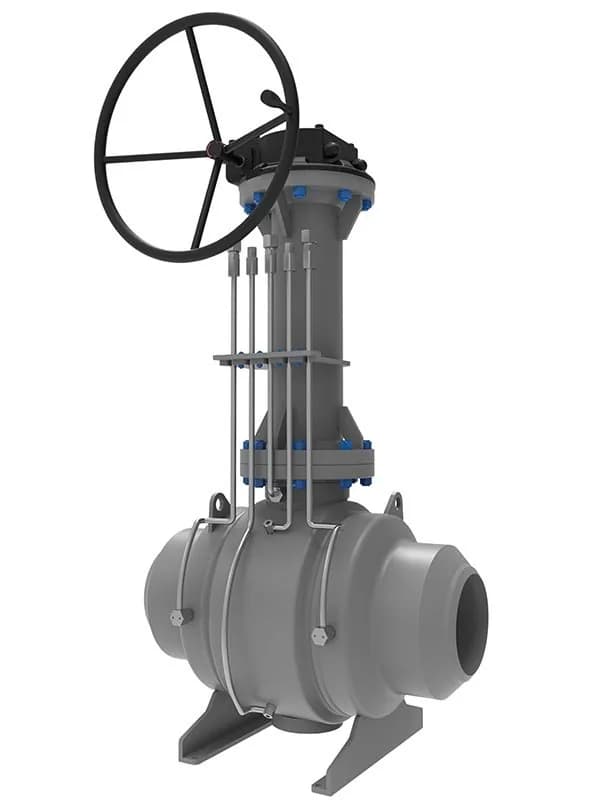
Không có mối nối bắt bu lông. Không có gioăng thân van. Không có kết nối mặt bích nơi thân van tách thành nhiều mảnh. Van bi đường ống chôn ngầm hàn toàn phần là một vỏ liên tục duy nhất—toàn bộ thân van được hợp nhất bằng hàn thành một ranh giới áp suất duy nhất với không một mối nối cơ khí nào làm gián đoạn vỏ bọc chứa. Sự đơn giản về kết cấu đó là toàn bộ lý do van này tồn tại. Trên đường ống dẫn khí chôn ngầm hoặc đường ống dầu thô ngầm, van được lắp đặt, phủ lớp bảo vệ, kiểm tra, và sau đó chôn dưới ba feet đất—và nó nằm đó trong hai mươi đến ba mươi năm. Không ai sẽ đào nó lên để siết bu lông thân van hoặc thay gioăng nắp van. Van phải giữ kín mà không cần can thiệp bảo trì, và thân van hàn toàn phần loại bỏ mọi mối nối bên ngoài có thể phát triển thành đường rò rỉ qua nhiều thập kỷ chu kỳ nhiệt, tiếp xúc độ ẩm đất, và áp suất bên trong duy trì.
Van bi đường ống chôn ngầm FLOWKS được thiết kế và chế tạo cho chính thực tế dịch vụ đó. Cấu trúc bi neo trục cố định với đế van lò xo cung cấp khả năng làm kín hai chiều—van giữ kín từ hướng thượng lưu và hạ lưu một cách độc lập, đây là yêu cầu bắt buộc cho cách ly đường ống nơi hướng dòng chảy có thể đảo ngược trong các sự kiện áp suất tăng đột biến hoặc nơi quy trình cách ly chặn kép và xả khí cần cả hai đế van làm kín trước khi các đoạn hạ lưu được mở để làm việc. Bi được giữ cố định tại các trục quay trên và dưới. Nó không nổi. Nó không dịch chuyển dưới áp suất đường ống. Các đế van thực hiện công việc làm kín, và chúng làm điều đó từ cả hai phía.
Kết cấu thân van hàn toàn phần loại bỏ các cơ chế rò rỉ dài hạn phổ biến nhất mà van thân bắt bu lông phải đối mặt dưới lòng đất. Sự nới lỏng bu lông thân van qua nhiều năm phục vụ—gây ra bởi chu kỳ nhiệt, rung động từ các đợt tăng áp suất đường ống, và hiện tượng từ biến trong vật liệu gioăng—là một chế độ hỏng hóc được ghi nhận rõ ràng trong van bi thân bắt bu lông chôn ngầm. Các bu lông dần mất lực siết ban đầu, độ nén gioăng giảm, và một đường rò rỉ chậm phát triển tại mối nối thân van mà không ai phát hiện cho đến khi giám sát phát thải phát hiện ra nhiều năm sau đó. Van hàn toàn phần không có mối nối đó. Thân van là một đường hàn liên tục. Các điểm xuyên qua bên ngoài duy nhất là lỗ trục cho việc lắp đặt bộ truyền động và, trên một số cấu hình, một cổng bảo trì truy cập từ đỉnh. Hai điểm xuyên qua thay vì bốn đến sáu điểm bạn sẽ tìm thấy trên thiết kế thân bắt bu lông—và sự giảm thiểu các lỗ mở bên ngoài đó trực tiếp chuyển thành rủi ro phát thải rò rỉ thấp hơn và ít điểm kiểm tra ISO 15848 hơn phải duy trì tính toàn vẹn làm kín trong suốt vòng đời phục vụ của van.
Bảo vệ chống ăn mòn cho đường ống chôn ngầm không phải là tùy chọn——mà được tích hợp sẵn trong thông số kỹ thuật sản phẩm. Van bi đường ống chôn ngầm FLOWKS được trang bị hệ thống phủ bên ngoài thiết kế cho chôn trực tiếp trong đất: FBE (epoxy liên kết nóng chảy) làm lớp chống ăn mòn cơ bản, với lớp phủ 3PE (polyethylene ba lớp) tùy chọn cho các công trình nơi hóa tính đất, độ ẩm, hoặc rủi ro ăn mòn do vi sinh vật (MIC) đòi hỏi thêm các lớp bảo vệ. Hệ thống phủ bao phủ toàn bộ bề mặt thân van, bao gồm các mối hàn và vùng chuyển tiếp nơi sự gián đoạn lớp phủ có thể tạo ra các điểm khởi phát ăn mòn cục bộ. Bề mặt bên trong tuân theo thông lệ phủ đường ống tiêu chuẩn——sạch, được kiểm tra, và được bảo vệ chống ăn mòn trong lưu kho và vận chuyển trước khi lắp đặt. Thiết kế van cũng tích hợp tính năng liên tục điện để tích hợp hệ thống bảo vệ catốt——thân van cung cấp đường dẫn kim loại liên tục cho dòng điện bảo vệ catốt chạy qua đoạn lắp đặt, đảm bảo van chôn ngầm nhận được mức độ chống ăn mòn tương đương với chính đường ống.
Tiếp cận bảo trì thực hiện qua đỉnh van. Trục van và giá đỡ bộ truyền động kéo dài theo phương thẳng đứng lên trên thân van, có thể tiếp cận qua ống nối trên mặt đất hoặc hố van. Việc thay thế đế van và gioăng có thể thực hiện mà không cần tháo van khỏi đường ống——quy trình bảo trì bên trong tiếp cận vòng đế qua lỗ van bằng dụng cụ chuyên dụng, hoặc qua cổng tiếp cận trên đỉnh được thiết kế riêng trên các cấu hình có trang bị. Đây là bảo trì trực tuyến theo thiết kế, không phải giải pháp chắp vá. Trên hệ thống lắp đặt hàn và chôn ngầm, bạn có hai lựa chọn: thay thế đế từ trên đỉnh trong vài giờ, hoặc đào đường ống lên và cắt van ra trong nhiều ngày. Chính nền kinh tế khiến kết cấu hàn hoàn toàn trở nên cần thiết cũng khiến khả năng bảo trì qua đỉnh trở thành bắt buộc——và cả hai đều là tiêu chuẩn trong thiết kế van này, không phải nâng cấp tùy chọn.
Vật liệu thân van: Thép cacbon A216 WCB cho dịch vụ vận chuyển khí và dầu thô tiêu chuẩn, thép không gỉ A351 CF8M cho môi trường đường ống ăn mòn, thép song pha A182 F51 cho các công trình đường ống ngoài khơi và ven biển nơi tiếp xúc muối và nứt do ăn mòn ứng suất là các yếu tố thiết kế. Van bi đường ống thường sử dụng WCB cho phần lớn các ứng dụng vận chuyển chôn ngầm——thép...
Thông Số Kỹ Thuật
| Size Range | 6"-48" |
| Pressure Class | Class150-1500 |
| Design Standard | API 6D,API607 |
| Body Materials | A105、WCB、L245、L360、F304、F316 |
| Parent Standards | API 6D, API 608, ASME B16.34, API 607 Fire Safe |
| Parent Size Range | 2" - 48" |
| Parent Pressure Class | Class 150 - 2500 |
Tải xuống sản phẩm
| Phạm Vi Cỡ | 6"-48" |
| Lớp Áp Suất | Class150-1500 |
| Tiêu Chuẩn Thiết Kế | API 6D,API607 |
| Vật Liệu Thân Van | A105、WCB、L245、L360、F304、F316 |
Cần Báo Giá?
Contact our engineering team for pricing and technical support on Van Cầu Đường Ống Ngầm (Hàn Toàn Phần).
Request a QuoteTìm Kiếm Thêm Giải Pháp?
Khám phá dải sản phẩm được thiết kế cho thách thức ngành của bạn.
DBB Valves
FLOWKS Double Block & Bleed (DBB) valves provide dual isolation with bleed verification in a single compact body. Replacing traditional multi-valve installations, FLOWKS DBB valves reduce weight, space and potential leak paths. Available in bolted bonnet, all-welded and expanding gate designs per API 6D and API 607.
Gate Valves
FLOWKS gate valves for isolation service in piping systems. Flexible wedge, solid wedge, slab and expanding gate designs per API 600, API 602 and ASME B16.34.
Globe Valves
FLOWKS globe valves for throttling and isolation. Standard, angle, Y-pattern and bellows seal configurations per API 602 and BS 1868.
Check Valves
FLOWKS check valves prevent reverse flow. Dual plate, swing, tilting disc and lift check designs per API 594 and BS 1868.