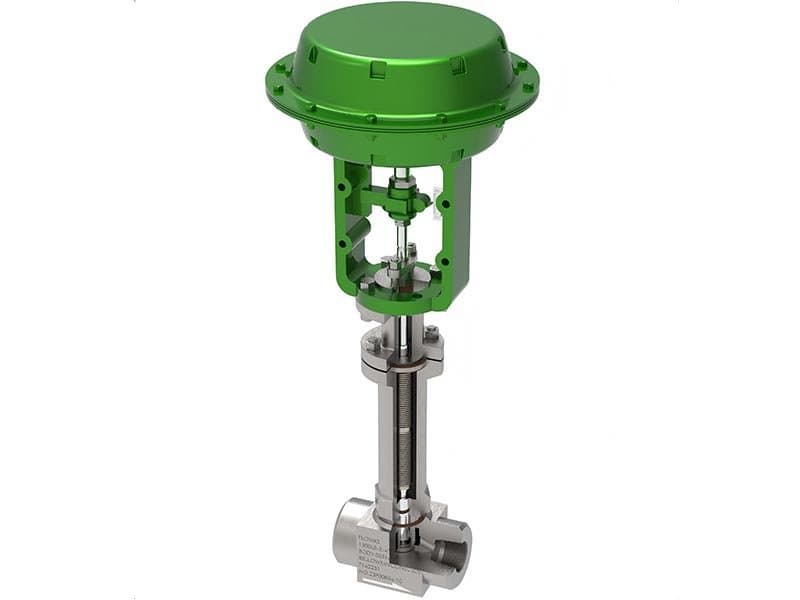
Van Điều Tiết Lưu Lượng Thấp Ống Chuông
Giới thiệu Van Điều Tiết Lưu Lượng Thấp Ống Chuông
Kích thước: 1/2" - 1" (DN15 - DN25) Áp suất: Loại 150 - 600 Tiêu chuẩn: IEC 60534, ASME B16.34, ISO 15848 (phát thải rò rỉ) Vật liệu thân van: A216 WCB, A351 CF8M, A182 F316 Vật liệu bộ phận điều chỉnh: 316 SS, 17-4PH SS, Stellite 6, bộ phận điều chỉnh siêu nhỏ V-port Làm kín: Gioăng trục bằng ống thổi kim loại + gioăng đệm PTFE/graphite
Thiết kế: Hành trình tuyến tính, chi tiết vi nút, truyền động khí nén/điện, không rò rỉ ngoài
Hai Vấn Đề Cùng Lúc——Lưu Lượng Nhỏ và Rò Rỉ Bằng Không——và Van Này Giải Quyết Cả Hai
Van điều chỉnh lưu lượng thấp xử lý vấn đề đầu tiên: điều chỉnh lưu lượng chính xác ở các giá trị Cv thấp hơn mức chi tiết tiêu chuẩn có thể kiểm soát hiệu quả. Van làm kín ống thổi xử lý vấn đề thứ hai: rò rỉ ngoài bằng không qua đệm trục——ống thổi tạo ra một rào cản kim loại linh hoạt giữa môi trường quá trình bên trong van và khí quyển bên ngoài, loại bỏ đường rò rỉ từ trục đến đệm mà thiết kế đệm thông thường không bao giờ có thể loại bỏ hoàn toàn. Van điều chỉnh lưu lượng thấp dạng ống thổi kết hợp cả hai giải pháp vào một cụm duy nhất——chi tiết vi cho điều chỉnh lưu lượng nhỏ chính xác, và làm kín ống thổi cho phát thải rò rỉ bằng không. Đây là van bạn chỉ định khi quá trình yêu cầu cả hai: môi trường độc hại không thể rò rỉ dù chỉ một lượng vết qua trục (hydro sulfide, clo, phosgene, vinyl chloride——bất cứ thứ gì kích hoạt quy định phát thải môi trường hoặc gây rủi ro độc tính cấp tính cho nhân viên), và tốc độ dòng chảy quá nhỏ để chi tiết tiêu chuẩn điều chỉnh hiệu quả. Hai thông số kỹ thuật riêng biệt hội tụ trên cùng một van——bạn không thể đạt được một trong hai với thiết kế đệm tiêu chuẩn và cái còn lại với chi tiết tiêu chuẩn. Bạn cần cả hai khả năng đồng thời, và đó chính xác là những gì sản phẩm này mang lại.
Ống Thổi——Cách Nó Làm Kín Những Gì Đệm Không Thể
Hệ thống làm kín trục van thông thường dựa vào sự nén – các vòng làm kín được ép chặt quanh trục bởi một bộ phận dẫn hướng, tạo ra một lớp bịt kín cơ học ngăn không cho môi chất rò rỉ qua khe hở giữa trục và thân van. Lớp bịt kín bằng nén này hoạt động tốt ở áp suất và nhiệt độ vừa phải – nhưng nó không bao giờ thực sự loại bỏ hoàn toàn sự rò rỉ. Hệ thống làm kín chịu được một tỷ lệ rò rỉ nhất định theo tiêu chuẩn áp dụng (ISO 15848, Phương pháp EPA 21). Theo thời gian, sự nén của hệ thống làm kín bị giảm, bề mặt trục bị mòn và tỷ lệ rò rỉ tăng lên cho đến khi hệ thống làm kín được siết chặt lại hoặc thay thế. Đối với các môi chất không nguy hiểm (nước, hơi nước, chất lỏng quy trình thông thường), tỷ lệ rò rỉ được kiểm soát đó là chấp nhận được – một vài ppm khí thải rò rỉ từ van nước không gây ra bất kỳ hành động pháp lý hoặc quy trình an toàn nào.
Đối với môi trường độc hại, gây ung thư, tự cháy hoặc được quy định về môi trường——tốc độ rò rỉ có kiểm soát tương tự là không thể chấp nhận. H₂S ở ngưỡng phơi nhiễm 100 ppm. Khí clo ở IDLH 1 ppm. Phosgene ở 0,1 ppm. Vinyl chloride (chất gây ung thư đã được xác nhận với giới hạn phát thải nghiêm ngặt). Những môi trường này không có tốc độ rò rỉ "chấp nhận được"——bất kỳ rò rỉ ngoài phát hiện được nào là sự cố an toàn, vi phạm quy định và nguy cơ quá trình. Đệm không thể đảm bảo bằng không——nó đảm bảo một tốc độ. Ống thổi đảm bảo bằng không.
Ống thổi kim loại là một ống mềm đa lớp, được tạo hình và hàn, làm bằng thép không gỉ (hoặc Inconel cho dịch vụ nhiệt độ cao), kết nối trục van với thân van——ống thổi di chuyển cùng trục khi nút van chuyển động lên xuống, uốn cong tại mỗi vị trí hành trình trong khi duy trì một rào chắn kim loại liên tục giữa khoang quy trình và khí quyển bên ngoài. Không có khe hở đệm để môi chất rò rỉ qua——thành ống thổi là kim loại đặc. Môi chất nằm bên trong khoang ống thổi. Khí quyển nằm bên ngoài. Cách duy nhất để môi chất tiếp cận khí quyển qua đường trục là thông qua vỡ ống thổi——và vỡ ống thổi là một chế độ hỏng hóc có thể phát hiện, nhìn thấy được với phản ứng bảo trì rõ ràng, không phải là sự gia tăng rò rỉ dần dần tích lũy không được phát hiện trong nhiều tháng.
Một bộ đệm dự phòng nằm phía trên ống thổi——không phải là vòng đệm chính, mà là lớp ngăn chứa thứ cấp trong trường hợp ống thổi vỡ. Nếu ống thổi hỏng, đệm dự phòng cung cấp khả năng ngăn chứa tạm thời cho đến khi van có thể được đưa ra khỏi vận hành để thay thế ống thổi. Đệm không dùng để xử lý vận hành bình thường——nó tồn tại cho kịch bản hỏng hóc đơn lẻ mà thiết kế ống thổi dự đoán và quản lý thay vì bỏ qua. Triết lý niêm phong kép đó (ống thổi chính + đệm dự phòng) là thực hành tiêu chuẩn trong thiết kế van niêm phong bằng ống thổi cho dịch vụ môi chất nguy hiểm——không phải là tùy chọn thêm, mà là một tính năng kiến trúc an toàn bắt buộc.
Micro-Trim——Độ Chính Xác Lưu Lượng Thấp Tương Tự Như Van Lưu Lượng Thấp Tiêu Chuẩn
Hình dạng trim trong van lưu lượng thấp dạng ống thổi tuân theo cùng triết lý thiết kế micro-plug như van điều chỉnh lưu lượng thấp FLOWKS tiêu chuẩn: biên dạng plug...
Thông Số Kỹ Thuật
| Size Range | 1/2”-2” |
| Pressure Class | Class150-2500 |
| Design Standard | ISA 75, IEC 60534 |
| Body Materials | A105, F11, F22, F304, F316, F304L, F316L, Aluminum Bronze, Stellite Alloy, Inconel 718, PTFE, RPTFE, PEEK, Flexible Graphite |
| Parent Standards | ISA 75, IEC 60534 |
| Parent Size Range | 1" - 24" |
| Parent Pressure Class | Class 150 - 1500 |
Tải xuống sản phẩm
| Phạm Vi Cỡ | 1/2”-2” |
| Lớp Áp Suất | Class150-2500 |
| Tiêu Chuẩn Thiết Kế | ISA 75, IEC 60534 |
| Vật Liệu Thân Van | A105, F11, F22, F304, F316, F304L, F316L, Aluminum Bronze, Stellite Alloy, Inconel 718, PTFE, RPTFE, PEEK, Flexible Graphite |
Cần Báo Giá?
Contact our engineering team for pricing and technical support on Van Điều Tiết Lưu Lượng Thấp Ống Chuông.
Request a QuoteTìm Kiếm Thêm Giải Pháp?
Khám phá dải sản phẩm được thiết kế cho thách thức ngành của bạn.
Ball Valves
FLOWKS offers floating ball valve, trunnion mounted ball valve and top entry ball valve for oil & gas, petrochemical and power generation. Designed per API 6D, API 608 and ASME B16.34.
DBB Valves
FLOWKS Double Block & Bleed (DBB) valves provide dual isolation with bleed verification in a single compact body. Replacing traditional multi-valve installations, FLOWKS DBB valves reduce weight, space and potential leak paths. Available in bolted bonnet, all-welded and expanding gate designs per API 6D and API 607.
Gate Valves
FLOWKS gate valves for isolation service in piping systems. Flexible wedge, solid wedge, slab and expanding gate designs per API 600, API 602 and ASME B16.34.
Globe Valves
FLOWKS globe valves for throttling and isolation. Standard, angle, Y-pattern and bellows seal configurations per API 602 and BS 1868.