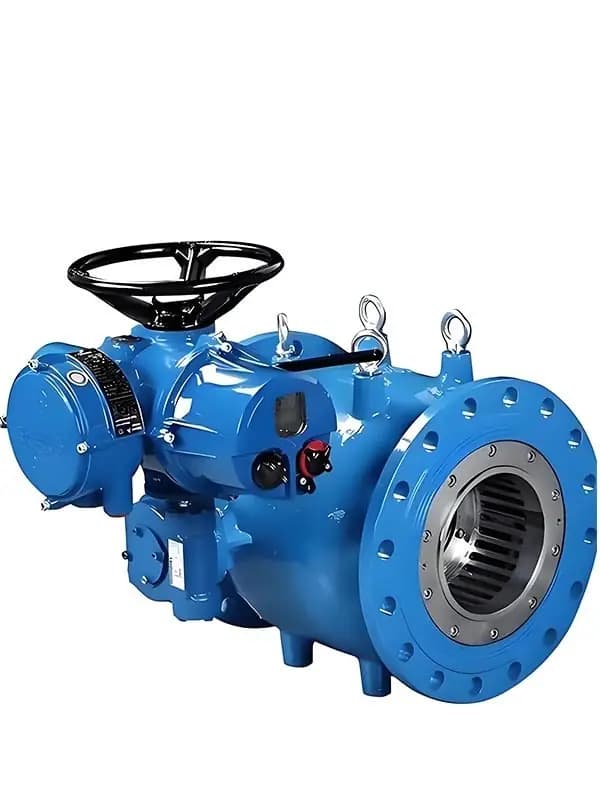
Giới thiệu Van Điều Tiết Lưu Lượng
Thông số kỹ thuật nhanh Kích thước: 6" - 48" (DN150 - DN1200) Áp suất: Loại 150 - 300 Tiêu chuẩn: IEC 60534, AWWA C504 (cấu hình hệ thống cấp nước), ASME B16.34 Vật liệu thân van: A216 WCB, A351 CF8M (thép không gỉ dùng cho xử lý nước ăn mòn) Vật liệu gioăng: EPDM, NBR, PTFE, gioăng kim loại cứng (dùng cho nước có tính mài mòn) Thiết kế bộ phận điều chỉnh: Đĩa hoặc hình trụ đường kính lớn, đặc tính dòng chảy đều hoặc tuyến tính
Thiết kế: Hành trình quay hoặc tuyến tính, truyền động khí nén/điện/thủy lực, tối ưu hóa cho điều tiết lưu lượng lớn Cv cao
Không phải Định lượng Chính xác——Kiểm soát Lưu lượng Thô ở Quy mô Lớn
Van điều chỉnh lưu lượng cho xử lý nước không nhằm định lượng 0,01 gallon mỗi phút vào lò phản ứng——nó quản lý hàng trăm hoặc hàng nghìn gallon mỗi phút qua các bể xử lý, đường ống phân phối chính và kênh xả thải, nơi lưu lượng ảnh hưởng đến hiệu suất quy trình nhưng yêu cầu độ chính xác điều chỉnh về cơ bản khác với kiểm soát quy trình hóa chất. Nhà máy xử lý nước không vận hành ở dung sai lưu lượng ±0,5%——chúng vận hành ở dải dung sai ±3-5%, nơi hóa chất xử lý hoạt động trong một khoảng, không phải tại một điểm. Van cần di chuyển khối lượng lớn qua kích thước lỗ khoan lớn, điều chỉnh lưu lượng trong phạm vi chấp nhận được của quy trình xử lý, và vận hành đáng tin cậy trong điều kiện không giống gì nhà máy lọc dầu hóa dầu——cấp nước đô thị với nhu cầu thay đổi, xử lý nước thải với lưu lượng đầu vào dao động, tuần hoàn nước làm mát với biến động tải theo mùa, xả hồ chứa với tốc độ xả được kiểm soát. Đây là các ứng dụng Cv cao, lưu lượng lớn, nơi công việc của van là quản lý thể tích, không phải hóa chất chính xác.
Van điều chỉnh lưu lượng FLOWKS được thiết kế cho loại dịch vụ cụ thể này——kích thước lỗ khoan lớn (6" đến 48"), giá trị Cv cao (xếp hạng hệ số lưu lượng quan trọng khi bạn di chuyển 500 đến 5000+ gallon mỗi phút), và độ chính xác điều chỉnh phù hợp với yêu cầu quy trình xử lý nước thay vì dung sai vòng lặp quy trình hóa chất. Hình dạng trim, kích thước bộ truyền động và biên dạng đặc tính lưu lượng đều được tối ưu hóa cho điều chỉnh lưu lượng lớn——không phải mượn từ thiết kế van điều khiển nhỏ hơn rồi phóng to với hy vọng tỷ lệ vẫn hoạt động ở kích thước lỗ khoan DN600.
Trim——Đĩa hoặc Xi lanh, Tùy thuộc vào Kích thước Lỗ khoan và Yêu cầu Điều chỉnh
Ở kích thước lỗ khoan nhỏ hơn trong dải van điều chỉnh lưu lượng (6"-12"), trim sử dụng hình dạng đĩa cải tiến——biên dạng đĩa có đường viền cung cấp hành vi đặc tính lưu lượng xác định khi đĩa xoay qua phạm vi điều chỉnh của nó. Đĩa không phải là tấm bướm phẳng xoay qua đường dẫn lưu chất——nó là một phần tử được tạo hình với biên dạng tối ưu cho điều chỉnh lưu lượng, cung cấp hành vi đặc tính phần trăm bằng nhau hoặc tuyến tính trên cung xoay của đĩa. Cách tiếp cận đĩa giữ thân van nhỏ gọn và mô-men xoắn bộ truyền động có thể quản lý được ở kích thước lỗ khoan nơi diện tích dòng chảy của đĩa tại mỗi vị trí xoay có thể cung cấp dải Cv yêu cầu mà không cần hành trình đĩa quá mức.
Ở kích thước lỗ khoan lớn hơn (12"-48"), trim dạng xi lanh hoặc lồng trở nên thực tế hơn——một nút hình trụ di chuyển dọc trục bên trong lồng để điều chỉnh lưu lượng qua các cửa sổ lồng, tương tự về nguyên lý với cụm nút-và-lồng của van điều khiển hành trình tuyến tính nhưng được mở rộng cho kích thước lỗ khoan lớn hơn và xếp hạng Cv cao hơn mà ứng dụng xử lý nước yêu cầu. Các cửa sổ lồng xác định diện tích dòng chảy tại mỗi vị trí nút, và biên dạng nút xác định đặc tính lưu lượng (phần trăm bằng nhau hoặc tuyến tính) khi nút di chuyển qua phạm vi hành trình của nó. Trim xi lanh ở kích thước lỗ khoan lớn cung cấp điều chỉnh lưu lượng chính xác hơn hình dạng đĩa——mối quan hệ diện tích dòng chảy nút-lồng có thể kiểm soát tốt hơn mối quan hệ diện tích dòng chảy đĩa-lỗ khoan ở DN600 trở lên, nơi cung xoay của đĩa tạo ra thay đổi diện tích dòng chảy lớn trên mỗi độ xoay khiến việc điều chỉnh tinh trở nên khó khăn.
Việc lựa chọn trim (đĩa hoặc xi lanh) không phải tùy ý——nó được xác định bởi kích thước lỗ khoan, dải Cv yêu cầu và độ chính xác điều chỉnh mà quy trình đòi hỏi. Kỹ thuật FLOWKS xác định loại trim dựa trên thông số ứng dụng của khách hàng——bạn không chọn đĩa hoặc xi lanh từ danh mục, bạn nhận được cấu hình cung cấp hành vi đặc tính lưu lượng phù hợp ở kích thước lỗ khoan và xếp hạng Cv đúng.
Môi trường Xử lý Nước——Không Sạch, Không Không Ăn mòn, Không Dễ cho Trim Van
Môi trường xử lý nước không phải nước cất——nó mang chất rắn lơ lửng, vật chất sinh học, cặn hóa chất xử lý và đôi khi các hạt mài mòn từ tải trầm tích. Nước thô đô thị chứa phù sa, mảnh vụn hữu cơ và sự gia tăng trầm tích theo mùa trong các sự kiện bão. Nước thải đầu vào mang chất rắn lơ lửng, bông sinh học và kết tủa hóa chất xử lý. Nước làm mát tuần hoàn qua các hệ thống tích tụ cáu cặn, sản phẩm ăn mòn và sinh vật phát triển. Không loại môi trường nào trong số này là sạch——và tất cả đều...
Thông Số Kỹ Thuật
| Parent Standards | ISA 75, IEC 60534 |
| Parent Size Range | 1" - 24" |
| Parent Pressure Class | Class 150 - 1500 |
Tải xuống sản phẩm
Cần Báo Giá?
Contact our engineering team for pricing and technical support on Van Điều Tiết Lưu Lượng.
Request a QuoteTìm Kiếm Thêm Giải Pháp?
Khám phá dải sản phẩm được thiết kế cho thách thức ngành của bạn.
Ball Valves
FLOWKS offers floating ball valve, trunnion mounted ball valve and top entry ball valve for oil & gas, petrochemical and power generation. Designed per API 6D, API 608 and ASME B16.34.
DBB Valves
FLOWKS Double Block & Bleed (DBB) valves provide dual isolation with bleed verification in a single compact body. Replacing traditional multi-valve installations, FLOWKS DBB valves reduce weight, space and potential leak paths. Available in bolted bonnet, all-welded and expanding gate designs per API 6D and API 607.
Gate Valves
FLOWKS gate valves for isolation service in piping systems. Flexible wedge, solid wedge, slab and expanding gate designs per API 600, API 602 and ASME B16.34.
Globe Valves
FLOWKS globe valves for throttling and isolation. Standard, angle, Y-pattern and bellows seal configurations per API 602 and BS 1868.