Van Cầu Điều Chỉnh Hơi Áp Suất Cao Kiểu Y
Giới thiệu Van Cầu Điều Chỉnh Hơi Áp Suất Cao Kiểu Y
Van Cầu Hơi Áp Suất Cao Dạng Y 1/2" - 4" (DN15 - DN100) Class 900 - 2500 (có sẵn 1680 lb, 2690 lb, 3000 lb) ASME B16.34, API 600 A105N, F11, F22, F91, F304, F316, F321 Kết cấu thân-nắp rèn nguyên khối, lớp phủ Stellite 6/21 ≥ 3 mm Đầu hàn đối đầu và hàn ổ cắm
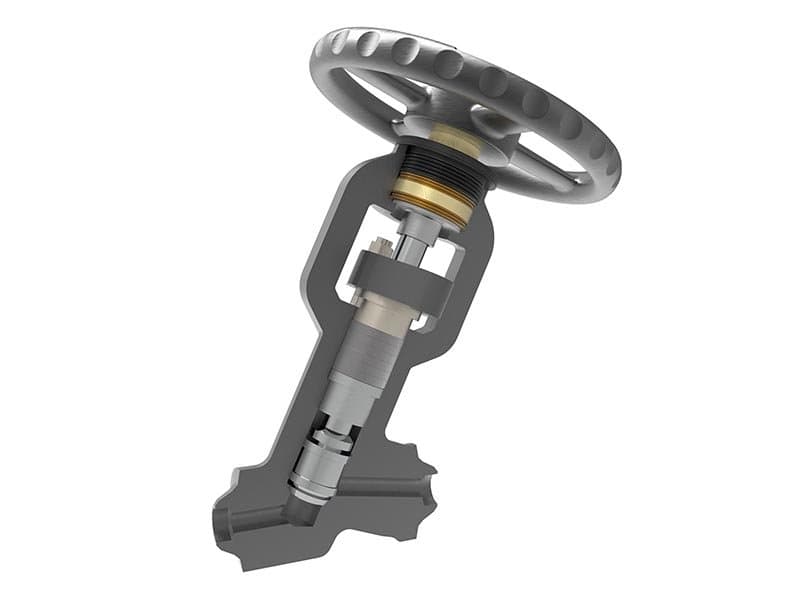
Một chi tiết, một đường rò rỉ — Không phải hai. Van cầu cao áp thông thường có một nắp bịt kín áp suất được bắt vít vào thân van. Mối nối nắp bịt kín đó là một đường rò rỉ. Vòng đệm xung quanh trục van cũng là một đường rò rỉ khác. Hai điểm rò rỉ tiềm tàng, hai hạng mục cần bảo trì, hai cách để hơi nước 25 MPa thoát ra ngoài khí quyển.
Van này được rèn nguyên khối — thân và nắp từ một phôi duy nhất. Không có mối nối nắp. Không có đệm nắp. Không có vòng đẩy phân đoạn. Con dấu duy nhất giữa quy trình và khí quyển là vòng đệm. Một đường rò rỉ thay vì hai. Trên đường ống hơi chính chôn bên trong lớp cách nhiệt, đó không phải là cải tiến nhỏ. Một mối nối nắp rò rỉ hơi bên trong lớp cách nhiệt sẽ không bị phát hiện cho đến khi lớp bọc bão hòa — lúc đó bề mặt làm kín đã bị xói mòn và bạn đang đối mặt với việc ngừng hoạt động toàn bộ. Thân rèn nguyên khối loại bỏ hoàn toàn kịch bản đó.
Tại sao Dạng Y, Không Phải Dạng Thẳng Van cầu dạng thẳng buộc hơi nước đi qua một góc 90° bên trong thân. Nhiễu loạn, xói mòn đế van do va đập, trở lực dòng chảy cao. Van dạng Y tạo góc dòng chảy 45°–60° so với trục trục van — hơi nước chảy qua với đường cong dần thay vì góc gấp. Cv cao hơn 30–50% so với dạng thẳng ở cùng kích thước, và đĩa van nâng hoàn toàn khỏi đường dòng chảy khi mở. Không có hơi nước va đập vào đế van trong quá trình vận hành. Trên đường xả hơi chính siêu tới hạn 600 MW, đó là sự khác biệt giữa việc mài lại đế van mỗi 18 tháng và để nguyên trong 4 năm.
Lớp Phủ Stellite và Trục Chỉ Nâng Lên Stellite 6 trên đế van, Stellite 21 trên đĩa van, độ dày lớp phủ ≥ 3 mm. Lớp phủ tiêu chuẩn thường là 1,5–2,0 mm — đủ cho dịch vụ thông thường, không đủ cho hơi siêu tới hạn mang hạt oxit ở tốc độ 30 m/s. Thêm một milimet kéo dài tuổi thọ mài mòn đế van khoảng 40%.
Trục van nâng lên mà không xoay. Trục van cầu thông thường xoắn khi nâng lên, làm cắt vòng đệm và tạo đường rò rỉ xoắn ốc. Trục chỉ nâng lên với ổ bi kim lăn bên ngoài đặt vòng đệm trong trạng thái nén thuần túy — không mài mòn xoắn, mô-men vận hành thấp hơn (khoảng một nửa so với thiết kế trục xoay), và không bị kẹt trục ở nhiệt độ cao.
Lựa Chọn Vật Liệu Theo Nhiệt Độ A105N: lên đến 425°C, xả đáy và xả nước Class 900 F11: lên đến 500°C, các điểm nhiệt độ trung gian F22: lên đến 550°C, cách ly hơi quá nhiệt trung gian — loại làm việc chính F91: lên đến 570°C+, cách ly hơi chính — cacbua ổn định vanadi mang lại độ bền phá hủy do từ biến gấp 2,5 lần F22 ở 571°C. Đối với tổ máy siêu tới hạn, không thể thiếu. F304/F316/F321: nước ngưng ăn mòn, lấy mẫu, dịch vụ cấp hạt nhân Nơi Van Này Khẳng Định Giá Trị Cách ly hơi chính (Class 2500, F91): vị trí xả, thông hơi và bypass trên đường ống đầu ra lò hơi Cách ly hơi quá nhiệt trung gian (Class 1500, F22): cách ly đường ống quá nhiệt nóng và lạnh Cách ly nước cấp (Class 1500–2500, F22/F91): bypass bình gia nhiệt, xả và cách ly lấy mẫu Xả đáy và xả nước (Class 900–1500, A105/F22): chu kỳ vận hành thường xuyên, môi trường ăn mòn — dịch vụ khắc nghiệt nhất đối với tuổi thọ lớp phủ đế van Lấy mẫu thiết bị đo (Class 1500–2500, F316): cách ly đường ống nhỏ cho điểm lấy mẫu, thường kết hợp với làm kín ống thổi Hỏi đáp Hỏi: Van này có thể bảo trì trực tuyến mà không cần tháo khỏi đường ống không?
Đáp: Có. Giảm áp theo quy trình LOTO, tháo cụm trục và đĩa van, mài đế van tại chỗ bằng dụng cụ chuyên dụng, thay vòng đệm, lắp lại. DN25 mất 2–3 giờ, DN50 mất 4–6 giờ. Không cần cắt đường ống.
Hỏi: Thân rèn nguyên khối so với nắp làm kín áp suất — sự khác biệt thực sự là gì?
A: Nắp van có gioăng kín áp suất có khớp nối giữa nắp và thân van sử dụng áp suất hệ thống để siết chặt gioăng. Nó hoạt động được, nhưng vẫn tạo ra một đường rò rỉ thứ hai bên cạnh gioăng đệm. Phương pháp rèn nguyên khối loại bỏ hoàn toàn khớp nối nắp van — một mảnh thép, một gioăng (vòng đệm), một bộ phận cần bảo trì. Ít đường rò rỉ hơn, ít lỗi hơn, bảo trì đơn giản hơn.
Q: Tôi có thể dùng nó để tiết lưu hay chỉ để cách ly?
A: Cả hai. Đường dòng chảy góc Y cho đặc tính tuyến tính hơn so với dạng thẳng, phù hợp cho tiết lưu gián đoạn như đường bypass gia nhiệt. Đối với điều chỉnh liên tục có độ giảm áp cao, nên dùng bộ phận điều khiển van có lồng dẫn hướng.
Q: Còn về phát thải bay hơi thì sao?
A: Đệm than chì với thiết kế thân van chỉ chuyển động lên đáp ứng tiêu chuẩn ISO 15848-1 cấp BH. Đối với yêu cầu phát thải bằng không (cấp AH), có sẵn phiên bản đệm ống thổi — xem Van Cầu Đệm Ống Thổi.
Thông Số Kỹ Thuật
| Size Range | 1/2"-4" |
| Pressure Class | Class900-2500 1680lb 2690lb 3000LB |
| Design Standard | ASME B16.34, API 600 |
| Body Materials | A105N, F11, F22, F91, F304, F316, F321 |
Tải xuống sản phẩm
| Phạm Vi Cỡ | 1/2"-4" |
| Lớp Áp Suất | Class900-2500 1680lb 2690lb 3000LB |
| Tiêu Chuẩn Thiết Kế | ASME B16.34, API 600 |
| Vật Liệu Thân Van | A105N, F11, F22, F91, F304, F316, F321 |
Cần Báo Giá?
Contact our engineering team for pricing and technical support on Van Cầu Điều Chỉnh Hơi Áp Suất Cao Kiểu Y.
Request a QuoteTìm Kiếm Thêm Giải Pháp?
Khám phá dải sản phẩm được thiết kế cho thách thức ngành của bạn.
Ball Valves
FLOWKS offers floating ball valve, trunnion mounted ball valve and top entry ball valve for oil & gas, petrochemical and power generation. Designed per API 6D, API 608 and ASME B16.34.
DBB Valves
FLOWKS Double Block & Bleed (DBB) valves provide dual isolation with bleed verification in a single compact body. Replacing traditional multi-valve installations, FLOWKS DBB valves reduce weight, space and potential leak paths. Available in bolted bonnet, all-welded and expanding gate designs per API 6D and API 607.
Gate Valves
FLOWKS gate valves for isolation service in piping systems. Flexible wedge, solid wedge, slab and expanding gate designs per API 600, API 602 and ASME B16.34.
Globe Valves
FLOWKS globe valves for throttling and isolation. Standard, angle, Y-pattern and bellows seal configurations per API 602 and BS 1868.