Bộ Lọc Kiểu Y
Giới thiệu Bộ Lọc Kiểu Y
Kích thước: 1/2" - 12" (DN15 - DN300)
Áp suất: Class 150 - 1500 / PN 10-250
Tiêu chuẩn: MSS SP-89, ASME B16.34, ASME B16.11 (đầu hàn ổ cắm / ren)
Vật liệu thân: A216 WCB, A351 CF8M, A182 F316 (rèn), A182 F304 (rèn), đồng thau/đồng cho các kích thước nhỏ.
Lưới lọc: Hình trụ bằng thép không gỉ đục lỗ, kích thước mắt lưới từ lỗ 1/64" đến lưới thô 1/4", có thể thêm lưới mịn bằng dây thép bên trong.
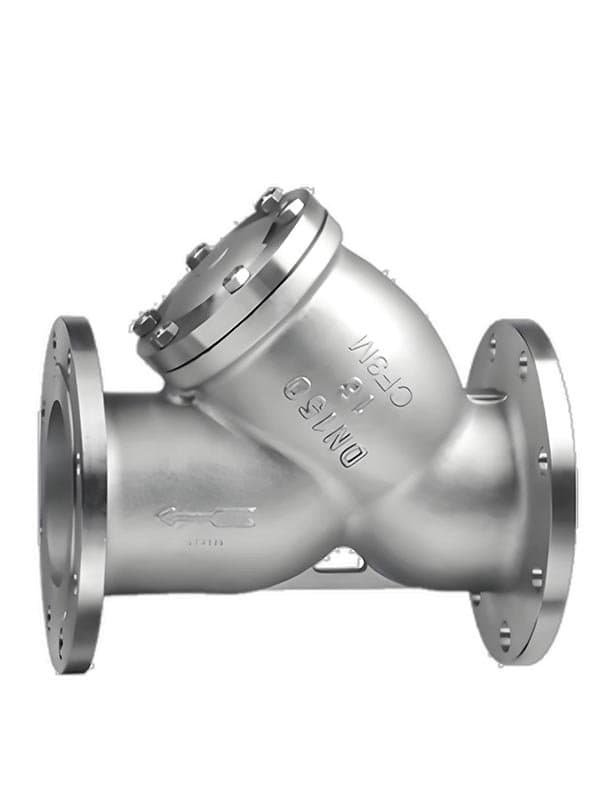
Thiết kế: Thân hình chữ Y—buồng lọc nghiêng tách nhánh khỏi dòng chảy chính. Lưới lọc nằm trong nhánh nghiêng, có thể tháo ra qua nút bắt bu lông hoặc nắp mặt bích ở đầu nhánh. Kết nối ren, hàn ống hoặc mặt bích.
Khi nào dùng Y-Strainer và khi nào không dùng Basket Strainer
Đường ống có đường kính nhỏ—1/2" đến 4"—không có đủ không gian cho basket strainer. Khoang thân của basket 2" đã cồng kềnh. Ở kích thước 1", nó không cân xứng với đường ống. Buồng lọc nghiêng của Y-strainer tách nhánh khỏi dòng chảy chính—nên thân ngắn hơn và nhẹ hơn ở cùng kích thước. Hình dạng nhỏ gọn đó khiến Y-strainer trở thành lựa chọn mặc định cho bảo vệ đường ống nhỏ.
Rồi đến áp suất. Hơi nước áp suất cao, khí nén, mạch thủy lực hoạt động ở áp suất mà buồng basket khó xử lý một cách kinh tế. Thân chữ Y rèn với lưới lọc hình trụ đạt Class 1500 mà không phải chịu chi phí cao của buồng basket nặng ở cùng cấp áp suất. Hình dạng đơn giản, ứng suất đơn giản hơn, chi phí thấp hơn ở áp suất cao—đó là lý do bạn thấy Y-strainer trên đường hơi, không phải basket strainer.
Lưới lọc là hình trụ—chất lỏng đi từ ngoài vào trong, cặn bẩn tích tụ bên trong. Bạn tháo nút bắt bu lông ở đầu nhánh để tiếp cận lưới lọc. Lỗ mở nhỏ hơn nắp trên của basket strainer, và bạn phải thao tác ở một góc. Kém tiện lợi hơn, nhưng cấp áp suất và kích thước nhỏ gọn khiến sự đánh đổi này đáng giá—Y-strainer phù hợp ở nơi basket strainer không thể lắp đặt.
Hơi nước, Khí nén và Thủy lực—Nơi Y-Strainer hoạt động
Đường ống hơi mang theo nước ngưng, rỉ sét, cặn đường ống—tất cả đều đi về van điều khiển của bạn. Y-strainer trên đường cấp sẽ chặn chúng trước khi đến van điều khiển, van giảm áp và bẫy hơi. Thép rèn chịu được nhiệt độ và áp suất. Lưới lọc inox chịu được ăn mòn. Kết nối mặt bích hoặc hàn ống kín chống rò rỉ hơi.
Khí nén hút bụi đường ống, dầu máy nén khí dư thừa, bụi chất hút ẩm. Bộ lọc chữ Y trên đường cấp khí bảo vệ các thiết bị khí nén và van điều khiển bằng khí nén. Kích thước nhỏ—từ 1/2" đến 2"—với đầu ren hoặc đầu hàn ổ cắm, bằng đồng thau hoặc thép rèn tùy thuộc vào yêu cầu chất lượng khí.
Mạch thủy lực là ứng dụng khắc nghiệt nhất. Lưới mịn—60 đến 100 mesh—bảo vệ van servo và van tỷ lệ khỏi các hạt mài mòn làm xước bề mặt van và gây hoạt động không ổn định. Thân F316 rèn chịu được chất lỏng mà không gây nhiễm bẩn. Thân chữ Y nhỏ gọn phù hợp với các cụm lắp đặt manifold chật hẹp nơi basket strainer không thể bố trí.
A: Bạn có thể sử dụng cho các kích thước từ 4 inch trở lên, khi kích thước đường ống phù hợp. Đối với các kích thước dưới 4 inch, thân giỏ lọc sẽ quá khổ so với đường ống và chi phí trên mỗi inch sẽ tăng lên. Bộ lọc chữ Y là lựa chọn thiết thực cho các đường ống nhỏ và áp suất cao.
A: Vâng—thép rèn (F304/F316, hoặc WCB cho hơi nước áp suất thấp hơn) là tiêu chuẩn cho hệ thống phân phối hơi nước. Chọn thân van phù hợp với cấp nhiệt độ và áp suất. Lưới lọc bằng thép không gỉ chịu được ăn mòn. Đảm bảo gioăng nút bịt nhánh phù hợp với hơi nước—PTFE hoặc than chì, không phải EPDM.
A: Loại ren (NPT/BSP) dùng cho các ứng dụng áp suất thấp, đường kính nhỏ, nơi cần tháo lắp – ví dụ như khí nén, nước. Loại hàn ống (socket-weld) dùng cho áp suất hoặc nhiệt độ cao hơn, nơi cần kết nối kín khí vĩnh viễn – ví dụ như hơi nước, thủy lực, hóa chất. Hàn ống có nghĩa là lắp đặt vĩnh viễn – bạn chỉ có thể bảo trì thông qua đầu nối nhánh.
A: Lưới lọc đục lỗ với kích thước lỗ nhỏ đến 1/64 inch. Lưới thép mịn từ 20 đến 200 mesh. Lưới mịn hơn sẽ nhanh bị tắc hơn. Chọn kích thước lưới phù hợp với dung sai của thiết bị phía sau – không nên lọc mịn hơn mức cần thiết.
A: Không—xả đáy giúp xả cặn nhẹ qua cổng có van. Nó kéo dài khoảng thời gian giữa các lần tháo lưới lọc hoàn toàn trên đường ống có tải trung bình. Tải nặng hoặc lưới bị nghẽn hoàn toàn vẫn cần tháo và làm sạch thủ công.
Thông Số Kỹ Thuật
| Size Range | 2“-24” |
| Pressure Class | Class150-2500 |
| Design Standard | ASME B16.34 |
| Body Materials | A216 WCB, A351 CF8M, B148 C95800 |
| Parent Standards | ASME B16.34, API 602, MSS SP-89 |
| Parent Size Range | 2" - 36" |
| Parent Pressure Class | Class 150 - 900 |
Tải xuống sản phẩm
| Phạm Vi Cỡ | 2“-24” |
| Lớp Áp Suất | Class150-2500 |
| Tiêu Chuẩn Thiết Kế | ASME B16.34 |
| Vật Liệu Thân Van | A216 WCB, A351 CF8M, B148 C95800 |
Cần Báo Giá?
Contact our engineering team for pricing and technical support on Bộ Lọc Kiểu Y.
Request a QuoteTìm Kiếm Thêm Giải Pháp?
Khám phá dải sản phẩm được thiết kế cho thách thức ngành của bạn.
Ball Valves
FLOWKS offers floating ball valve, trunnion mounted ball valve and top entry ball valve for oil & gas, petrochemical and power generation. Designed per API 6D, API 608 and ASME B16.34.
DBB Valves
FLOWKS Double Block & Bleed (DBB) valves provide dual isolation with bleed verification in a single compact body. Replacing traditional multi-valve installations, FLOWKS DBB valves reduce weight, space and potential leak paths. Available in bolted bonnet, all-welded and expanding gate designs per API 6D and API 607.
Gate Valves
FLOWKS gate valves for isolation service in piping systems. Flexible wedge, solid wedge, slab and expanding gate designs per API 600, API 602 and ASME B16.34.
Globe Valves
FLOWKS globe valves for throttling and isolation. Standard, angle, Y-pattern and bellows seal configurations per API 602 and BS 1868.