Flange Block-Bleed DBB
About
Quick Specs 2" - 20" (DN50 - DN500) Class 150 - 600 API 6D, API 607, ASME B16.34, ISO 15848 A216 WCB, A351 CF8M, A182 F51 PTFE, Nylon, PEEK, metal-to-metal (Stellite 6) Flanged end connections (RF/RTJ), bolted bonnet, double block & bleed in single body, manual or actuated operation
Flanged Connections——Where the Pipeline Specification Calls for Bolted End Connections
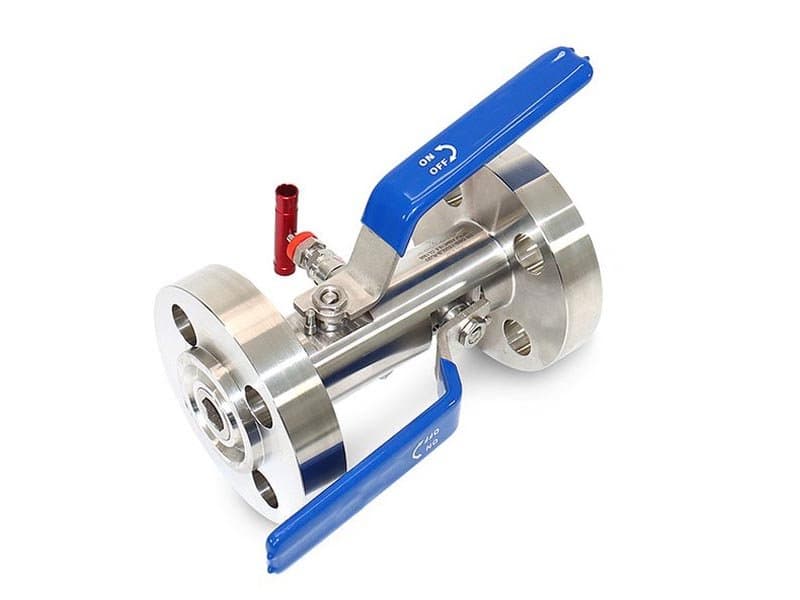
The flanged DBB valve serves the same isolation function as the trunnion DBB——two independent blocking seats with a verified bleed cavity between them——but with flanged end connections to the pipeline instead of butt-weld. Flanged connections (raised face or ring-type joint per ASME B16.5) are the standard pipeline connection method for Class 150 through Class 600 in many facility specifications——particularly on process piping systems where maintenance accessibility requires bolted connections that can be disassembled without cutting and re-welding the pipe. A butt-weld DBB valve (like the FLOWKS all-welded DBB series) permanently joins the valve to the pipeline——removal requires cutting the weld and re-welding a replacement. A flanged DBB valve unbolted from the pipeline flanges——four bolts per flange (on smaller sizes) or dozens on larger sizes, but the principle is the same: unbolt, remove, replace, re-bolt. No welding. No hot work permit. No radiographic inspection of replacement welds.
That bolted-connection accessibility is the primary reason facilities specify flanged DBB valves on Class 150-600 piping——the maintenance logistics of bolted connections are simpler, faster, and cheaper than welded connections on the pressure classes where flanged joints are structurally adequate. Above Class 600, butt-weld connections become the standard specification because flanged joints at Class 900 and above require heavier bolting, larger gasket surfaces, and higher bolt tensioning loads that push the flanged-connection maintenance complexity beyond practical limits for many installations. The FLOWKS flanged DBB covers Class 150 through Class 600——the pressure range where flanged connections serve the majority of process piping installations and where the bolted-connection maintenance advantage is most valuable.
Bolted Bonnet——Maintenance Access Without Removing the Valve from the Pipeline
The bonnet (the valve body section that contains the stem, packing, and the upper trunnion bearing) attaches to the body through a bolted bonnet-to-body connection——bolted, not welded. That bolted bonnet design provides maintenance access to the stem packing, the upper trunnion bearing, and the ball-and-seat assembly without removing the entire valve from the pipeline flanges. The maintenance procedure: unbolt the bonnet, lift the bonnet assembly (stem, ball upper pin, packing) out of the body, access the seat rings and ball for inspection or replacement, re-install the bonnet with new gasket, re-bolt, re-torque. The pipeline flanges stay bolted——the valve body stays connected to the pipeline throughout the maintenance operation. That in-line maintenance capability is the same principle that FLOWKS top-entry ball valves use for buried and welded pipeline service——the difference is that the flanged DBB's bolted bonnet serves flanged-connection installations where the pipeline flanges themselves are the primary disassembly point, and the bonnet bolts are the secondary access point for internal trim maintenance.
The bonnet-to-body gasket is a critical sealing element——it's the pressure boundary between the body cavity (exposed to pipeline pressure) and the bonnet cavity (exposed to packing and stem). The gasket specification matches the process media and temperature conditions: spiral-wound gaskets (stainless winding with graphite or PTFE filler) for general process service, metal-ring gaskets for high-temperature and fire-safe applications where spiral-wound gaskets would degrade under sustained thermal loading. The gasket gets replaced every time the bonnet gets unbolted——gaskets are one-time sealing elements, not reusable. That replacement requirement is standard maintenance practice across bolted-bonnet valve designs——you don't re-use a gasket on a pressure boundary, you install a new one every time the joint gets re-assembled.
Double Block and Bleed——Same Functional Architecture, Flanged Installation Package
The DBB isolation architecture inside the flanged body is identical to the trunnion DBB: two independent spring-loaded seats pressing against the trunnion-mounted ball from opposite sides, with a bleed cavity between them that vents through a designated port on the body. The upstream seat blocks process pressure from the active pipeline section. The downstream seat blocks pressure toward the isolated section. The bleed cavity verifies both seats simultaneously——zero pressure at the bleed confirms both blocking boundaries are holding. The functional...
Technical Specifications
| Size Range | 1/2"-4" |
| Pressure Class | Class 150 - 2500 |
| Design Standard | EEMUA PUB NO182 |
| Body Materials | A105、SS304、SS316、F51, F55, F53, Hastelloy C、Monel 400 |
| Parent Standards | API 6D, API 607, API 608, ASME B16.34, ISO 15848 |
| Parent Size Range | 2" - 24" |
| Parent Pressure Class | Class 150 - 1500 |
Product Downloads
| Size Range | 1/2"-4" |
| Pressure Class | Class 150 - 2500 |
| Design Standard | EEMUA PUB NO182 |
| Body Materials | A105、SS304、SS316、F51, F55, F53, Hastelloy C、Monel 400 |
Need a quote?
Contact our engineering team for pricing and technical support on Flange Block-Bleed DBB.
Request a QuoteLooking for more options?
Explore our complete range of industrial valves or contact us for custom solutions.
Ball Valves
FLOWKS offers floating ball valve, trunnion mounted ball valve and top entry ball valve for oil & gas, petrochemical and power generation. Designed per API 6D, API 608 and ASME B16.34.
Gate Valves
FLOWKS gate valves for isolation service in piping systems. Flexible wedge, solid wedge, slab and expanding gate designs per API 600, API 602 and ASME B16.34.
Globe Valves
FLOWKS globe valves for throttling and isolation. Standard, angle, Y-pattern and bellows seal configurations per API 602 and BS 1868.
Check Valves
FLOWKS check valves prevent reverse flow. Dual plate, swing, tilting disc and lift check designs per API 594 and BS 1868.