Product Range
Complete range of industrial valves for every application.
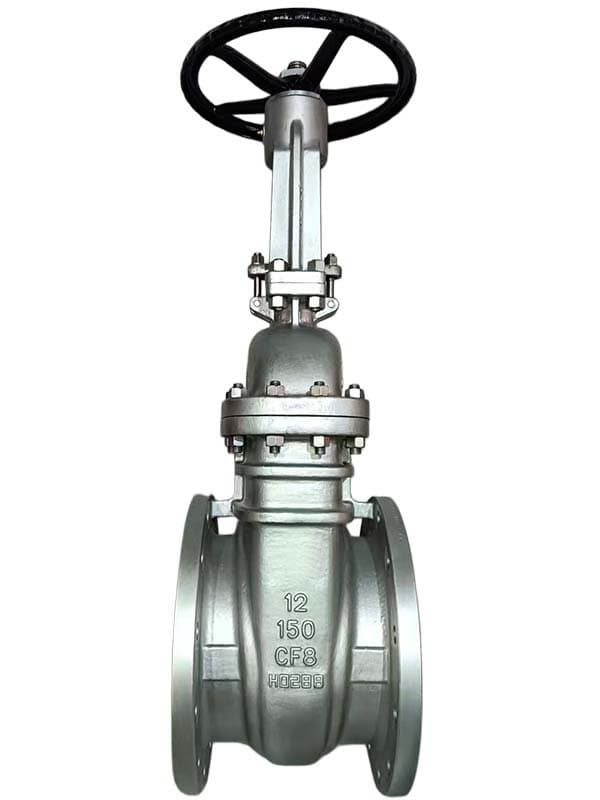
Handwheel Gate Valve
Quick Specs Size: 2" - 24" (DN50 - DN600) Pressure: Class 150 - 600 / PN 10-100 Standard: API 600, ASME B16.34, ASME B16.10, ASME B16.5 Body Materials: A216 WCB, A351 CF8M, A351 CF8 Wedge: Solid wedge (one-piece cast) Stem: OS&Y rising stem Bonnet: Bolted bonnet Ends: Flanged (ASME B16.5 RF or RTJ) The Valve You See Everywhere Walk through any refinery, any petrochemical plant, any power station — count the gate valves on the piping. Most of them look exactly like this one. Solid wedge. Rising stem. Bolted bonnet. Handwheel on top. This configuration isn't the most technically advanced gate valve design, and it's not the best choice for every service condition. But it's the one that gets specified over and over because three things matter more than sophistication: proven performance, availability, and cost. You need an isolation valve on a Class 150 water line — this is the one. You need to block off a section of Class 300 oil piping for maintenance — same valve. Steam below 350°F, general process shutdown points, utility headers — all of it runs on the solid wedge handwheel gate valve. It's the workhorse, not the thoroughbred. Why the Rising Stem Tells You Everything The OS&Y stem does one thing that engineers appreciate in the field — it shows you the valve position without any indicator, any actuator feedback, or any tag. Stem up above the handwheel means open. Stem down at the handwheel level means closed. You can walk down a pipe rack at 6 AM, glance at the stem height on each valve, and know the line status before you check the control room display. That visual indication is why OS&Y dominates over rising-stem-with-rising-handwheel designs where the handwheel climbs the stem as the valve opens. When the handwheel moves with the stem, you can't tell the stem position independently — the wheel could be partway up and you'd have no way to distinguish quarter-open from fully open. OS&Y separates the handwheel from the stem movement. The wheel stays in place, the stem moves through it. Clear, unambiguous, no interpretation required. The handwheel itself is the simplest actuation you can put on a valve. No air supply, no electricity, no actuator mounting bracket. You grab the wheel and turn it. The stem nut rotates inside the yoke, the stem threads through the nut, and the wedge travels up or down. Direct mechanical operation — the kind that still works when the power goes out and the instrument air compressor trips. What the Solid Wedge Can't Do Here's the limitation, and it's important enough that you should think about it before specifying this valve for steam or high-temperature cycling service. The solid wedge is one piece of cast metal — no flexibility, no expansion compensation. When the valve body heats up, the seat rings expand outward because they're part of the body. The wedge expands too, but if the body and wedge seating surfaces use different materials or overlays, the expansion rates don't match. The body seats spread wider than the wedge can accommodate, and the wedge gets trapped between them. The valve won't close, or it closes but won't re-open without forcing the handwheel until something breaks. This binding doesn't happen at moderate temperatures because the expansion difference is small — a few thousandths of an inch that the machining tolerances absorb. But at steam temperatures above 350°F, or in services where the valve cycles between hot and cold repeatedly, the cumulative expansion mismatch exceeds the clearance between the wedge and seats. That's when you need a flexible wedge — each wing deflects independently to compensate for the differential expansion. For water, oil, gas, and moderate-temperature steam at Class 150-300, the solid wedge handles the service conditions without problems. The majority of isolation points in a typical process plant fall into that category, which is why this valve remains the default specification. Bolted Bonnet — Proven and Maintainable The bolted bonnet is the standard closure for Class 150-600. The bonnet bolts to the body with a gasket between them. When you need to access the internals — replace the seat rings, re-machine the wedge seating faces, change the stem packing — you unbolt the bonnet, lift it off, and the valve is open for maintenance. Simple procedure, standard tools, no special training required. The gasket between bonnet and body is the pressure boundary seal. It compresses under bolt preload and maintains the seal across the full operating pressure range. At Class 150-300, the bolt forces are manageable and the gasket design is straightforward. At Class 600, the bolts get larger and the gasket needs more compression, but the design still works — it just requires careful bolt torquing during assembly. FAQ A: Not recommended. The solid wedge doesn't compensate for thermal expansion mismatch between body...
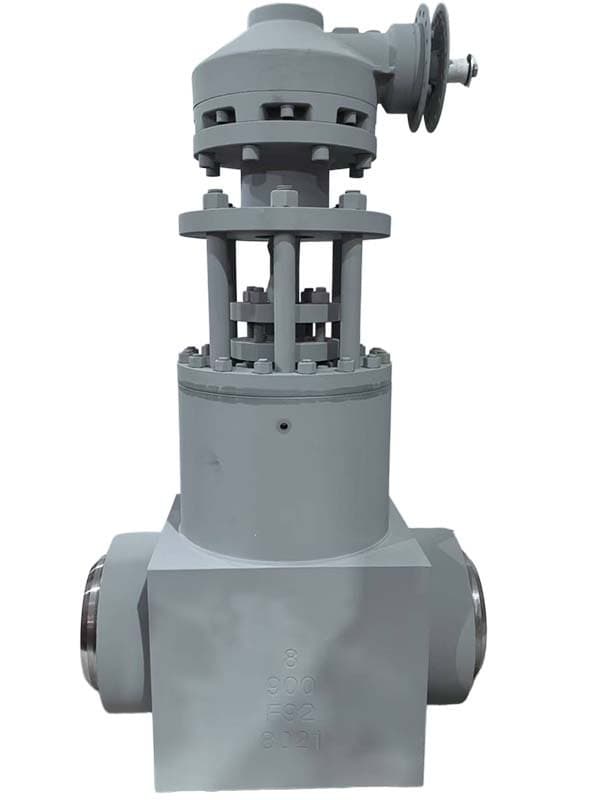
Forged Steel Self-Sealing Wedge Gate Valve
Quick Specs Size: 2" - 12" (DN50 - DN300) Pressure: Class 600 - 2500 / PN 100-420 Standard: API 602, ASME B16.34, manufacturer-specific for pressure-seal bonnet Body Materials: A182 F22, A182 F91, A182 F316, A182 F304 (all forged) Wedge: Flexible wedge Bonnet: Pressure-seal (self-sealing) Stem: OS&Y rising stem with handwheel Ends: Butt weld or flanged Two Things That Change Everything at High Pressure This valve solves two problems that appear above Class 600 — problems that bolted-bonnet cast-body gate valves can't handle. First, the bonnet seal. Second, the body integrity. Together, they make this valve the standard specification for power station main steam, reheater isolations, high-pressure feedwater, and petrochemical high-pressure service where the operating conditions exceed what a standard gate valve can safely contain. Pressure-Seal Bonnet — the Seal That Gets Stronger Under Pressure At Class 150-300, a bolted bonnet works fine. The internal pressure pushes the bonnet upward, and the bonnet bolts hold it down against the gasket. Manageable forces, reasonable bolt sizes, straightforward assembly. At Class 600 and above, the upward force on the bonnet becomes enormous. The bolts have to be massive — think 2-inch-diameter studs with hydraulically tensioned nuts on Class 1500 and 2500 valves. That hardware is expensive, difficult to torque correctly in the field, and creates maintenance problems every time you need to disassemble the valve. The pressure-seal bonnet eliminates the bolt problem entirely. Instead of bolts holding the bonnet against the body, the internal line pressure does the work. Inside the bonnet-to-body joint, a segmented seal ring sits between the bonnet skirt and the body bore. When pressure enters the valve, it pushes upward against the bonnet and simultaneously compresses the seal ring against the body wall. Higher pressure compresses the seal harder. At Class 2500 operating pressure, that seal ring is compressed so tightly between the bonnet and body that leakage through the joint becomes physically impossible — the pressure that could cause leakage is the same pressure that creates the sealing force. The bonnet is held in position by a retaining ring or threaded connection, not by the bolts you see on the outside. Those bolts serve one purpose — low-pressure seating during startup when the line pressure hasn't reached the threshold where the seal ring compresses effectively. Once the valve is at operating pressure, those bolts are unloaded. They're not carrying the seal force. The line pressure is. This design has a maintenance advantage that experienced valve technicians understand immediately — there are no gaskets to replace and no bolt torquing procedures to follow during reassembly. The seal ring is a metal component that gets inspected and re-lapped if needed. The bonnet re-installs by dropping it into the body bore and engaging the retaining ring. When pressure comes back up, the seal re-establishes itself automatically. Forged Body — No Porosity, No Leaks at Class 2500 Cast valve bodies at Class 600 and below work reliably. The casting process produces sound metal with acceptable quality levels for those pressure ratings. But at Class 600-2500, casting porosity becomes a risk you can't accept. Castings can contain microscopic voids — trapped gas pockets, shrinkage cavities, inclusion defects — that are invisible on the surface but leak under sustained high-pressure loading. A porosity defect in a Class 2500 valve body wall would leak immediately when the valve goes into service. The wall thickness at those ratings is calculated with minimal margin — there's no extra metal to absorb a void. Forging eliminates the porosity problem. The forging process compresses the metal under massive pressure, closing any voids and aligning the grain structure into a dense, uniform matrix. A forged body has no internal cavities, no gas porosity, no shrinkage defects. The metal is solid throughout the wall section. At Class 600-2500, that solid-body integrity is the reason forged construction is the standard — not an upgrade option, but the baseline requirement. The forged alloys for this valve are selected for their specific service conditions. A182 F22 (2.25% Cr-1% Mo) for high-temperature service where creep resistance matters. A182 F91 (9% Cr-1% Mo-V) for the highest temperature applications — main steam and reheater lines in power stations operating at 1000°F and above. The vanadium addition in F91 provides superior long-term creep strength compared to F22. A182 F316 and F304 for corrosive service where the stainless chemistry resists the process fluid attack. Flexible Wedge — Required at These Temperatures At Class 600-2500, the operating temperatures are high enough that thermal expansion binding is a certainty with a solid wedge — not a possibility, a...
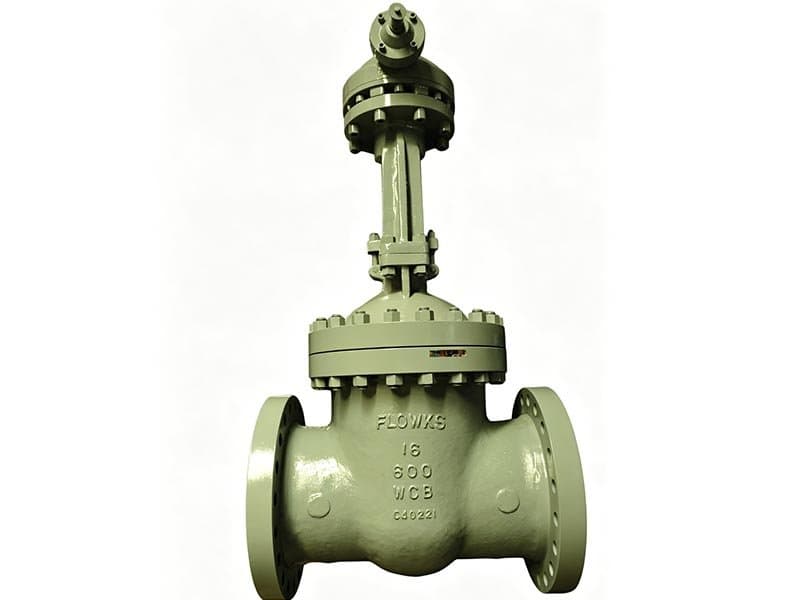
Flexible Wedge Gate Valve
Quick Specs Size: 2" - 24" (DN50 - DN600) Pressure: Class 150 - 600 / PN 10-100 (cast), Class 600 - 2500 / PN 100-420 (forged, pressure-seal) Standard: API 600 (cast), API 602 (forged), ASME B16.34 Body Materials: A216 WCB, A351 CF8M, A351 CF8 (cast, Class 150-600); A182 F22/F91/F316/F304 (forged, Class 600-2500) Wedge: Flexible wedge — central hub with deflectable wings Bonnet: Bolted bonnet (Class 150-600) or pressure-seal (Class 600-2500) Stem: OS&Y rising stem with handwheel Ends: Flanged or butt weld The Wedge That Bends Instead of Binding The flexible wedge solves one specific problem — thermal binding. It's a focused solution, not a general upgrade. If your service conditions don't cause thermal expansion mismatch, a solid wedge works just as well and costs less. But if your valve operates in steam above 350°F, hot oil processing, or any service where the temperature swings between hot and cold during startup, shutdown, or cycling operation, the flexible wedge is the design that keeps the valve functional when the solid wedge would lock up. Here's what happens without the flexibility. The valve body heats up. The seat rings — machined into or inserted into the body — expand outward because they're thermally coupled to the body metal. The wedge also expands, but the seating faces on the wedge may have a different overlay material than the body seats. Stainless overlay on carbon steel seats, stellite hard-facing on alloy seats — the overlay material has a different coefficient of thermal expansion than the base metal. The wedge grows at one rate, the seat rings spread at another. When the seats spread wider than the wedge can reach, the wedge drops into the gap and can't seal. When the seats spread wider than the wedge can fit, the wedge gets trapped and can't move at all. The flexible wedge prevents both failures. The central hub connects two wing sections that are thinner than the hub — that reduced thickness gives each wing a small amount of spring deflection. Each wing can move independently toward or away from its corresponding seat ring by about 0.5 to 1mm. When the left seat ring expands more than the right (asymmetric heating from uneven steam distribution or pipe orientation), the left wing deflects outward to follow the expanded seat while the right wing stays in position. The hub holds the two wings together mechanically, but the wings aren't rigidly locked to each other — they flex independently within the deflection range. That same flexibility handles pipe stress. When the piping system loads the valve body with bending forces from thermal expansion of the pipe runs, the body distorts slightly. The seat rings shift out of their original parallel alignment. A solid wedge fights the distortion — it's trying to seat against rings that are no longer parallel, and it can't conform. The flexible wings adjust to the distorted geometry, each wing angling slightly to maintain seat contact across the full seating face width. When You Need It — and When You Don't Steam service above 350°F — yes, specify flexible wedge. That's the primary application, and it's where the thermal binding risk is highest. Power stations, industrial steam distribution, process heating systems — all of it runs on flexible wedge gate valves because the operating temperatures and the temperature cycling during startup create expansion conditions that solid wedges can't handle. Hot oil and gas processing where the fluid temperature exceeds 350°F — yes. Refinery process lines, crude oil heating systems, high-temperature chemical processing — the same expansion mismatch applies, even though the fluid isn't steam. Cycling operation where the valve goes from ambient to operating temperature repeatedly — yes. Startup and shutdown cycles create the worst conditions for solid wedges because the expansion differential changes direction during each cycle. The wedge seats at operating temperature, then the valve cools and the seats contract. If the wedge stays in the closed position during cooling, it can bind on the contracting seats. The flexible wedge accommodates that contraction without losing seat contact. General water, oil, and gas service at moderate temperatures below 350°F — you don't need the flexible wedge. A solid wedge handles those conditions without binding. The cost difference between solid and flexible wedge at cast sizes is minimal — about 5-10% on the valve price. But if the service conditions don't require it, that extra cost is unnecessary. Specify flexible wedge when the service demands it, not as a default upgrade. At forged sizes for Class 600-2500, flexible wedges are the default — not an option. Thermal binding at those operating temperatures and pressures isn't a risk you accept for cost savings on the wedge. Cast or Forged — the Body Matches the Pressure This valve comes in two body...
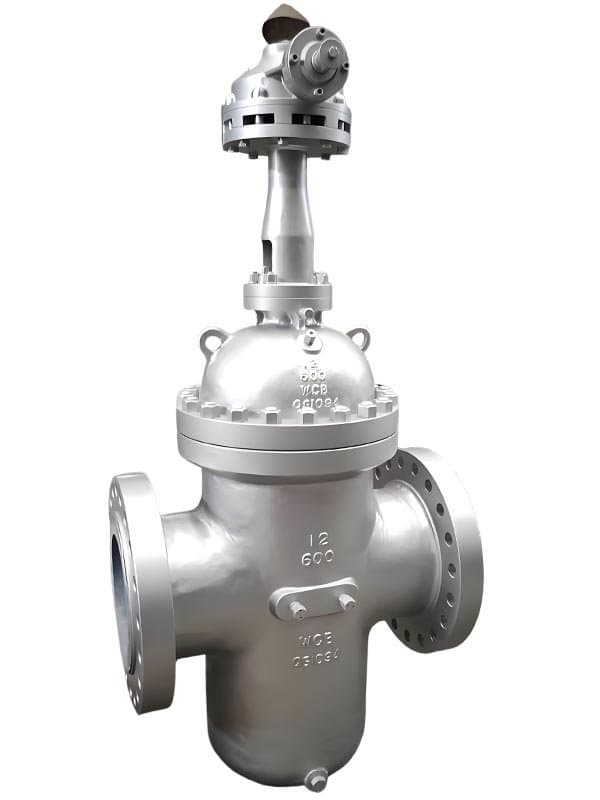
Flat Gate Valve
Quick Specs Size: 2" - 48" (DN50 - DN1200) Pressure: Class 150 - 900 / PN 10-150 Standard: API 6D, manufacturer-specific for flat/slab gate designs Body Materials: A216 WCB, A351 CF8M, forged steel (A182 F316/F22), all-welded body available Gate: Flat slab gate (single plate) or expanding gate (two-plate mechanical seal) Seat: Metal-to-metal (parallel seat rings) or soft-seated (elastomer/PTFE insert) Bonnet: Bolted bonnet or pressure-seal Design: Through-conduit full-bore — gate has bore-sized hole aligning with pipe when open Full Bore Means the Pig Goes Through Flat gate valves — also called through-conduit slab gate valves — exist for a reason that wedge gate valves can't address. When the valve is open, the gate plate has a hole that matches the pipe bore diameter exactly. That hole aligns with the pipeline bore, and the gate becomes part of the unobstructed flow path. No reduction in cross-section, no pocket areas where debris collects, no flow restriction that costs pumping energy over years of continuous operation. That full-bore passage is why flat gate valves dominate pipeline isolation. Pipelines get inspected by sending pigs through the line — inspection tools, cleaning tools, smart pigs that measure wall thickness and detect corrosion. The pig travels through the pipe bore pushed by product flow at line velocity. If a gate valve restricts the bore even slightly, the pig hits the restriction and stops. Or it gets damaged. Or it gets stuck inside the valve body, which is the kind of problem that shuts down a pipeline section for days and costs hundreds of thousands of dollars in lost throughput. Solid wedge gate valves at some sizes have reduced-port bodies — the bore through the body is smaller than the nominal pipe diameter. That reduction doesn't matter for most process isolation where you're just blocking flow, not running pigs. But for pipeline service, reduced bore is unacceptable. The through-conduit flat gate valve has zero bore reduction in the open position. The pig passes through the valve body as if the valve weren't there. Full diameter, full flow area, no obstruction. The second reason full bore matters — crude oil and natural gas pipelines operate continuously for years. Pressure drop through a partially restricted valve accumulates pumping energy cost over that operating period. A reduced-port gate valve on a 36-inch natural gas transmission line might create a pressure drop of 2-3 psi at operating flow rates. That doesn't sound like much, but across a 200-mile pipeline with dozens of isolation valves, the cumulative pressure drop adds compressor fuel cost that runs into six figures annually. Through-conduit flat gates eliminate that restriction entirely. Slab Gate vs Expanding Gate — Two Ways to Seal The slab gate is a single flat plate that slides vertically between two parallel seat rings. When the plate drops between the seats, the solid section blocks the bore. When the plate rises, the bore-sized hole in the plate aligns with the pipeline and flow passes through unobstructed. Simple design, few moving parts, reliable operation in pipeline service. The sealing mechanism for a slab gate relies on line pressure pushing the gate plate against the downstream seat ring. The upstream seat is in contact with the plate, but the primary seal happens on the downstream side where line pressure forces the plate against the seat face. That pressure-activated seal works well at normal operating pressures. At low differential pressure — near-zero line pressure during startup, or pressure equalization across the valve during bypass operation — the sealing force is minimal and the slab gate may not achieve bubble-tight shutoff. The expanding gate solves that low-pressure sealing limitation. Two plates connected by a wedge mechanism — as the gate descends to the closed position, the internal wedge pushes the two plates outward against the parallel seat rings. The plates expand mechanically, independent of line pressure. When the gate reaches full closure, both plates are pressed firmly against their respective seat rings by the wedge mechanism, creating a seal that doesn't depend on line pressure to function. Bubble-tight shutoff at any pressure, including zero. The expanding gate costs more and adds mechanical complexity — two plates, a wedge mechanism, more seal surfaces to maintain. But for pipeline isolation where bubble-tight shutoff is a regulatory requirement — natural gas transmission lines, hazardous liquid pipelines subject to DOT compliance — the expanding gate provides the sealing certainty that slab gates can't guarantee at low or zero differential pressure. Parallel Seats — Not Tapered All flat gate valve designs use parallel seat rings, not tapered wedge seats. The seat rings are parallel to each other and the gate plate slides between them in a straight...
Technical Overview
Gate valves isolate — they open to let full flow pass through the bore unobstructed, or close to block it completely. They are not throttling valves. A partially-open gate valve has the wedge or gate sitting in the flow stream, which causes vibration, seat erosion, and noise. Specify a globe or control valve for throttling; specify a gate valve for on/off isolation. FLOWKS manufactures four gate valve configurations covering the full range of process piping sizes, pressures, and temperatures. Handwheel gate valves with solid wedge and bolted bonnet are the default isolation valve for general process piping — Class 150-600 at 2"-24", simple manual operation, rising-stem visual position indication, proven and affordable. Forged steel self-sealing wedge gate valves with pressure-seal bonnet and forged body deliver zero-porosity integrity at Class 600-2500 where bolted bonnets become structurally impractical and casting defects unacceptable — the line pressure itself compresses the seal ring tighter as pressure rises. Flexible wedge gate valves solve thermal binding — the two wing sections deflect independently to accommodate seat-ring expansion, pipe stress, and body distortion that would trap a solid wedge between expanded seats at high temperature. Flat gate valves (through-conduit slab/expanding gate) provide full-bore unobstructed passage when open — the bore-sized hole in the gate plate aligns with the pipeline for zero flow restriction, enabling pipeline pigging and minimizing pressure drop on long crude/gas transmission lines.
FLOWKS gate valves provide on/off isolation across the full range of industrial piping sizes, pressures, and temperatures. Handwheel gate valves with solid wedge and bolted bonnet cover general process isolation at Class 150-600 from 2"-24" — the workhorse configuration for oil & gas, petrochemical, water, and moderate-temperature steam service with rising-stem visual position indication. Forged steel self-sealing wedge gate valves with pressure-seal bonnet deliver high-pressure, high-temperature isolation at Class 600-2500 — forged body eliminates casting porosity, pressure-seal bonnet uses line pressure as the sealing force instead of massive bonnet bolts, flexible wedge compensates for thermal expansion binding at operating temperatures above 350°F. Flexible wedge gate valves prevent thermal seat binding in steam and cycling-temperature service — each wing deflects independently to maintain seat contact when body expansion distorts the seat geometry. Flat gate valves with through-conduit design provide full-bore unobstructed passage for pipeline pigging and zero-pressure-drop isolation on crude oil, natural gas, and product pipelines from 2"-48" — slab gate for basic isolation, expanding gate for bubble-tight shutoff at low differential pressure.
Product Downloads
Technical Articles
Read our latest technical articles and industry insights.


Engineering Calculators
Free online engineering calculators for valve selection and sizing.
Industries Using This Product
Applications across various industrial sectors.
Oil & Gas
Upstream, midstream and downstream valve solutions meeting API 6D, API 607 fire-safe requirements. From wellhead to refinery, FLOWKS provides reliable valve solutions for the most demanding oil and gas applications.
Power Generation
High-temperature and high-pressure valves for fossil fuel, nuclear, and renewable energy plants. FLOWKS gate valves and globe valves are proven in power generation service worldwide.
Refining
Heavy-duty valves designed for the extreme conditions of petroleum refining. FLOWKS valves handle high temperatures, corrosive media, and erosive service in refineries globally.
Looking for more options?
Explore our complete range of industrial valves or contact us for custom solutions.
Ball Valves
FLOWKS offers floating ball valve, trunnion mounted ball valve and top entry ball valve for oil & gas, petrochemical and power generation. Designed per API 6D, API 608 and ASME B16.34.
DBB Valves
FLOWKS Double Block & Bleed (DBB) valves provide dual isolation with bleed verification in a single compact body. Replacing traditional multi-valve installations, FLOWKS DBB valves reduce weight, space and potential leak paths. Available in bolted bonnet, all-welded and expanding gate designs per API 6D and API 607.
Globe Valves
FLOWKS globe valves for throttling and isolation. Standard, angle, Y-pattern and bellows seal configurations per API 602 and BS 1868.
Check Valves
FLOWKS check valves prevent reverse flow. Dual plate, swing, tilting disc and lift check designs per API 594 and BS 1868.