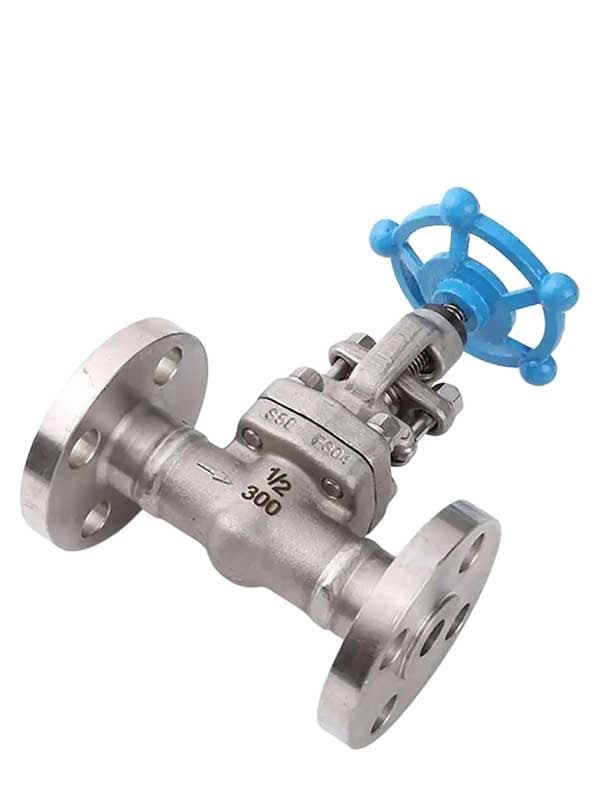
Giới thiệu Van C4-00Cr14Ni14Si4
Tại sao thép C4 sống sót trong axit nitric 98% khi mọi thứ khác thất bại
Axit nitric đậm đặc (trên 95%, đặc biệt ở 98%+) là một thách thức ăn mòn kỳ lạ: nó oxy hóa mạnh đến mức thụ động hóa hầu hết thép không gỉ — nhưng chỉ trong thời gian ngắn. Vấn đề đến từ vùng quá thụ động. Ở nồng độ và nhiệt độ sản xuất, nitric đẩy thép không gỉ qua vùng thụ động vào sự hòa tan quá thụ động, nơi màng oxit bảo vệ tự oxy hóa và kim loại ăn mòn ở tốc độ không thể chấp nhận. 304L và 316L thất bại trong HNO3 98% ở nhiệt độ sản xuất không phải vì chúng không thể hình thành màng thụ động, mà vì màng đó hòa tan trong thế oxy hóa cực đoan.
Hàm lượng silicon 3–5% của thép C4 tạo nên sự khác biệt lớn. Silicon hình thành lớp bề mặt giàu SiO2 ổn định trong điều kiện quá thụ động (transpassive) nơi Cr2O3 bị phân hủy. Lớp oxit silicon đó trơ về mặt hóa học trong axit nitric đặc — không hòa tan, không oxy hóa thêm, và không cho phép axit nitric tiếp cận kim loại bên dưới. Kết quả: tốc độ ăn mòn của thép C4 trong axit nitric sôi 98% đo được dưới 0,1 mm/năm, trong khi 304L đo được ở mức milimét mỗi năm.
Ngành công nghiệp sản xuất axit nitric Trung Quốc đã phát triển thép C4 đặc biệt cho ứng dụng này trong những năm 1980 — đây là thành tựu nghiên cứu và phát triển cấp quốc gia đạt giải thưởng khoa học của Bộ Quốc phòng. Phương pháp magie nitrat để cô đặc axit nitric (quy trình chủ đạo trong các nhà máy axit nitric Trung Quốc) vận hành ở điều kiện làm thất bại mọi loại thép không gỉ tiêu chuẩn phương Tây. Van C4 trong các vòng cô đặc đó chạy được 8–12 năm. Đó không phải là giai thoại — đó là hồ sơ vận hành tích lũy qua hàng chục nhà máy.
Lợi thế khác so với các giải pháp thay thế: nhôm nguyên chất xử lý axit nitric đặc khá tốt, nhưng độ bền cơ học của nó quá thấp nên không thể chế tạo thân van áp lực chức năng từ nó. Gang đúc silicon cao (Durcomet 5, khái niệm hóa học tương tự) có khả năng chống ăn mòn tốt nhưng giòn — khả năng chịu va đập kém, và sốc nhiệt làm nứt vật đúc. Thép C4 mang lại cả khả năng chống ăn mòn lẫn tính toàn vẹn cơ học để chế tạo một van áp lực thực thụ.
Những Đánh Đổi Hạn Chế Việc Ứng Dụng Rộng Rãi Hơn Của Thép C4
Không phải là hợp kim chống ăn mòn vạn năng. Lớp oxit ổn định bằng silicon của C4 vượt trội trong điều kiện axit oxy hóa, cụ thể là axit nitric đặc. Trong môi trường axit khử (axit sulfuric loãng, axit clohydric), nó không có lợi thế nào so với thép không gỉ tiêu chuẩn — và trong môi trường chứa fluoride, nó dễ bị tổn thương như mọi hợp kim chứa silicon khác. C4 là chuyên gia ngách, không phải là nâng cấp tổng quát.
Không có chỉ định ASTM/UNS chính thức. Đây là vấn đề thực tế đối với các nhà đặc tả kỹ thuật quốc tế. Thép C4 có nguồn gốc từ phát triển luyện kim Trung Quốc và được tiêu chuẩn hóa theo GB (tiêu chuẩn quốc gia Trung Quốc). Các công ty kỹ thuật phương Tây làm việc trên các dự án axit nitric tại Trung Quốc có thể đặc tả nó theo chỉ định GB, nhưng không có tiêu chuẩn ASTM tương đương để tham chiếu cho các dự án ngoài Trung Quốc. Điều đó hạn chế việc áp dụng toàn cầu mặc dù vật liệu đã được chứng minh hiệu quả.
Tìm nguồn cung quốc tế khó khăn. Hầu hết sản xuất thép C4 và chế tạo van diễn ra tại các xưởng đúc chuyên dụng của Trung Quốc. Các đội ngũ thu mua ở châu Âu hoặc Bắc Mỹ đối mặt với lựa chọn nhà cung cấp hạn chế và chuỗi logistics dài. Kiểm định chất lượng đòi hỏi hoặc kiểm tra tại chỗ hoặc mối quan hệ đã thiết lập với các nhà cung cấp Trung Quốc hiểu được kỳ vọng tài liệu phương Tây.
Hàn đòi hỏi vật liệu độn cụ thể. Vật liệu độn thép không gỉ tiêu chuẩn (308, 316) không khớp với hàm lượng silicon cao của C4. Thực hành khuyến nghị là sử dụng điện cực hàn silicon 奥0.12 (chỉ định Trung Quốc) — về cơ bản là vật liệu độn austenit silicon cao tương ứng. Tìm vật liệu độn này ngoài Trung Quốc rất khó. ER309Si (chỉ định AWS) là xấp xỉ phương Tây hợp lý, nhưng hàm lượng silicon thấp hơn mức tối ưu. Ủ hòa tan sau hàn ở 1050°C là bắt buộc để khôi phục đầy đủ khả năng chống ăn mòn.
Khó khăn gia công. Hàm lượng silicon 3–5% làm thép C4 cứng hơn và mài mòn hơn thép không gỉ austenit tiêu chuẩn. Tuổi thọ dụng cụ ngắn hơn khoảng 40–50% so với các thao tác gia công 304/316. Mảnh cắt carbide với hình dạng hình học phù hợp là bắt buộc. Các xưởng quen với thép không gỉ tiêu chuẩn sẽ đánh giá thấp chi phí dụng cụ và độ lệch kích thước.
Đặc Tả Van C4 Cho Dịch Vụ Axit Nitric
Cho sản xuất axit nitric đặc (95–98%): van cổng hoặc van cầu thép C4, Class 150–300, theo đặc tả đúc GB 2100. Đây là ứng dụng đã được chứng minh. Xác minh hồ sơ theo dõi của nhà cung cấp trong các nhà máy cô đặc axit nitric thực tế — không chỉ dữ liệu ăn mòn phòng thí nghiệm.
Cho trạm bồn chứa và vận chuyển axit nitric: C4 hoạt động được, nhưng 304L cũng xử lý axit nitric đặc ở nhiệt độ môi trường đầy đủ trong các ứng dụng vận chuyển và lưu trữ nơi axit không nóng. Sử dụng C4 tại các điểm nơi axit ở hoặc gần nhiệt độ quy trình — đầu...
Thông Số Kỹ Thuật
| Parent Standards | ASME B16.34, NACE MR0175 |
| Parent Size Range | 2" - 24" |
| Parent Pressure Class | Class 150 - 1500 |
Tải xuống sản phẩm
Cần Báo Giá?
Contact our engineering team for pricing and technical support on Van C4-00Cr14Ni14Si4.
Request a QuoteTìm Kiếm Thêm Giải Pháp?
Khám phá dải sản phẩm được thiết kế cho thách thức ngành của bạn.
Ball Valves
FLOWKS offers floating ball valve, trunnion mounted ball valve and top entry ball valve for oil & gas, petrochemical and power generation. Designed per API 6D, API 608 and ASME B16.34.
DBB Valves
FLOWKS Double Block & Bleed (DBB) valves provide dual isolation with bleed verification in a single compact body. Replacing traditional multi-valve installations, FLOWKS DBB valves reduce weight, space and potential leak paths. Available in bolted bonnet, all-welded and expanding gate designs per API 6D and API 607.
Gate Valves
FLOWKS gate valves for isolation service in piping systems. Flexible wedge, solid wedge, slab and expanding gate designs per API 600, API 602 and ASME B16.34.
Globe Valves
FLOWKS globe valves for throttling and isolation. Standard, angle, Y-pattern and bellows seal configurations per API 602 and BS 1868.