Giới thiệu Van Màng Monel
Tại Sao Van Màng Niken Nguyên Chất Thống Trị Trong Các Nhà Máy Xút Ăn Da
Nếu bạn từng tham quan một nhà máy sản xuất xút ăn da (NaOH), bạn sẽ nhận thấy một điều: các van trong vòng tuần hoàn xút 50% gần như luôn là van màng niken nguyên chất. Không phải vì ai đó chọn theo xu hướng — mà vì lịch sử hư hỏng của mọi vật liệu thay thế đã chứng minh điều đó.
Thép không gỉ 316L xử lý được xút loãng ở nhiệt độ phòng. Đẩy lên nồng độ 50% trên 150°C — chính xác là điều kiện vận hành của các nhà máy xút công nghệ màng ngăn — và 316L sẽ phát triển nứt do ăn mòn ứng suất trong vòng vài tháng. Niken 200? Nó chạy hàng năm trời trong cùng điều kiện dịch vụ. Khả năng chống nứt do ăn mòn ứng suất trong môi trường kiềm của niken không phải là mẹo hợp kim — đó là tính chất cơ bản của chính kim loại này.
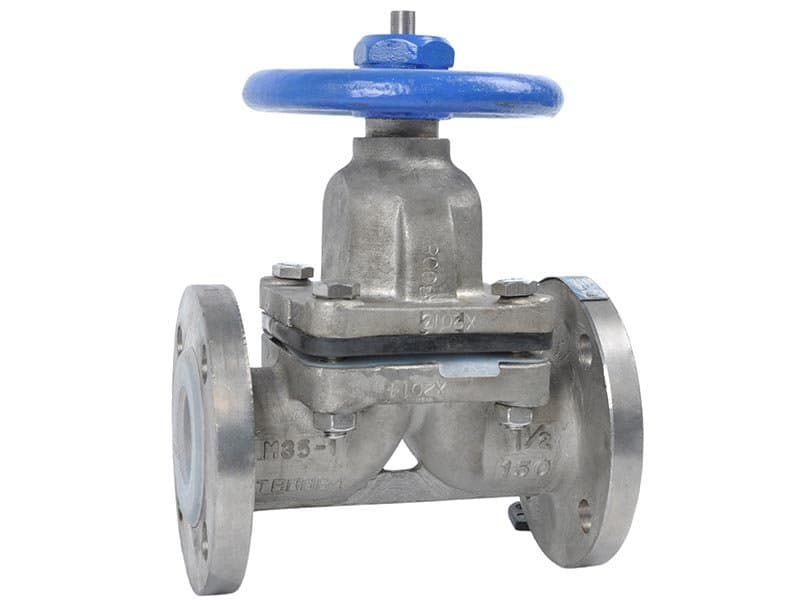
Cấu hình van màng kết hợp tự nhiên với niken nguyên chất vì van màng cô lập chất lỏng quy trình khỏi cơ cấu truyền động van. Trong dịch vụ xút, điều này quan trọng vì hai lý do: (1) rò rỉ xút cực kỳ nguy hiểm cho nhân viên, và màng chắn cung cấp một lớp đệm vật lý giữa quy trình và thế giới bên ngoài, và (2) bên trong thân van luôn sạch — không có rò rỉ hộp nhồi, không có vật liệu nhồi trục mà xút có thể thấm qua và làm thoái hóa theo thời gian.
Niken 201 (N02201) là biến thể carbon thấp, và đây là cấp độ bạn phải sử dụng trên 315°C. Niken 200 trải qua quá trình chuyển hóa graphite ở nhiệt độ duy trì trên 315°C — carbon kết tủa thành các nốt graphite làm giòn cấu trúc. Hàm lượng carbon ≤0,02% của Niken 201 ngăn chặn hoàn toàn điều này. Nếu bảng thông số kỹ thuật của bạn ghi "Niken 200" cho một van xút chạy trên 300°C, hãy đánh dấu lại. Đó là cơ chế hư hỏng tiềm ẩn đang chờ đợi lần vượt nhiệt tiếp theo.
Điều Niken Nguyên Chất Không Thể Làm (Và Nơi Nó Hỏng Một Cách Thầm Lặng)
Môi trường axit oxy hóa. Axit nitric, axit chromic, dung dịch chloride oxy hóa — niken nguyên chất ăn mòn nhanh chóng. Màng thụ động bảo vệ niken trong điều kiện kiềm và khử không hình thành trong môi trường oxy hóa. Nếu chất lỏng quy trình của bạn từng chuyển sang tính oxy hóa — thậm chí tạm thời trong chu kỳ làm sạch — niken 200 sẽ bị tấn công nhanh hơn thép không gỉ 304.
Hợp chất lưu huỳnh ở nhiệt độ cao. Môi trường chứa lưu huỳnh trên 300°C khiến niken chịu ăn mòn giữa các hạt. Điều này liên quan đến dịch vụ nhà máy lọc dầu nơi dấu vết khí chua có thể tiếp cận thiết bị xử lý xút thông qua các sự cố quy trình. Thông số vật liệu thường bỏ sót điều này vì "dòng chảy bình thường là xút sạch" — nhưng điều kiện sự cố giết chết van.
Độ mềm. Niken nguyên chất (99%+) mềm về mặt cơ học so với cả thép không gỉ 304. Độ bền kéo khoảng 462 MPa — đủ cho thân van màng áp suất thấp, nhưng không đủ cho cấu hình van cổng hoặc van cầu rèn áp suất cao nơi cần 500+ MPa. Đó là một phần lý do van niken nguyên chất chủ yếu là loại màng hoặc bướm — hình dạng hoạt động trong giới hạn cơ học của vật liệu.
Biến động giá. Giá niken kim loại dao động mạnh trên thị trường hàng hóa. Chi phí vật liệu thân van niken nguyên chất có thể thay đổi 20–30% giữa lúc đặt hàng và giao hàng. Các đội ngũ thu mua ghét điều này. Lập ngân sách cho dự án van niken nguyên chất yêu cầu khóa giá tại thời điểm đặt hàng, không phải ước tính từ ba tháng trước.
Lời Khuyên Thực Tế Khi Chỉ Định Van Màng Niken
Cho NaOH 50% ở 90–150°C: Van màng Niken 200, loại đập tràn, màng PTFE hoặc elastomer tùy theo nhiệt độ. Đây là ứng dụng kinh điển và hoạt động đáng tin cậy.
Cho xút trên 300°C: Chuyển sang Niken 201 ngay lập tức. Không có ngoại lệ. Ghi rõ giới hạn nhiệt độ trên bảng thông số kỹ thuật để các đội bảo trì trong tương lai không vô tình thay thân van 200 vào vị trí nhiệt độ cao.
Cho hệ thống nước tinh khiết thực phẩm và dược phẩm: Van màng Niken 200 mang lại rủi ro rửa trôi thấp nhất trong mọi lựa chọn van kim loại. Hàm lượng tạp chất gần như bằng không nghĩa là không có gì di chuyển vào dòng sản phẩm của bạn. Thép không gỉ rửa trôi lượng vết crom và niken — chấp nhận được cho hầu hết ứng dụng, nhưng không phải cho nước tiêm hoặc sản xuất thuốc thử độ tinh khiết cao.
A: Hastelloy hoạt động tốt trong xút nhưng tốn kém gấp 3–4 lần mà không có lợi thế hiệu suất nào trong môi trường cụ thể đó. Molypden và crom trong Hastelloy dành cho khả năng chống axit và chloride mà bạn không cần trong dòng chỉ có xút. Niken nguyên chất cho bạn đúng khả năng chống ăn mòn với đúng mức giá.
A: Vâng, với que hàn Nickel 200 (ERNi-1) phù hợp. Làm sạch vùng hàn thật kỹ lưỡng — niken dễ bị nhiễm bẩn từ dầu mỡ trên bề mặt, mực bút dạ, thậm chí cả dấu vân tay. Sự nhiễm bẩn lưu huỳnh từ đá mài bẩn gây ra hiện tượng nứt nóng. Việc giữ gìn vệ sinh mối hàn là điều bắt buộc đối với niken nguyên chất.
A: Màng phủ PTFE cho dịch vụ trên 120°C. EPDM cho xút nhiệt độ thấp hơn (dưới 100°C). Cao su tự nhiên hoạt động ở nhiệt độ môi trường nhưng thoái hóa trong xút nóng. Không bao giờ dùng Buna-N (NBR) trong xút đậm đặc — nó trương nở...
Thông Số Kỹ Thuật
| Parent Standards | ASME B16.34, NACE MR0175 |
| Parent Size Range | 2" - 24" |
| Parent Pressure Class | Class 150 - 1500 |
Tải xuống sản phẩm
Cần Báo Giá?
Contact our engineering team for pricing and technical support on Van Màng Monel.
Request a QuoteTìm Kiếm Thêm Giải Pháp?
Khám phá dải sản phẩm được thiết kế cho thách thức ngành của bạn.
Ball Valves
FLOWKS offers floating ball valve, trunnion mounted ball valve and top entry ball valve for oil & gas, petrochemical and power generation. Designed per API 6D, API 608 and ASME B16.34.
DBB Valves
FLOWKS Double Block & Bleed (DBB) valves provide dual isolation with bleed verification in a single compact body. Replacing traditional multi-valve installations, FLOWKS DBB valves reduce weight, space and potential leak paths. Available in bolted bonnet, all-welded and expanding gate designs per API 6D and API 607.
Gate Valves
FLOWKS gate valves for isolation service in piping systems. Flexible wedge, solid wedge, slab and expanding gate designs per API 600, API 602 and ASME B16.34.
Globe Valves
FLOWKS globe valves for throttling and isolation. Standard, angle, Y-pattern and bellows seal configurations per API 602 and BS 1868.