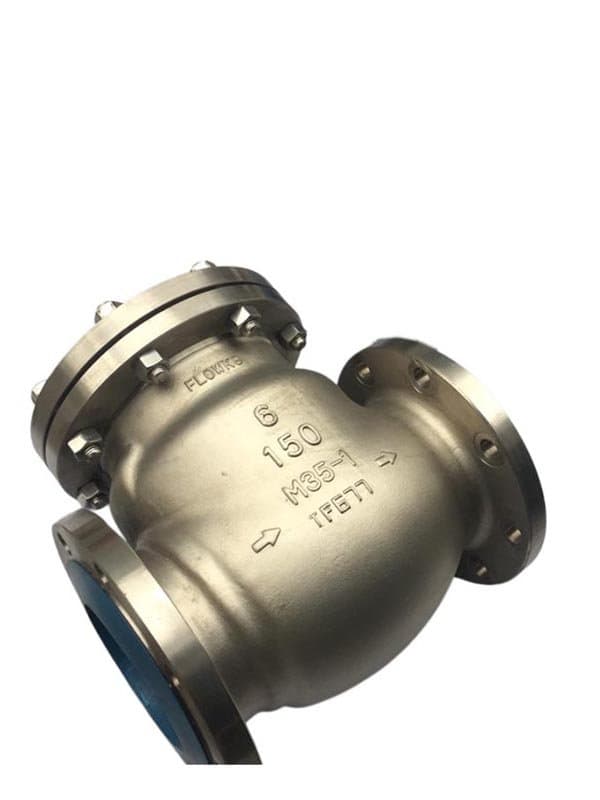
Van Một Chiều Đập Đuôi Monel
Giới thiệu Van Một Chiều Đập Đuôi Monel
Tại Sao Monel Sống Sót Trong Axit Flohydric Khi Mọi Vật Liệu Khác Bị Phân Hủy
Axit flohydric là loại axit khiến các kỹ sư chống ăn mòn giàu kinh nghiệm phải e ngại. Không phải vì nó là axit mạnh nhất – thực tế không phải vậy. Mà vì nó tấn công những vật liệu mà người ta cho là "chống axit". Thép không gỉ? Bị rỗ trong vài giờ ở nồng độ sản xuất. Thép tráng men thủy tinh? Cuối cùng bị thấm vào các mối hàn. Titan? Có thể chấp nhận được ở nồng độ thấp, nhưng nguy hiểm ở nồng độ trên 50% và ở nhiệt độ cao.
Monel 400 xử lý HF ở các nồng độ phá hủy các kim loại khác. Ma trận niken-đồng tạo thành màng thụ động ổn định trong môi trường florua mà các hệ hợp kim khác không thể tái tạo. Trong các đơn vị alkyl hóa HF — ứng dụng HF khắc nghiệt nhất trong bất kỳ nhà máy lọc dầu nào — van một chiều dạng lật Monel trên mạch tuần hoàn axit hoạt động trong nhiều năm. Đó không phải lý thuyết. Đó là dữ liệu vận hành hàng thập kỷ từ mọi nhà máy alkyl hóa HF lớn trên toàn thế giới.
Cấu hình van một chiều dạng lật đặc biệt hợp lý trong ứng dụng HF vì đây là loại van giảm thiểu thể tích khoang bên trong. Thể tích kẹt nhỏ hơn nghĩa là lượng axit chứa trong thân van ít hơn, giảm cả rủi ro ăn mòn lẫn mức độ nguy hiểm nếu xảy ra rò rỉ. Trong hệ thống HF, giảm lượng axit chứa trong bất kỳ bộ phận đơn lẻ nào là triết lý an toàn, không chỉ là sở thích thiết kế.
Monel K500 (N05500) bổ sung nhôm và titan để tăng độ cứng theo thời gian, giúp tăng độ bền kéo lên khoảng 2-3 lần so với Monel 400. Sử dụng loại vật liệu này cho các chốt bản lề van một chiều và các bộ phận bên trong chịu tác động cơ học lặp đi lặp lại khi đĩa van đóng sập. Phần thân van vẫn giữ nguyên chất liệu 400; các bộ phận chuyển động được hưởng lợi từ độ cứng của K500.
Các Giới Hạn Thực Tế (Vì Ứng Dụng HF Đòi Hỏi Sự Trung Thực)
Khoảng giá. Monel nằm giữa thép không gỉ cao cấp và các hợp kim niken thực sự như Hastelloy. Một van một chiều kiểu xoay bằng Monel có giá gấp 4-5 lần so với 316L, nhưng chỉ bằng khoảng một nửa giá của một van tương đương bằng C276. Điều đó làm cho nó trở thành lựa chọn "giá trị tốt nhất" cho HF — bạn trả đủ tiền cho sự bảo vệ thực sự, nhưng không phải trả mức giá cao cấp của một siêu hợp kim được thiết kế cho các phản ứng hóa học khắc nghiệt hơn nữa.
Điểm yếu khi tiếp xúc với axit oxy hóa. Hợp kim niken-đồng của Monel được tối ưu hóa cho môi trường khử. Trong axit nitric, nó bị ăn mòn nhanh hơn so với thép không gỉ tiêu chuẩn. Nếu hệ thống của bạn chuyển đổi giữa axit HF (khử) và axit nitric (oxy hóa) — điều này hiếm gặp nhưng vẫn xảy ra trong một số quy trình hóa học — thì Monel không phải là giải pháp. Hastelloy C276 đáp ứng được cả hai yêu cầu.
Rủi ro ăn mòn điện hóa trong hệ thống kim loại hỗn hợp. Monel có tính quý cao trong chuỗi điện hóa — gần với titan. Nếu bạn bắt van một chiều Monel vào đường ống thép carbon bằng mặt bích thép, thép trở thành anốt hy sinh và tự tăng tốc ăn mòn ngay tại điểm kết nối. Sử dụng bộ cách điện (đệm + ống lót + vòng đệm) tại mọi điểm chuyển tiếp Monel-sang-thép, hoặc chỉ định mặt bích Monel tương ứng cho đoạn ống kế cận.
Gia công khó hơn vẻ ngoài. Monel 400 gia công như kim loại mềm dẻo — dụng cụ bị kéo thay vì cắt sạch, và biến cứng bề mặt tăng nhanh. K500 tệ hơn sau khi hóa già. Các xưởng không chuyên về hợp kim niken thường xuyên tạo ra thân van một chiều có sai số kích thước trên lỗ chốt bản lề, khiến đĩa van đóng không đều và rò rỉ khi dòng chảy ngược. Chọn nhà chế tạo có kinh nghiệm được chứng nhận về hợp kim niken.
Kinh nghiệm chọn giống dựa trên kinh nghiệm thực tế tại nhà máy.
Đối với hệ tuần hoàn axit alkyl hóa HF: Thân van Monel 400 với chốt bản lề K500. Van một chiều kiểu xoay, nắp van bắt vít, tối thiểu cấp 300. Kích thước từ 2"–6" phù hợp với hầu hết các mạch tuần hoàn axit. Không sử dụng nắp van hàn kín — môi trường HF đòi hỏi phải tiếp cận được nắp van để thay thế bản lề đĩa mà không cần phải cắt van ra khỏi đường ống.
Cho nước thải cô đặc từ chưng cất nước biển: Van một chiều dạng lật Monel 400 hoạt động được, nhưng đồng nhôm tiết kiệm chi phí hơn với cùng khả năng chống ăn mòn trong nước muối tinh khiết. Chỉ dùng Monel nếu nước muối mang dấu vết HF hoặc florua khác từ nhiễm bẩn quy trình thượng nguồn.
Đối với việc sử dụng với dung dịch xút ăn da (NaOH): Hợp kim Monel 400 là lựa chọn truyền thống và vẫn còn phù hợp, nhưng niken nguyên chất (Nickel 200) lại vượt trội hơn trong môi trường xút đậm đặc ở nhiệt độ trên 200°C. Dưới ngưỡng đó, Monel mang lại khả năng chống xút tương đương 90% so với niken với chi phí thấp hơn nhiều.
A: Có, ở nồng độ dưới 50% và nhiệt độ dưới 80°C. Trên mức đó, nó sẽ bị ăn mòn với tốc độ không thể chấp nhận được. Đối với axit sulfuric đậm đặc, hãy xem xét thép C4 hoặc Hastelloy B2 tùy thuộc vào điều kiện cụ thể.
A: Không. Nhiệm vụ của thân van là chống ăn mòn và đảm bảo độ bền cấu trúc dưới áp lực — Monel 400 đáp ứng được cả hai yêu cầu này. Ưu điểm về độ bền...
Thông Số Kỹ Thuật
| Size Range | 2”-24” |
| Pressure Class | Class150-600 |
| Design Standard | API 594,API 6D,ASME B16.34 |
| Body Materials | Monel 400 / UNS N04400,Monel K500 / UNS N05500 |
| Parent Standards | ASME B16.34, NACE MR0175 |
| Parent Size Range | 2" - 24" |
| Parent Pressure Class | Class 150 - 1500 |
Tải xuống sản phẩm
| Phạm Vi Cỡ | 2”-24” |
| Lớp Áp Suất | Class150-600 |
| Tiêu Chuẩn Thiết Kế | API 594,API 6D,ASME B16.34 |
| Vật Liệu Thân Van | Monel 400 / UNS N04400,Monel K500 / UNS N05500 |
Cần Báo Giá?
Contact our engineering team for pricing and technical support on Van Một Chiều Đập Đuôi Monel.
Request a QuoteTìm Kiếm Thêm Giải Pháp?
Khám phá dải sản phẩm được thiết kế cho thách thức ngành của bạn.
Ball Valves
FLOWKS offers floating ball valve, trunnion mounted ball valve and top entry ball valve for oil & gas, petrochemical and power generation. Designed per API 6D, API 608 and ASME B16.34.
DBB Valves
FLOWKS Double Block & Bleed (DBB) valves provide dual isolation with bleed verification in a single compact body. Replacing traditional multi-valve installations, FLOWKS DBB valves reduce weight, space and potential leak paths. Available in bolted bonnet, all-welded and expanding gate designs per API 6D and API 607.
Gate Valves
FLOWKS gate valves for isolation service in piping systems. Flexible wedge, solid wedge, slab and expanding gate designs per API 600, API 602 and ASME B16.34.
Globe Valves
FLOWKS globe valves for throttling and isolation. Standard, angle, Y-pattern and bellows seal configurations per API 602 and BS 1868.