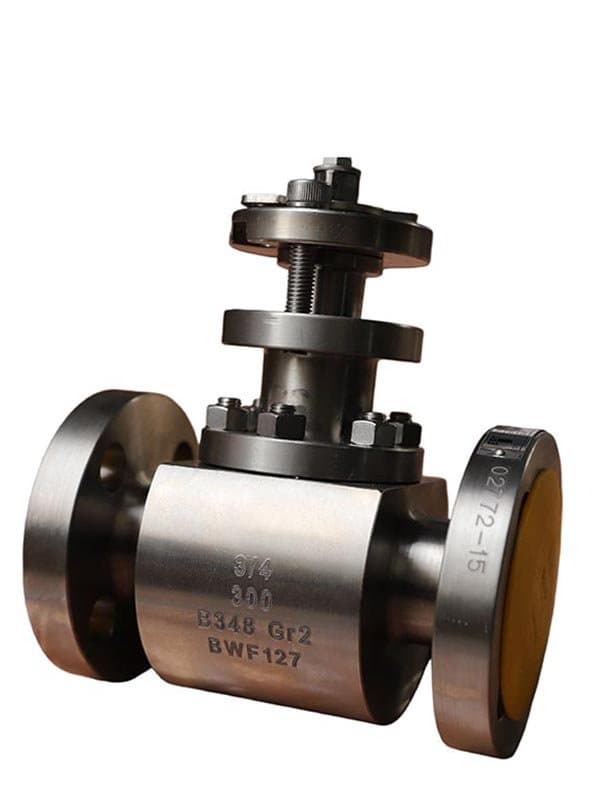
Van Cầu Lắp Trên Titan
Giới thiệu Van Cầu Lắp Trên Titan
Tại Sao Van Bi Titanium Thắng Ở Nơi Thép Không Gỉ Ăn Mòn Và Thép Thường Gỉ Sét
Khả năng chống ăn mòn của titanium đến từ một điều tưởng chừng đơn giản: một màng oxit dày 10 nanomet hình thành tự phát trong bất kỳ môi trường chứa oxy nào. Màng đó tái tạo ngay lập tức nếu bị hư hại. Cào xước bề mặt đế van bi titanium — bề mặt tái thụ động trong vòng mili giây. Cào xước đế thép không gỉ trong cùng dòng quy trình giàu chloride — vết xước trở thành vết rỗ trong vòng vài giờ.
Đó là lý do tại sao van bi titan chiếm ưu thế trong các ứng dụng clo ẩm. Các nhà máy sản xuất clo, sản xuất chất tẩy trắng, dây chuyền natri hypoclorit — những môi trường này đẩy thép không gỉ 316L vượt quá ngưỡng ăn mòn ngay từ ngày đầu tiên. Titan cấp 2 có thể hoạt động trong nhiều thập kỷ. Lớp oxit ổn định trong điều kiện clo oxy hóa mà phá hủy mọi kim loại kỹ thuật thông thường khác.
Trong các nhà máy khử muối, câu chuyện tương tự nhưng kinh tế thay đổi. Thép không gỉ hiệu suất cao (254SMO, 904L) có thể xử lý nước biển — nhưng titan mang lại lợi thế trọng lượng quan trọng trên các giàn khoan ngoài khơi nơi mỗi kg tồn kho van ảnh hưởng đến tải trọng kết cấu. Một van bi titan Grade 2 kích thước 6" nặng khoảng một nửa so với van 254SMO tương đương. Trên hệ thống sản xuất nổi, khoản tiết kiệm đó nhân lên qua hàng trăm van.
Grade 7 (Ti + palladium) là vũ khí bí mật cho môi trường axit khử nơi ngay cả Grade 2 cũng gặp khó khăn. Việc thêm 0,2% palladium dịch chuyển điện thế ăn mòn, cho phép màng oxit duy trì độ ổn định trong điều kiện khử. Nó đắt hơn Grade 2 — nhưng trong dòng axit hỗn hợp oxy hóa/khử, nó ngăn chặn ăn mòn khe hở mà titan tiêu chuẩn phát triển trong các túi tù đọng.
Những Nhược Điểm Khiến Kỹ Sư Phải Cân Nhắc Lại Về Titan
Bám dính ma sát. Bề mặt trượt titan-titan bám dính ma sát thảm khốc. Ghế van bi có cả bi và ghế đều bằng titan sẽ kẹt dưới tải trọng trừ khi bạn xử lý vấn đề này. Giải pháp của ngành: phủ cứng bề mặt bi (chrome oxide hoặc phủ tungsten carbide) hoặc sử dụng vật liệu ghế khác loại (PTFE hoặc PEEK gia cường). Nếu nhà cung cấp van báo giá van bi "toàn titan" mà không chỉ rõ xử lý bề mặt trên các bề mặt tiếp xúc, hãy đặt câu hỏi trước khi đặt hàng.
Dễ bị tổn thương bởi fluoride. Màng oxit của titan hòa tan trong môi trường chứa fluoride. Axit hydrofluoric rõ ràng — nhưng cũng có các nguồn ít rõ ràng hơn: dấu vết fluoride trong nước làm mát (một số nguồn cấp nước đô thị chứa 1–2 ppm), fluoride trong một số dòng xử lý phosphate. Nếu fluoride hiện diện ở bất kỳ nồng độ đáng kể nào, titan bị ăn mòn. Hastelloy C276 xử lý được fluoride; titan thì không. Đây là sự khác biệt nhị phân — không có điểm trung gian.
Giòn hóa hydro ở nhiệt độ cao. Trên 300°C trong môi trường khử, titan hấp thụ hydro, gây giòn hóa. Trong nước biển thông thường và dịch vụ axit oxy hóa, điều này không phải là mối lo, nhưng trong dòng khí khử nóng (dịch vụ hydro nhà máy lọc dầu, khí tổng hợp) đây là cơ chế hỏng hóc thực sự.
Chi phí và nguồn cung. Titan cấp 2 không hề rẻ — giá nguyên liệu thô cao gấp khoảng 3-4 lần so với thép không gỉ. Thân van titan đúc có nguồn cung hạn chế trên toàn thế giới; hầu hết các van titan đều được chế tạo bằng phương pháp rèn. Thời gian giao hàng cho van bi titan rèn với kích thước không phổ biến là 12-16 tuần.
Tính chất điện hóa cao. Titan nằm ở đầu cao của dãy điện hóa. Khi ghép nối nó với mặt bích bằng thép, đồng hoặc nhôm mà không có lớp cách nhiệt, các kim loại kém cao cấp hơn đó sẽ bị ăn mòn mạnh tại mối nối. Mỗi mối nối mặt bích titan-thép cần một bộ cách nhiệt hoàn chỉnh, nếu không bạn sẽ tạo ra một tế bào ăn mòn cục bộ tấn công đường ống chứ không phải van.
Cách Đặc Tả Van Bi Titan Mà Không Bị Thiệt Hại
Cho dịch vụ nước biển ngoài khơi: Grade 2, ghế PTFE, Class 300, kích thước 2"–10". Bi phủ cứng (lớp phủ Cr2O3). Bộ cách điện tại mọi kết nối mặt bích thép. Đây là công thức đã được chứng minh.
Cho sản xuất clo ẩm / chất tẩy trắng: Grade 2, ghế kim loại với lớp phủ tungsten carbide trên bi, ghế PTFE gia cường. Môi trường clo không tấn công PTFE ở nhiệt độ sản xuất chất tẩy trắng bình thường, và bi được phủ loại bỏ rủi ro bám dính ma sát.
Cho dịch vụ axit hỗn hợp nơi xuất hiện điều kiện khử: Grade 7 (tăng cường Pd). Chi phí palladium thêm khoảng 30% vào giá van, nhưng đó là cách duy nhất để ngăn chặn ăn mòn khe hở trong các túi axit tù đọng. Đừng cố tiết kiệm tiền bằng cách dùng Grade 2 ở đây — bạn sẽ phải thay van trong 18 tháng.
A: Grade 2 xử lý axit sulfuric loãng (dưới 5% nồng độ) ở nhiệt độ vừa phải. Axit sulfuric đậm đặc tấn công titan. Grade 7 mở rộng phạm vi phần nào nhưng vẫn không phải là lựa chọn đúng cho axit sulfuric đậm đặc. Sử dụng Hastelloy B2 hoặc C276 cho dịch vụ đó.
A: Grade 5 có độ bền kéo khoảng gấp 2 lần Grade 2 — hữu ích cho dịch vụ áp suất cao Class 600+ hoặc nơi dự kiến có sốc cơ học. Nhưng Grade 5 có khả năng chống ăn mòn thấp hơn một chút so với Grade 2 trong một số môi...
Thông Số Kỹ Thuật
| Size Range | 2“-24” |
| Pressure Class | Class 150 -600 |
| Design Standard | ASME B16.34,API 6D, |
| Body Materials | Gr1(R50250)、Gr2(R50400,TA2)、Gr3(R50550)、Gr4(R50700),TA0、TA1、TA2、TA3、TA4 |
| Parent Standards | ASME B16.34, NACE MR0175 |
| Parent Size Range | 2" - 24" |
| Parent Pressure Class | Class 150 - 1500 |
Tải xuống sản phẩm
| Phạm Vi Cỡ | 2“-24” |
| Lớp Áp Suất | Class 150 -600 |
| Tiêu Chuẩn Thiết Kế | ASME B16.34,API 6D, |
| Vật Liệu Thân Van | Gr1(R50250)、Gr2(R50400,TA2)、Gr3(R50550)、Gr4(R50700),TA0、TA1、TA2、TA3、TA4 |
Cần Báo Giá?
Contact our engineering team for pricing and technical support on Van Cầu Lắp Trên Titan.
Request a QuoteTìm Kiếm Thêm Giải Pháp?
Khám phá dải sản phẩm được thiết kế cho thách thức ngành của bạn.
Ball Valves
FLOWKS offers floating ball valve, trunnion mounted ball valve and top entry ball valve for oil & gas, petrochemical and power generation. Designed per API 6D, API 608 and ASME B16.34.
DBB Valves
FLOWKS Double Block & Bleed (DBB) valves provide dual isolation with bleed verification in a single compact body. Replacing traditional multi-valve installations, FLOWKS DBB valves reduce weight, space and potential leak paths. Available in bolted bonnet, all-welded and expanding gate designs per API 6D and API 607.
Gate Valves
FLOWKS gate valves for isolation service in piping systems. Flexible wedge, solid wedge, slab and expanding gate designs per API 600, API 602 and ASME B16.34.
Globe Valves
FLOWKS globe valves for throttling and isolation. Standard, angle, Y-pattern and bellows seal configurations per API 602 and BS 1868.