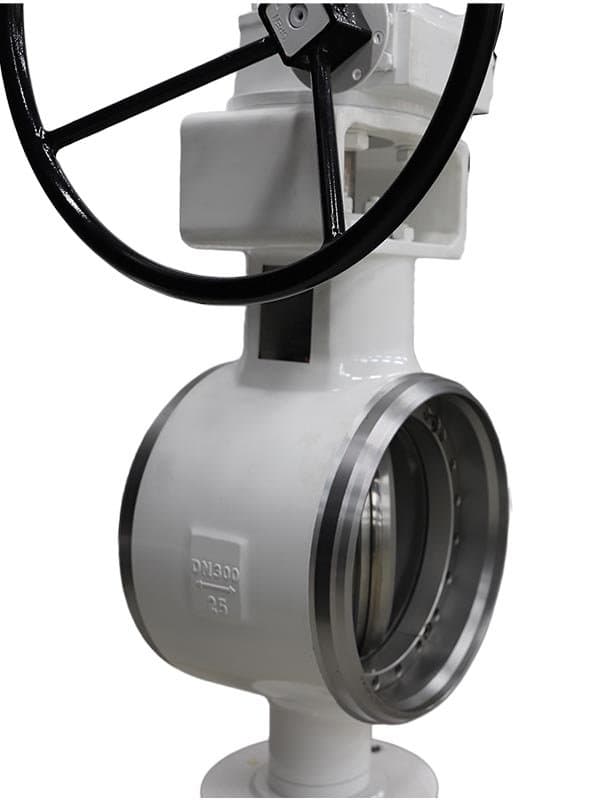
Van Bướm Lệch Tâm Hàn Đối Đầu
Giới thiệu Van Bướm Lệch Tâm Hàn Đối Đầu
Kích thước: 2" - 24" (DN50 - DN600)
Áp suất: Class 150 - 600 / PN 10-100
Tiêu chuẩn: ASME B16.34, API 609, ISO 15848
Vật liệu thân van: A216 WCB, A182 F316 (rèn cho kích thước nhỏ hơn), A351 CF8M
Ghế ngồi: Ghế kim loại-kim loại (lớp phủ Stellate 6) hoặc ghế composite nhiều lớp (đế kim loại + than chì dẻo)
Thiết kế: Kết nối đầu hàn giáp mép (vát mép theo ASME B16.25), hình học lệch tâm kép hoặc lệch tâm ba
Không Mặt Bích, Không Gioăng, Không Đường Rò Rỉ
Mọi kết nối mặt bích có hai điểm hỏng: gioăng và bu lông. Gioăng lão hóa và nén không đều. Bu lông giãn dưới chu kỳ nhiệt, mất lực siết, và gioăng giảm xuống dưới lực nén làm kín—giờ bạn có một đường rò rỉ không thể thấy cho đến khi nó xuất hiện dưới dạng phát thải hoặc giọt rò trên sàn. Ở Class 600+, kết nối mặt bích yêu cầu bu lông nặng và gioăng dày, và chúng vẫn là điểm làm kín yếu nhất trong đường ống.
Mối hàn đối đầu loại bỏ cả hai vấn đề trên. Đầu van được vát theo tiêu chuẩn ASME B16.25. Hàn trực tiếp chúng vào đường ống. Không có gioăng giữa van và đường ống. Không cần bảo trì kiểu bố trí bu lông. Không có đường rò rỉ bên ngoài. Sau khi mối hàn được thực hiện, kiểm tra và chấp nhận, mối nối đó là vĩnh viễn. Nó không bị lão hóa. Nó không bị giãn nở. Nó không bị rò rỉ.
Điều này quan trọng trong ba tình huống. Đường ống áp suất cao Class 600+ nơi mỗi mặt bích là một hạng mục bảo trì và nguồn phát thải. Lắp đặt chôn ngầm hoặc ngập nước nơi việc siết lại bu lông đòi hỏi đào bới. Hệ thống an toàn cháy nơi gioăng cháy—mối hàn thì không.
Hàn Vào Nghĩa Là Vĩnh Viễn
Sự đánh đổi rất rõ ràng. Van bướm hàn giáp mép không thể tháo ra mà không cắt nó. Khi bạn hàn van này vào đường ống, nó trở thành một bộ phận vĩnh viễn của đường ống.
Đó là lý do tại sao một số hệ thống lắp đặt yêu cầu các đầu nối được hàn đối đầu. Các hầm ngầm, đường ống vượt biển, đường ống chịu áp suất cao chống cháy, nơi bạn muốn giảm thiểu tối đa các điểm rò rỉ bên ngoài—lắp đặt cố định là lựa chọn kỹ thuật đúng đắn. Bạn cần lên kế hoạch để nó tồn tại suốt vòng đời của đường ống.
Nếu lắp đặt của bạn yêu cầu tháo van định kỳ, chỉ định đầu mặt bích. Hàn giáp mép dành cho dịch vụ vĩnh viễn.
Hình Học Lệch Tâm Bảo Vệ Cả Hai Loại Ghế Van
Chuyển động quay kiểu cam từ hình học lệch tâm kép hoặc lệch tâm ba nâng đĩa van khỏi ghế van ngay lập tức thay vì trượt. Đối với ghế van kim loại-kim loại Stellite 6, điều đó có nghĩa không có mài xát trên bề mặt cứng mỗi chu kỳ—lớp phủ sống sót qua dịch vụ mài mòn và nhiệt độ cao. Đối với ghế van composite đa lớp, lớp than chì không bị cạo đi trong quá trình quay—hiệu suất kín khít được duy trì qua hàng nghìn chu kỳ.
Giảm ma sát ở mặt van cũng làm giảm mô-men xoắn vận hành. Bộ truyền động nhỏ hơn, vận hành bằng tay dễ dàng hơn. Đối với van được lắp đặt cố định trong hầm ngầm, mô-men xoắn thấp hơn có nghĩa là không cần kích thước quá lớn—trọng lượng nhẹ hơn, ít bảo trì hơn ở những vị trí khó tiếp cận.
A: Không có đường rò rỉ bên ngoài nào tại điểm nối van với đường ống. Không có gioăng, không có bu lông, không có phớt cơ khí nào bị giãn theo thời gian. Mối hàn là vĩnh cửu và tuân thủ tiêu chuẩn.
A: Chỉ bằng cách cắt mối hàn. Đây là van lắp đặt cố định. Nếu ứng dụng yêu cầu tháo lắp định kỳ, hãy chỉ định kiểu mặt bích.
A: Kim loại-kim loại Stellite 6 cho dịch vụ nhiệt độ cao, mài mòn hoặc chu kỳ trên 500°F khi cần chứng nhận an toàn cháy nổ và dung sai rò rỉ môi trường xung quanh chấp nhận được. Vật liệu tổng hợp đa lớp khi bạn cần cả an toàn cháy nổ và kín khít tuyệt đối ở nhiệt độ môi trường trong cùng một van.
A: Đầu van được vát mép theo ASME B16.25. Quy trình hàn, vật liệu phụ và xử lý nhiệt sau hàn (PWHT) phải tuân thủ ASME B31.3 hoặc quy chuẩn dự án áp dụng. WCB sử dụng quy trình thép carbon tiêu chuẩn. F316 yêu cầu vật liệu phụ thép không gỉ và kiểm soát nhiệt lượng đầu vào.
A: Có. Đầu hàn giáp mép được ưu tiên cho đường ống chôn ngầm và ngập nước—không gioăng để rò rỉ, không bu lông để ăn mòn. Chỉ định lớp phủ bên ngoài theo yêu cầu dự án cho vật liệu thân van trong môi trường đó.
Thông Số Kỹ Thuật
| Size Range | 2" - 48" |
| Pressure Class | Class 150 - 1500 |
| Design Standard | API 609, BS EN 593, API 607 |
| Body Materials | WCB, WC6, WC9, CF8, CF8M, CF3, CF3M, Aluminum Bronze, Stellite Alloy, 304, 316, Inconel 718, PTFE, RPTFE, PEEK, Flexible Graphite |
| Parent Standards | API 609, BS EN 593 |
| Parent Size Range | 2" - 60" |
| Parent Pressure Class | Class 150 - 600 |
Tải xuống sản phẩm
| Phạm Vi Cỡ | 2" - 48" |
| Lớp Áp Suất | Class 150 - 1500 |
| Tiêu Chuẩn Thiết Kế | API 609, BS EN 593, API 607 |
| Vật Liệu Thân Van | WCB, WC6, WC9, CF8, CF8M, CF3, CF3M, Aluminum Bronze, Stellite Alloy, 304, 316, Inconel 718, PTFE, RPTFE, PEEK, Flexible Graphite |
Cần Báo Giá?
Contact our engineering team for pricing and technical support on Van Bướm Lệch Tâm Hàn Đối Đầu.
Request a QuoteTìm Kiếm Thêm Giải Pháp?
Khám phá dải sản phẩm được thiết kế cho thách thức ngành của bạn.
Ball Valves
FLOWKS offers floating ball valve, trunnion mounted ball valve and top entry ball valve for oil & gas, petrochemical and power generation. Designed per API 6D, API 608 and ASME B16.34.
DBB Valves
FLOWKS Double Block & Bleed (DBB) valves provide dual isolation with bleed verification in a single compact body. Replacing traditional multi-valve installations, FLOWKS DBB valves reduce weight, space and potential leak paths. Available in bolted bonnet, all-welded and expanding gate designs per API 6D and API 607.
Gate Valves
FLOWKS gate valves for isolation service in piping systems. Flexible wedge, solid wedge, slab and expanding gate designs per API 600, API 602 and ASME B16.34.
Globe Valves
FLOWKS globe valves for throttling and isolation. Standard, angle, Y-pattern and bellows seal configurations per API 602 and BS 1868.