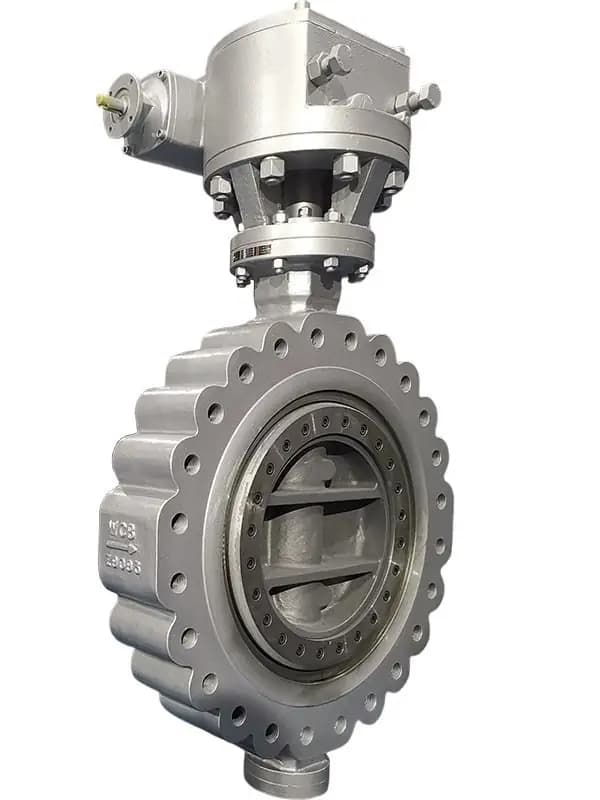
Van Bướm Ghế Đa Lớp Kiểu Tai Bắt
Giới thiệu Van Bướm Ghế Đa Lớp Kiểu Tai Bắt
Kích thước: 2" - 24" (DN50 - DN600)
Áp suất: Class 150 - 300 / PN 10-40
Tiêu chuẩn: API 609, API 607 (an toàn cháy), EN 593
Vật liệu thân: A216 WCB, gang dẻo (GGG40), A351 CF8M
Đế: Đế composite đa lớp—vòng đế kim loại cơ bản + lớp làm kín than chì linh hoạt
Thiết kế: Thân kiểu lug với tai ren mặt bích, hình học lệch tâm kép hoặc lệch tâm ba
Thân Lug Tự Giữ Trong Đường Ống
Van bướm kiểu tai giữ nguyên vị trí trong đường ống khi bạn tháo bu lông ở một bên. Các tai ren trên thân van—một bộ cho mỗi bên mặt bích—cho phép bắt bu lông độc lập. Tháo bu lông ở phía hạ lưu, tháo đoạn ống, và van vẫn giữ nguyên vị trí. Các bu lông ở phía thượng lưu giữ nó. Đó là kiểu lắp đặt ở đầu cuối. Đó là cách ly phía hạ lưu mà không cần tháo van.
Thân van dạng wafer không làm được điều này. Nếu tháo bu lông một bên, van wafer sẽ rơi ra ngoài. Nếu bạn cần cách ly một phía—bảo trì thiết bị hạ nguồn trong khi thượng nguồn vẫn chịu áp suất—bạn cần thân van dạng lug. Các điểm cách ly tại nhà máy lọc dầu, đầu cuối đường ống hóa dầu, trạm phân phối ngoài khơi đòi hỏi chính xác điều này. Đội bảo trì tháo bu lông một bên, làm việc, rồi bắt lại bu lông. Van không bao giờ rời khỏi đường ống.
Ghế van đa lớp: Kín khít ở nhiệt độ thường, hoạt động sau hỏa hoạn
Cấu tạo của van composite gồm một vòng đế kim loại nằm bên dưới lớp đệm kín bằng than chì dẻo. Hoạt động bình thường: than chì nén chặt vào mép đĩa van để tạo ra lớp đệm kín hoàn toàn. Không có rò rỉ nhìn thấy được. Tuân thủ tiêu chuẩn ISO 15848. Trong điều kiện hỏa hoạn: than chì bị cháy thành than, vòng đế kim loại vẫn duy trì tiếp xúc với lớp đệm kín. Đạt tiêu chuẩn an toàn cháy nổ API 607.
Các tiêu chuẩn ngành hóa dầu ngày càng yêu cầu van cách ly phải có gioăng nhiều lớp vì không thể chấp nhận một van chỉ kín hoàn hảo ở nhiệt độ bình thường nhưng lại hỏng khi gặp hỏa hoạn. Cũng không thể chấp nhận một van chịu được hỏa hoạn nhưng lại rò rỉ đủ ở nhiệt độ môi trường để vi phạm quy định về khí thải. Gioăng nhiều lớp đáp ứng cả hai yêu cầu trong cùng một bộ phận. Không cần van cách ly thứ cấp ở phía hạ lưu.
Nơi Sự Kết Hợp Này Quan Trọng
Các điểm cách ly tại nhà máy lọc dầu có nhu cầu bảo trì hạ nguồn và yêu cầu an toàn cháy cho hydrocarbon. Đầu cuối đường ống hóa dầu giữa các phân xưởng—an toàn cháy và đóng kín chặt đều bắt buộc. Lắp đặt trên giàn ngoài khơi nơi thân van lug cho phép cách ly từng mô-đun trong các chiến dịch bảo trì mà không cần tháo van. Bất kỳ lắp đặt nào cần dịch vụ đầu chết VÀ chứng nhận an toàn cháy VÀ rò rỉ nhiệt độ thường kín khít—van này đáp ứng cả ba.
Thép cacbon A216 WCB dùng cho dịch vụ nhà máy lọc dầu tiêu chuẩn – tiết kiệm chi phí, đáp ứng tiêu chuẩn Class 150-300. Gang dẻo GGG40 dùng cho nước và nước thải khi không cần thiết phải sử dụng thép cacbon. Thép không gỉ A351 CF8M dùng cho dòng chảy ăn mòn và môi trường chứa clorua. Cấu hình gioăng nhiều lớp được giữ nguyên trên cả ba tùy chọn thân van.
A: Van dạng wafer không có tai ren – bu lông xuyên qua giữa các mặt bích. Tháo một bu lông ở một bên và van sẽ rơi ra. Van dạng lug có tai ren ở mỗi bên mặt bích, cho phép bắt bu lông độc lập và cách ly một phía.
A: Có. Than chì cháy thành than khi tiếp xúc với lửa, nhưng vòng đế kim loại duy trì tính toàn vẹn làm kín với đĩa van. Cả yêu cầu rò rỉ qua thân và rò rỉ ngoài đều được đáp ứng.
A: Có, trong phạm vi Class 150-300. Việc bắt bu lông độc lập mỗi bên cho phép tháo một mặt bích trong khi thượng nguồn giữ van dưới áp suất đường ống đầy đủ. Xác nhận định mức đầu chết cụ thể cho kích thước và vật liệu của bạn.
A: Vòng đệm có thể thay thế được. Than chì dẻo có tuổi thọ cao trong điều kiện bình thường. Nếu xảy ra rò rỉ sau thời gian dài vận hành, hãy thay thế vòng đệm – không cần thay toàn bộ van. Tránh siết quá chặt các bu lông mặt bích trong quá trình lắp đặt, vì điều này sẽ làm vỡ than chì đến mức không thể phục hồi.
A: GGG40 đủ cho nước, nước thải và ứng dụng tiện ích ăn mòn thấp. Rẻ hơn WCB, đủ tính chất cơ học cho Class 150-300. Đối với dịch vụ hydrocarbon hoặc ăn mòn, chỉ định WCB hoặc CF8M.
Thông Số Kỹ Thuật
| Size Range | 2" - 48" |
| Pressure Class | Class 150 - 1500 |
| Design Standard | API 609, BS EN 593, API 607 |
| Body Materials | WCB, WC6, WC9, CF8, CF8M, CF3, CF3M, Aluminum Bronze, Stellite Alloy, 304, 316, Inconel 718, PTFE, RPTFE, PEEK, Flexible Graphite |
| Parent Standards | API 609, BS EN 593 |
| Parent Size Range | 2" - 60" |
| Parent Pressure Class | Class 150 - 600 |
Tải xuống sản phẩm
| Phạm Vi Cỡ | 2" - 48" |
| Lớp Áp Suất | Class 150 - 1500 |
| Tiêu Chuẩn Thiết Kế | API 609, BS EN 593, API 607 |
| Vật Liệu Thân Van | WCB, WC6, WC9, CF8, CF8M, CF3, CF3M, Aluminum Bronze, Stellite Alloy, 304, 316, Inconel 718, PTFE, RPTFE, PEEK, Flexible Graphite |
Cần Báo Giá?
Contact our engineering team for pricing and technical support on Van Bướm Ghế Đa Lớp Kiểu Tai Bắt.
Request a QuoteTìm Kiếm Thêm Giải Pháp?
Khám phá dải sản phẩm được thiết kế cho thách thức ngành của bạn.
Ball Valves
FLOWKS offers floating ball valve, trunnion mounted ball valve and top entry ball valve for oil & gas, petrochemical and power generation. Designed per API 6D, API 608 and ASME B16.34.
DBB Valves
FLOWKS Double Block & Bleed (DBB) valves provide dual isolation with bleed verification in a single compact body. Replacing traditional multi-valve installations, FLOWKS DBB valves reduce weight, space and potential leak paths. Available in bolted bonnet, all-welded and expanding gate designs per API 6D and API 607.
Gate Valves
FLOWKS gate valves for isolation service in piping systems. Flexible wedge, solid wedge, slab and expanding gate designs per API 600, API 602 and ASME B16.34.
Globe Valves
FLOWKS globe valves for throttling and isolation. Standard, angle, Y-pattern and bellows seal configurations per API 602 and BS 1868.