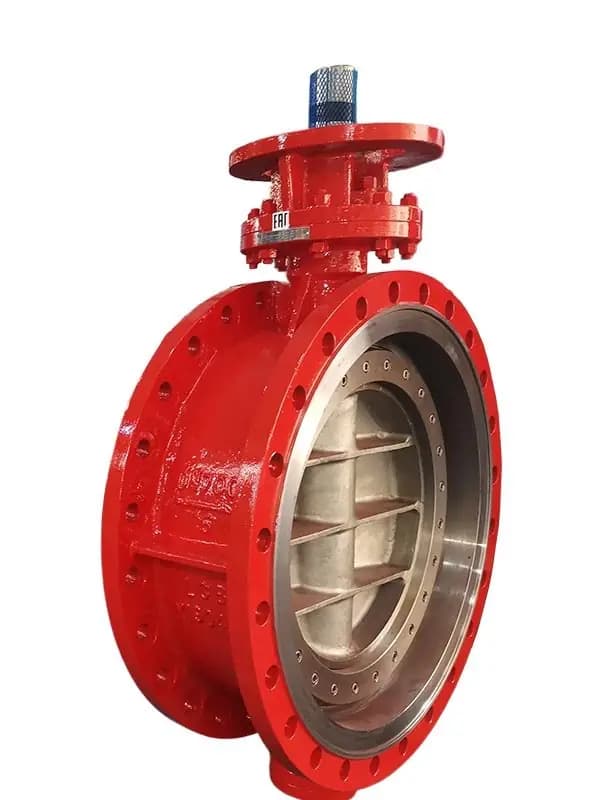
Van Bướm Ghế Đa Lớp Lệch Tâm Ba
Giới thiệu Van Bướm Ghế Đa Lớp Lệch Tâm Ba
Kích thước: 2" - 48" (DN50 - DN1200)
Áp suất: Class 150 - 600 (PN 10 - 100)
Tiêu chuẩn: API 609, ASME B16.34, API 607 (chống cháy), ISO 15848
Vật liệu thân: A216 WCB, A351 CF8M, A351 CF8, A182 F316
Ghế: Ghế composite đa lớp—vòng đế thép không gỉ hoặc Stellite + lớp bịt than chì linh hoạt + lớp đệm đàn hồi tùy chọn
Thiết kế: Hình học lệch tâm ba (lệch trục ba mặt phẳng), chuyển động quay đĩa kiểu cam
Van lệch tâm ba ghế kim loại xử lý nhiệt độ cao rất tốt. Nhưng ở nhiệt độ môi trường? Các khe hở vi mô trong tiếp xúc kim loại-kim loại có nghĩa là rò rỉ đo được—không tệ, nhưng không bằng không. Van ghế đàn hồi bịt kín hoàn toàn ở nhiệt độ phòng, mọi lúc. Cho đến khi có hỏa hoạn. Sau đó cao su cháy đi và không gì giữ được đường ống đó.
Ghế đa lớp giải quyết cả hai vấn đề trong một bộ phận. Vòng đế thép không gỉ hoặc Stellite cung cấp xương sống kết cấu. Trên cùng là lớp bịt than chì linh hoạt nén vào mép đĩa—bịt kín hoàn toàn ở nhiệt độ bình thường. Khi điều kiện hỏa hoạn làm than hóa than chì ở 800°F+, vòng đế kim loại bên dưới vẫn giữ đĩa và duy trì tính toàn vẹn của ghế.
Đó là lý do tại sao thông số kỹ thuật hóa dầu đang chuyển sang ghế đa lớp. Bạn không phải chọn giữa "kín ở nhiệt độ môi trường" và "còn hoạt động sau hỏa hoạn." Ghế này đáp ứng cả hai.
Ba Độ Lệch Bảo Vệ Lớp Than Chì
Thiết kế lệch tâm ba chiều nghĩa là có ba mặt phẳng lệch nhau giữa tâm trục và bề mặt làm kín của đĩa. Khi kết hợp lại, chúng tạo ra chuyển động quay kiểu cam – đĩa nhấc khỏi đế ngay lập tức thay vì cọ xát vào đó. Ít cọ xát hơn đồng nghĩa với việc lớp than chì ít bị mài mòn hơn. Nếu bạn đã từng thay thế một đế van mềm trông như bị kéo lê trên giấy nhám, bạn sẽ hiểu tại sao chuyển động quay kiểu cam lại quan trọng đối với các đế van composite. Than chì bền, nhưng không phải là không thể phá hủy. Hình học lệch tâm ba chiều bảo vệ nó qua hàng nghìn chu kỳ.
Nơi các kỹ sư chỉ định điều này
Các đơn vị chưng cất dầu thô với dao động nhiệt độ từ điều kiện quy trình 650°F đến nhiệt độ môi trường khi ngừng vận hành. Các lò phản ứng hóa học chạy nóng nhưng được cách ly ở nhiệt độ phòng để bảo trì. Van cách ly chống cháy trên giàn ngoài khơi cũng phải đáp ứng tuân thủ phát thải ISO 15848. Nếu thông số kỹ thuật của bạn yêu cầu API 607 VÀ kín hoàn toàn ở nhiệt độ môi trường, van này đáp ứng cả hai tiêu chí mà không cần van cách ly thứ cấp phía hạ lưu.
Không bao giờ siết quá lực bu lông mặt bích. Lớp than chì nén dưới tải trọng, nhưng lực căng bu lông quá mức sẽ nghiền nát nó không thể phục hồi. Tuân theo quy trình siết chéo tăng dần. Với kích thước 24"+ trở lên, kiểm tra độ nén của đế sau khi siết ban đầu—nếu khí rò qua ở thử nghiệm áp suất môi trường, thực hiện thêm một lượt siết trước khi than chì ngồi hoàn toàn vào mép đĩa. Khi đã nén đúng, nó sẽ giữ kín.
A: Có. Lớp than chì linh hoạt lấp đầy các khe hở vi mô mà đế kim loại-đối-kim loại để lại ở điều kiện môi trường. Kín bọt khí là đạt được và lặp lại được.
A: Than chì bị cháy thành than đen. Vòng đế kim loại duy trì sự tiếp xúc kín với đĩa van. Van vượt qua các bài kiểm tra an toàn cháy nổ vì vòng kim loại cung cấp bề mặt làm kín cấu trúc sau khi than chì bị tiêu thụ hết.
A: Vâng. Tháo đĩa, lấy vòng đệm cũ ra, lắp vòng đệm mới vào, rồi lắp ráp lại. Đối với đĩa 24 inch trở lên, cần hai kỹ thuật viên và một bề mặt sạch sẽ—không có mảnh vụn nào giữa lớp than chì và mép đĩa trong quá trình lắp ráp lại.
A: Đế kim loại nguyên chất vượt qua thử nghiệm an toàn cháy nhưng thường cho phép rò rỉ đo được ở điều kiện môi trường. Nếu thông số kỹ thuật của bạn yêu cầu cả an toàn cháy và đóng kín khít ở điều kiện vận hành bình thường, kim loại nguyên chất có thể không đáp ứng yêu cầu rò rỉ ở môi trường.
Thông Số Kỹ Thuật
| Size Range | 2" - 48" |
| Pressure Class | Class 150 - 1500 |
| Design Standard | API 609, BS EN 593, API 607 |
| Body Materials | WCB, WC6, WC9, CF8, CF8M, CF3, CF3M, Aluminum Bronze, Stellite Alloy, 304, 316, Inconel 718, PTFE, RPTFE, PEEK, Flexible Graphite |
| Parent Standards | API 609, BS EN 593 |
| Parent Size Range | 2" - 60" |
| Parent Pressure Class | Class 150 - 600 |
Tải xuống sản phẩm
| Phạm Vi Cỡ | 2" - 48" |
| Lớp Áp Suất | Class 150 - 1500 |
| Tiêu Chuẩn Thiết Kế | API 609, BS EN 593, API 607 |
| Vật Liệu Thân Van | WCB, WC6, WC9, CF8, CF8M, CF3, CF3M, Aluminum Bronze, Stellite Alloy, 304, 316, Inconel 718, PTFE, RPTFE, PEEK, Flexible Graphite |
Cần Báo Giá?
Contact our engineering team for pricing and technical support on Van Bướm Ghế Đa Lớp Lệch Tâm Ba.
Request a QuoteTìm Kiếm Thêm Giải Pháp?
Khám phá dải sản phẩm được thiết kế cho thách thức ngành của bạn.
Ball Valves
FLOWKS offers floating ball valve, trunnion mounted ball valve and top entry ball valve for oil & gas, petrochemical and power generation. Designed per API 6D, API 608 and ASME B16.34.
DBB Valves
FLOWKS Double Block & Bleed (DBB) valves provide dual isolation with bleed verification in a single compact body. Replacing traditional multi-valve installations, FLOWKS DBB valves reduce weight, space and potential leak paths. Available in bolted bonnet, all-welded and expanding gate designs per API 6D and API 607.
Gate Valves
FLOWKS gate valves for isolation service in piping systems. Flexible wedge, solid wedge, slab and expanding gate designs per API 600, API 602 and ASME B16.34.
Globe Valves
FLOWKS globe valves for throttling and isolation. Standard, angle, Y-pattern and bellows seal configurations per API 602 and BS 1868.