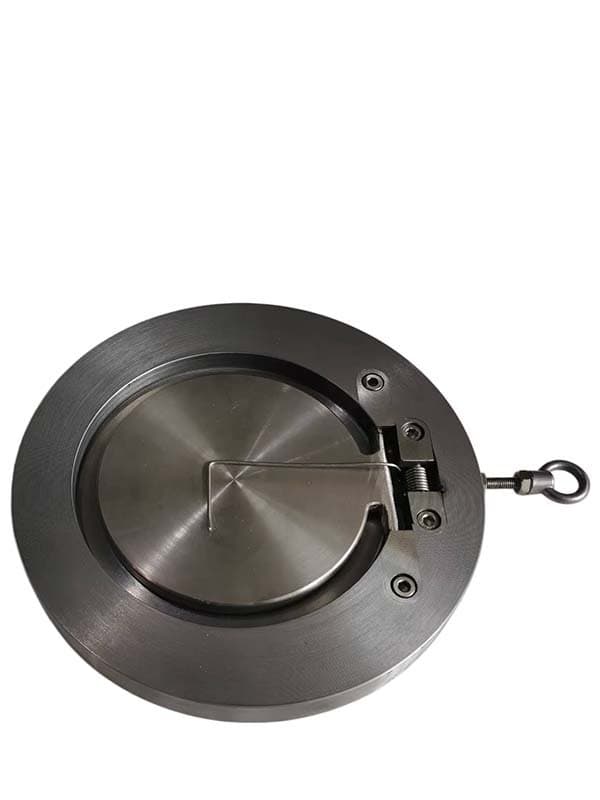
Giới thiệu Van Một Chiều Đập Đuôi Một Đĩa Wafer
Kích thước: 2" - 24" (DN50 - DN600)
Áp suất: Class 150 - 300 / PN 10-40
Tiêu chuẩn: MSS SP-71, API 6D
Vật liệu thân van: A216 WCB, A351 CF8M, gang dẻo (GGG40)
Đế van: Kim loại tiếp xúc kim loại hoặc đế mềm (chèn gioăng đàn hồi/PTFE trên mép đĩa hoặc vòng đế)
Đĩa van: Đĩa đơn — xoay toàn phần trên chốt bản lề bên trong, góc mở lên đến 80°, đóng bằng trọng lực và áp suất ngược
Thiết kế: Thân dạng wafer — mặt đối mặt mỏng, không có lỗ bu lông, kẹp giữa các mặt bích đường ống bằng bu lông xuyên suốt
Lựa Chọn Kinh Tế — Và Những Gì Bạn Phải Đánh Đổi
Van một chiều dạng đĩa xoay đơn kiểu wafer là thiết bị chống dòng chảy ngược đơn giản nhất bạn có thể đặt giữa hai mặt bích. Thân mỏng, không lỗ bu lông, một đĩa trên chốt bản lề. Dòng chảy thuận đẩy đĩa mở ra. Dòng chảy dừng lại, trọng lực và áp suất ngược đưa đĩa trở lại đế van. Không lò xo, không van giảm chấn, không cơ cấu bên ngoài, không chi tiết bên trong phức tạp. Chỉ là một đĩa xoay trên chốt bên trong vỏ mỏng.
Sự đơn giản đó khiến van một chiều đĩa xoay đơn kiểu wafer trở thành dạng van xoay rẻ nhất. Nếu bạn đang vận hành đường ống nước Class 150-300, vòng tuần hoàn HVAC, hoặc đầu xả bơm quy trình thông thường nơi cần bảo vệ dòng ngược cơ bản và chi phí là yếu tố quyết định chính, van wafer đĩa đơn là thứ được chỉ định. Nó hoạt động. Nó giá phải chăng. Nó có sẵn từ mọi nhà sản xuất van với mọi vật liệu thông dụng.
Nhưng sự đơn giản đi kèm với những đánh đổi bạn cần hiểu trước khi lắp đặt.
Dịch Vụ Đầu Bịt — Wafer Không Làm Được
Thân wafer không có lỗ bu lông. Van được giữ vị trí bằng bu lông xuyên qua thân van từ mặt bích đường ống này sang mặt bích kia. Cả hai mặt bích đường ống phải hiện diện để kẹp van. Nếu bạn cần bắt mặt bích bịt ở một bên — để cách ly đầu bịt, để kết thúc đường ống, để cách ly bảo trì khi một bên bị bịt kín — thân wafer không thể làm được. Không có lỗ bu lông trên thân wafer để mặt bích bịt gắn vào. Bạn cần thân dạng lug hoặc hai mặt bích cho dịch vụ đầu bịt.
Đây là sai lầm phổ biến nhất với van một chiều wafer. Ai đó chỉ định wafer cho điểm cách ly đầu xả bơm, sau đó muốn bịt kín phía hạ lưu để bảo trì bơm. Wafer không thể giữ mặt bích bịt. Bu lông xuyên kẹp wafer giữa các mặt bích đường ống chỉ hoạt động khi cả hai mặt bích hiện diện và được bắt chặt. Gỡ một mặt bích ra và wafer không còn hỗ trợ kết cấu ở phía đó.
Đóng Bằng Trọng Lực và Áp Suất Ngược — Không Có Lò Xo Dự Phòng
Đĩa đóng bằng trọng lực và áp suất ngược. Không có hỗ trợ lò xo. Trên đường ống nằm ngang với hướng dòng chảy cho phép trọng lực kéo đĩa về phía đế, việc đóng là đáng tin cậy — đĩa xoay xuống bằng trọng lực, và áp suất ngược đẩy nó về vị trí. Nhưng trên đường ống đứng với dòng chảy hướng lên, trọng lực kéo đĩa ra xa đế. Đĩa treo mở trừ khi áp suất ngược phát triển để đẩy nó đóng lại. Nếu áp suất ngược tăng chậm — hệ thống cột áp thấp, đường xả dài với giảm tốc dòng chảy dần — đĩa mở lâu hơn và nhiều dòng ngược đi qua trước khi đóng.
Đối với lắp đặt thẳng đứng, bạn cần van một chiều có hỗ trợ lò xo. Van đĩa kép với lò xo xoắn, van một chiều dòng trục với đĩa nạp lò xo, hoặc van nâng với hành trình rơi trọng lực ngắn đều đóng đáng tin cậy hơn trên đường ống đứng. Van một chiều đĩa xoay đơn wafer là công cụ cho đường ống nằm ngang.
Thân Mỏng — Ít Chiều Sâu Kết Cấu
Thân wafer có kích thước mặt đối mặt tối thiểu. Đó là thiết kế — nhỏ gọn, mỏng, kẹp giữa các mặt bích. Ở kích thước 2" đến 6" nơi lực đường ống ở mức vừa phải, thân mỏng xử lý tải trọng không vấn đề. Ở kích thước 12" đến 24" nơi tải trọng uốn đường ống và lực giãn nở nhiệt đáng kể, thân wafer có chiều sâu kết cấu ít hơn dạng lug hoặc hai mặt bích. Ít chiều sâu hơn nghĩa là ít khả năng chống uốn, ít khả năng phân phối lực đường ống qua cấu trúc thân.
Đối với đường ống nước chính Class 150 đường kính lớn nơi áp suất vận hành thấp và sự cố áp lực có thể kiểm soát, van một chiều đĩa đơn wafer đáp ứng yêu cầu kết cấu. Đối với đường ống quy trình Class 300 đường kính lớn hoặc ứng dụng có tải trọng đường ống đáng kể, dạng lug hoặc hai mặt bích cung cấp an toàn kết cấu tốt hơn.
Đế Kim Loại Cho Dịch Vụ Khắc Nghiệt, Đế Mềm Cho Đóng Kín Khít
Van bi kim loại-kim loại là tiêu chuẩn. Mặt đĩa tiếp xúc với vòng đệm thân van — cả hai đều là bề mặt kim loại cứng. Chúng xử lý được các hạt lơ lửng, chịu được nhiệt độ vừa phải và có tuổi thọ hàng nghìn chu kỳ. Khả năng chịu rò rỉ ở mức độ bạn mong đợi từ van kim loại-kim loại: không hoàn toàn kín hơi, nhưng đủ cho hầu hết các ứng dụng nước và quy trình chung.
Phiên bản đế mềm thêm vòng gioăng đàn hồi hoặc PTFE trên mép đĩa hoặc bề mặt vòng đế. Vật liệu mềm nén vào các khuyết tật bề mặt và cho đóng kín hoàn toàn. Đế mềm hoạt động cho đường nước và hóa chất Class 150-300 nơi yêu cầu rò rỉ bằng không. Chúng không hoạt động cho hơi nước hoặc nhiệt độ cao — đàn hồi và PTFE phân hủy trên giới hạn nhiệt độ của chúng. Khớp đế với dịch vụ.
A: Không. Thân wafer...
Thông Số Kỹ Thuật
| Parent Standards | API 594, BS 1868, ASME B16.34 |
| Parent Size Range | 2" - 48" |
| Parent Pressure Class | Class 150 - 2500 |
Tải xuống sản phẩm
Cần Báo Giá?
Contact our engineering team for pricing and technical support on Van Một Chiều Đập Đuôi Một Đĩa Wafer.
Request a QuoteTìm Kiếm Thêm Giải Pháp?
Khám phá dải sản phẩm được thiết kế cho thách thức ngành của bạn.
Ball Valves
FLOWKS offers floating ball valve, trunnion mounted ball valve and top entry ball valve for oil & gas, petrochemical and power generation. Designed per API 6D, API 608 and ASME B16.34.
DBB Valves
FLOWKS Double Block & Bleed (DBB) valves provide dual isolation with bleed verification in a single compact body. Replacing traditional multi-valve installations, FLOWKS DBB valves reduce weight, space and potential leak paths. Available in bolted bonnet, all-welded and expanding gate designs per API 6D and API 607.
Gate Valves
FLOWKS gate valves for isolation service in piping systems. Flexible wedge, solid wedge, slab and expanding gate designs per API 600, API 602 and ASME B16.34.
Globe Valves
FLOWKS globe valves for throttling and isolation. Standard, angle, Y-pattern and bellows seal configurations per API 602 and BS 1868.