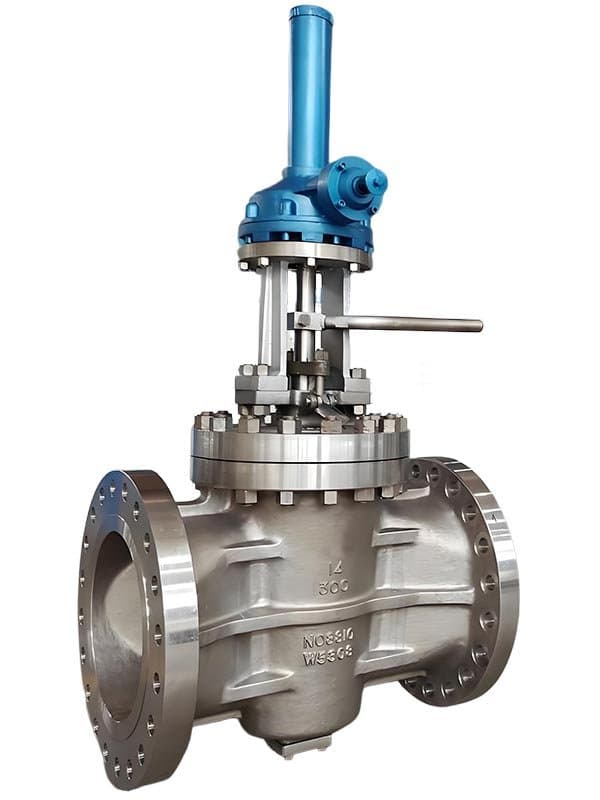
Giới thiệu Van Côn Kiểu Nâng
1/2" – 4" (DN15 – DN100)
Class 150 – 300 / PN 10-40
API 599, MSS SP-111, theo tiêu chuẩn nhà sản xuất
A216 WCB, A351 CF8M, A182 F316 (rèn), đồng thau/đồng cho kích thước nhỏ
Kim loại-kim loại (bề mặt nút xoay tiếp xúc với vòng bệ van thân van) hoặc bệ van mềm (miếng chèn PTFE/RPTFE). Bệ van kim loại có thể phủ Stellite cho dịch vụ mài mòn/chu kỳ.
Vận hành kiểu nâng — nút xoay nâng lên khỏi bệ van trước khi quay, sau đó ngồi lại. Chuyển động hai bước: nâng → quay → ngồi lại. Không có tiếp xúc trượt trong quá trình quay.
Cách Nó Thực Sự Chuyển Động
Hầu hết các van nút đều xoay nút van ngay trên bề mặt đế van. Mỗi vòng quay đều làm cọ xát đế van một chút. Sau hàng trăm chu kỳ hoạt động của van kim loại-kim loại, sự cọ xát đó tích tụ lại — gây ra hiện tượng mài mòn, xước đế van, tăng đột biến mô-men xoắn ở giữa hành trình. Bạn sẽ cảm nhận được điều đó ở tay cầm. Van sẽ khó xoay hơn.
Van nút kiểu nâng tránh hoàn toàn vấn đề đó. Trước khi nút xoay quay, nó nâng thẳng lên khỏi bệ van. Nút xoay ở trạng thái lơ lửng khi quay 90° đến vị trí mới. Sau đó nó hạ xuống ngồi lại trên bệ van. Nâng, quay, ngồi lại — ba chuyển động riêng biệt, không có tiếp xúc trượt khi nút xoay đang quay.
Không bị cọ xát. Không bị mài mòn. Không có hiện tượng tăng đột biến mô-men xoắn giữa chừng. Bề mặt tiếp xúc luôn sạch sẽ vì không có gì cọ xát vào nó trong quá trình quay.
Tại Sao Nó Dừng Ở Bốn Inch
Cơ chế nâng cần hành trình trục van lớn hơn so với kiểu xoay một phần tư vòng đơn giản. Trục van phải di chuyển lên, sau đó xoay, rồi mới di chuyển xuống. Khoảng cách di chuyển thêm này tỷ lệ thuận với kích thước van — van 4 inch nâng lên vài milimét, điều này có thể chấp nhận được. Van 12 inch cần nâng lên đủ xa để vượt qua đường kính đế van lớn hơn nhiều, và bộ phận cơ khí sẽ nhanh chóng trở nên cồng kềnh.
Đó là lý do tại sao van nút kiểu nâng thường được sử dụng trong các đường ống nhỏ. Từ nửa inch đến bốn inch. Cách ly thiết bị. Điểm lấy mẫu. Đường ống bơm hóa chất. Những nơi cần van đóng kín bằng gioăng kim loại nhưng van vẫn đủ nhỏ để khoảng cách nâng ngắn và cơ cấu vẫn nhỏ gọn.
Các thiết kế nút bịt lệch tâm xử lý các kích thước lớn hơn bằng cách dịch chuyển trục và tạo một góc nghiêng để nút bịt bật ra khỏi đế. Phương pháp cơ học khác nhau, nhưng mục tiêu giống nhau. Tuy nhiên, đối với các ứng dụng đường kính nhỏ, nơi mài mòn đế là mối quan tâm chính, kiểu nâng mang lại hoạt động trơn tru nhất hiện có.
Khi nào Đế Kim Loại với Stellite Hợp Lý
Các loại gioăng mềm (PTFE, RPTFE) hoạt động tốt trong môi trường sạch, nhiệt độ thấp. Chúng kín khít, giá thành thấp và không cần cơ cấu nâng để bảo vệ – vật liệu mềm không bị mài mòn như kim loại.
Đế kim loại với kim loại là nơi loại nâng phát huy giá trị. Bùn mài mòn, dịch vụ chu kỳ với hàng trăm chu kỳ truyền động mỗi tuần, quy trình nhiệt độ cao có thể phá hủy PTFE — đây là những ứng dụng bạn cần đế cứng có thể tồn tại. Và một đế cứng mà bạn không bao giờ cào xước trong quá trình xoay.
Lớp phủ Stellite trên bề mặt đế đưa độ bền đó đi xa hơn. Stellite chống mài mòn, chống tróc, và chịu được trong các dịch vụ có thể ăn mòn qua bề mặt thép không gỉ tiêu chuẩn. Kết hợp với chuyển động loại nâng loại bỏ tiếp xúc trượt, bạn có được cặp đế có thể vận hành lặp lại mà không bị mài mòn tiến triển.
A: Không. Van kiểu nâng được sản xuất với kích thước tối đa 4 inch. Với kích thước lớn hơn, khoảng cách nâng trở nên không thực tế. Hãy sử dụng van nút lệch tâm hoặc loại van khác cho kích thước từ 6 inch trở lên.
A: Có. Trục cần chuyển động dọc trục ngoài chuyển động xoay. Việc chọn bộ truyền động phải tính đến hành trình nâng trước khi bắt đầu xoay. Phiên bản vận hành bằng tay quay sử dụng cơ cấu cam hoặc ren quản lý trình tự nâng-xoay-đóng lại bên trong.
A: Cả hai thiết kế đều loại bỏ sự tiếp xúc trượt của đế van, nhưng chúng thực hiện điều đó theo cách khác nhau. Thiết kế lệch tâm làm lệch trục để van trượt ra khỏi đế van ở một góc. Kiểu nâng van nâng van thẳng lên. Với kích thước nhỏ, kiểu nâng van mang lại tác động đóng kín trực tiếp nhất với hình dạng đơn giản nhất. Với kích thước lớn hơn, thiết kế lệch tâm thực tế hơn.
A: Chứng nhận an toàn cháy phụ thuộc vào nhà sản xuất và cấu hình. Phiên bản đế kim loại với vật liệu thân phù hợp có thể đáp ứng yêu cầu thử nghiệm cháy API 607. Phiên bản đế mềm dựa vào đế kim loại dự phòng để đóng kín an toàn cháy sau khi miếng chèn mềm cháy hết. Kiểm tra với nhà sản xuất để biết chứng nhận cụ thể.
A: Van bi kín bằng đế mềm chống lại bi xoay — bi trượt qua đế mỗi vòng quay. Trong dịch vụ mài mòn hoặc chu kỳ cao, tiếp xúc trượt đó làm mòn đế. Van bi nâng với đế kim loại loại bỏ hoàn toàn tiếp xúc trượt đó. Nếu điều kiện dịch vụ của bạn làm suy giảm đế van bi theo thời gian, van bi nâng cho bạn lựa chọn kín lâu bền hơn.
Thông Số Kỹ Thuật
| Parent Standards | API 599, API 6D |
| Parent Size Range | 2" - 24" |
| Parent Pressure Class | Class 150 - 1500 |
Tải xuống sản phẩm
Cần Báo Giá?
Contact our engineering team for pricing and technical support on Van Côn Kiểu Nâng.
Request a QuoteTìm Kiếm Thêm Giải Pháp?
Khám phá dải sản phẩm được thiết kế cho thách thức ngành của bạn.
Ball Valves
FLOWKS offers floating ball valve, trunnion mounted ball valve and top entry ball valve for oil & gas, petrochemical and power generation. Designed per API 6D, API 608 and ASME B16.34.
DBB Valves
FLOWKS Double Block & Bleed (DBB) valves provide dual isolation with bleed verification in a single compact body. Replacing traditional multi-valve installations, FLOWKS DBB valves reduce weight, space and potential leak paths. Available in bolted bonnet, all-welded and expanding gate designs per API 6D and API 607.
Gate Valves
FLOWKS gate valves for isolation service in piping systems. Flexible wedge, solid wedge, slab and expanding gate designs per API 600, API 602 and ASME B16.34.
Globe Valves
FLOWKS globe valves for throttling and isolation. Standard, angle, Y-pattern and bellows seal configurations per API 602 and BS 1868.