Cơ Cấu Khí Nén Màng
Giới thiệu Cơ Cấu Khí Nén Màng
Hồi vị bằng lò xo (tác động đơn) hoặc tác động kép
100–10.000 lbf (diện tích màng × áp suất cấp)
Tuyến tính, lên đến 4 inch (100mm)
ISO 5211 (bề mặt lắp đặt)
Mặt bích ISO 5211 đến thân van/nắp van; lắp trực tiếp trên van cầu, van cổng và van điều khiển
Nitrile (NBR) / EPDM / Viton (FKM) / thép không gỉ
Nhiều hộp lò xo; dải điều chỉnh bằng lựa chọn hộp lò xo; an toàn hỏng hóc đóng hoặc mở
Tại sao bộ truyền động màng vận hành van điều khiển
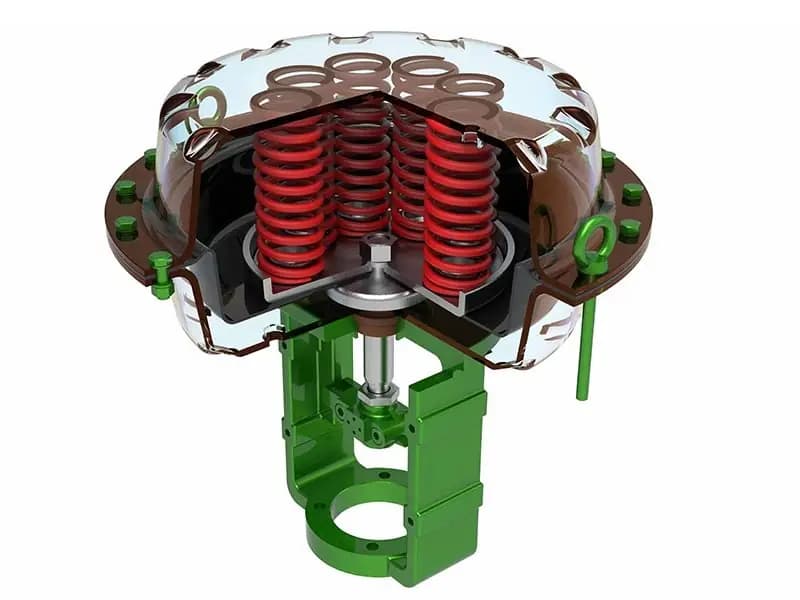
Đi qua bất kỳ đơn vị hóa dầu hoặc phòng điều khiển nhà máy điện nào — các van điều tiết lưu lượng trên đường ống quy trình gần như luôn được truyền động bằng màng. Không phải ngẫu nhiên. Van điều khiển cầu di chuyển nút van lên xuống. Đó là chuyển động tuyến tính. Bộ truyền động màng đẩy trục xuống (áp suất khí tác động lên đỉnh màng, nén lò xo, dẫn trục về phía đóng) và nhả trục lên (khí được loại bỏ, lò xo đẩy về phía mở). Chuyển động đẩy-kéo đó chính xác là những gì trục van cầu cần.
Bản thân màng là bộ chuyển đổi áp suất thành lực. Một tấm cao su phẳng hoặc dạng sóng biến dạng khi khí đẩy vào một phía. Phép tính rất đơn giản — màng 100 inch vuông ở 60 psi cấp tạo lực đẩy 6.000 lbf. Vì diện tích màng lớn, bạn có được lực đẩy tương đương ở áp suất cấp thấp hơn. Không cần tăng khí lên trên 100+ psi như bộ truyền động piston yêu cầu. Khí dụng cụ tiêu chuẩn ở 40–80 psi đáp ứng được công việc.
Yêu cầu áp suất thấp hơn đó quan trọng hơn hầu hết kỹ sư nhận ra. Hệ thống khí dụng cụ trong các nhà máy cũ chạy ở áp suất đầu ống góp 60 psi với bộ giảm áp cục bộ hạ xuống 40 psi tại van. Bộ truyền động màng hoạt động tốt ở áp suất đó. Bộ truyền động piston sẽ bị dừng.
Hồi vị bằng lò xo nghĩa là bạn yên tâm
Hành động an toàn hỏng hóc là lý do khác khiến bộ truyền động màng thống trị điều khiển quy trình. Nếu nguồn khí bị hỏng — máy nén ngừng, ống góp vỡ, đường cấp bị tắc — lò xo dẫn van về vị trí an toàn. Đóng cho chế độ đóng khi hỏng. Mở cho chế độ mở khi hỏng. Lò xo không phụ thuộc vào khí, điện hoặc bất kỳ nguồn năng lượng bên ngoài nào. Nó chỉ là lực cơ học tích trữ được giải phóng. Trọng lực và lò xo luôn sẵn có.
Trên đường ống hơi 400-psig, bạn muốn van điều khiển đó đóng khi mất khí. Lò xo làm điều đó. Không cần pin dự phòng. Không cần bình khí phụ. Chỉ cần một lò xo nén bên trong vỏ bộ truyền động đẩy trục về vị trí an toàn. Độ tin cậy đó là lý do bộ truyền động màng nằm trên mọi van điều khiển quan trọng trong ứng dụng hóa dầu và điện.
Vật liệu màng phù hợp với dịch vụ
Nitrile xử lý dịch vụ dầu khí thông thường. EPDM chịu được hơi nước và nước nóng — thường dùng trên van điều khiển nước cấp lò hơi. Viton chống ăn mòn hóa học trên các đường axit và dung môi. Khi chất lỏng quá trình ăn mòn mạnh đến mức cả Viton cũng bị phân hủy, màng thép không gỉ sẽ thay thế. Chọn dựa trên những gì bên trong thân van, không phải thứ trông rẻ nhất trong catalog.
Biết Giới Hạn Hành Trình
Bộ truyền động màng tiêu chuẩn cung cấp hành trình tuyến tính tối đa 4 inch. Vượt quá đó, màng biến dạng quá xa và mất diện tích hiệu dụng — lực đẩy giảm. Thiết kế màng nhiều tầng kéo dài hành trình, nhưng bạn đánh đổi lực đẩy để lấy quãng đường di chuyển. Nếu van cổng của bạn cần hành trình thân van 6 inch, bạn cần xi lanh piston, không phải bộ truyền động màng.
A: Không trực tiếp. Bộ truyền động màng tạo lực đẩy tuyến tính, không phải mô-men xoay. Bạn cần giá đỡ và liên kết để chuyển đổi chuyển động tuyến tính thành xoay 90° — và việc chuyển đổi đó thêm phức tạp và mất chuyển động. Đối với van xoay 1/4 vòng, hãy dùng bộ truyền động rack-and-pinion hoặc scotch yoke.
A: Màng biến dạng và diện tích áp suất hiệu dụng của nó thu hẹp khi hành trình tăng. Màng ở độ biến dạng 4 inch có diện tích làm việc nhỏ hơn ở 1 inch. Thiết kế nhiều tầng bù đắp phần nào, nhưng sự đánh đổi giữa chiều dài hành trình và lực đẩy đầu ra là cơ bản của hình học màng.
A: Thay hộp lò xo. Các bộ lò xo khác nhau tạo ra lực an toàn khi mất nguồn khác nhau. Vỏ bộ truyền động chứa nhiều lò xo — bạn thay bộ lò xo để khớp với lực đóng mà van của bạn yêu cầu. Không cần thay toàn bộ bộ truyền động.
A: 60 psi là điểm tối ưu cho hầu hết các lắp đặt. Nó cung cấp lực đẩy đầy đủ ở kích thước màng tiêu chuẩn và khớp với áp suất ống khí dụng cụ điển hình. Nếu hệ thống khí của bạn chạy thấp hơn — 40 psi ở các nhà máy cũ — hãy chỉ định kích thước màng lớn hơn để bù đắp.
A: Trong dịch vụ điều khiển điều biến. Bộ truyền động màng có ma sát làm kín không đáng kể, nghĩa là độ trễ thấp hơn và độ chính xác vị trí tốt hơn. Màng uốn cong tự do; vòng chữ O của piston kéo lê trên thành xi lanh. Sự khác biệt ma sát đó quan trọng khi bạn đang tiết lưu ở độ mở 30% và bộ định vị đang thực hiện các điều chỉnh nhỏ.
Thông Số Kỹ Thuật
| Size Range | Torque 10 Nm - 4,000 Nm |
| Pressure Class | 4-8 bar |
| Design Standard | ISO 5211, NAMUR, ATEX |
| Body Materials | Aluminum Alloy (Hard Anodized), SS316 |
| Parent Standards | ISO 5211, NAMUR, ATEX / IECEx |
| Parent Size Range | Torque 10 Nm - 10,000 Nm |
| Parent Pressure Class | Supply Pressure 4-8 bar |
Tải xuống sản phẩm
| Phạm Vi Cỡ | Torque 10 Nm - 4,000 Nm |
| Lớp Áp Suất | 4-8 bar |
| Tiêu Chuẩn Thiết Kế | ISO 5211, NAMUR, ATEX |
| Vật Liệu Thân Van | Aluminum Alloy (Hard Anodized), SS316 |
Cần Báo Giá?
Contact our engineering team for pricing and technical support on Cơ Cấu Khí Nén Màng.
Request a QuoteTìm Kiếm Thêm Giải Pháp?
Khám phá dải sản phẩm được thiết kế cho thách thức ngành của bạn.
Ball Valves
FLOWKS offers floating ball valve, trunnion mounted ball valve and top entry ball valve for oil & gas, petrochemical and power generation. Designed per API 6D, API 608 and ASME B16.34.
DBB Valves
FLOWKS Double Block & Bleed (DBB) valves provide dual isolation with bleed verification in a single compact body. Replacing traditional multi-valve installations, FLOWKS DBB valves reduce weight, space and potential leak paths. Available in bolted bonnet, all-welded and expanding gate designs per API 6D and API 607.
Gate Valves
FLOWKS gate valves for isolation service in piping systems. Flexible wedge, solid wedge, slab and expanding gate designs per API 600, API 602 and ASME B16.34.
Globe Valves
FLOWKS globe valves for throttling and isolation. Standard, angle, Y-pattern and bellows seal configurations per API 602 and BS 1868.