Cơ Cấu Khí Nén Màng Có Tay Quay
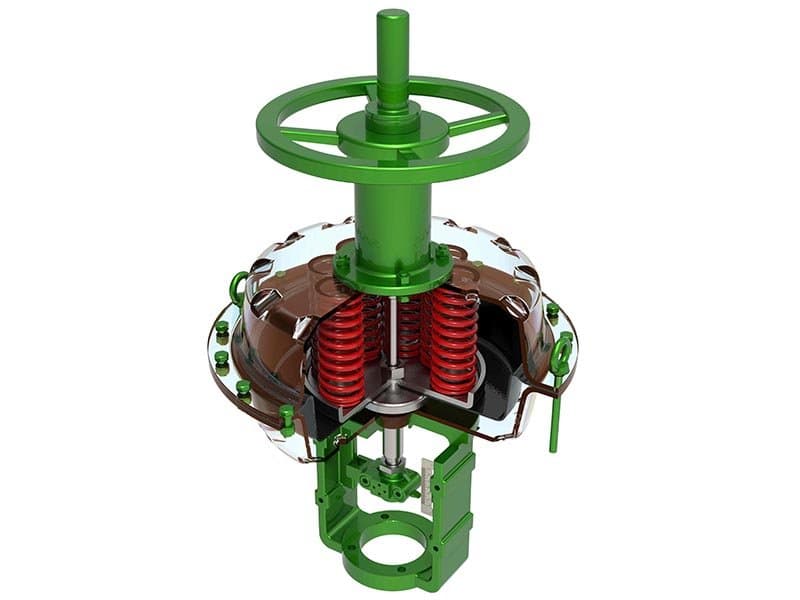
Giới thiệu Cơ Cấu Khí Nén Màng Có Tay Quay
Hồi lò xo (tác động đơn) hoặc tác động kép
100–10.000 lbf (diện tích màng × áp suất cấp)
Tuyến tính, tối đa 4 inch (100mm)
ISO 5211 (bề mặt lắp đặt)
Mặt bích ISO 5211 đến nắp van/đế; tay quay ở bên cạnh hoặc trên đỉnh đế bộ truyền động
Nitrile (NBR) / EPDM / Viton (FKM) / thép không gỉ
Nhiều hộp lò xo; dải điều chỉnh bằng cách chọn hộp lò xo
Điều khiển tay phụ có ly hợp; ly hợp gài tay quay vào thân van khi xoay, nhả ra khi bộ truyền động tiếp tục điều khiển khí nén
Tay Quay Là Kế Hoạch Dự Phòng Của Bạn
Cùng bộ truyền động màng. Cùng lực đẩy đầu ra. Cùng hồi lò xo an toàn khi mất nguồn. Tay quay thêm một thứ — điều khiển tay thay thế khi không có khí. Nghe có vẻ đơn giản, và về mặt cơ khí thì đúng vậy. Nhưng các tình huống vận hành mà nó quan trọng thì đáng để hiểu rõ.
Khởi động nhà máy. Hệ thống khí nén mất nhiều ngày để đưa vào vận hành. Dao động áp suất, rò rỉ hệ thống, sự cố máy nén — ống khí dụng cụ chưa ổn định. Người vận hành cần định vị van điều khiển bằng tay cho đến khi hệ thống khí ổn định. Tay quay cho phép họ làm điều đó. Xoay vô lăng, ly hợp gài, thân van phản hồi. Không cần khí.
Sự cố nguồn khí giữa quá trình chạy. Máy nén ngừng. Ống khí bị vỡ. Đường cấp đến một van cụ thể bị tắc. Hồi lò xo đẩy van về vị trí an toàn — mở hoàn toàn hoặc đóng hoàn toàn. Điều đó bảo vệ khỏi nguy cơ quá trình. Nhưng nếu quá trình có thể tiếp tục chạy ở tốc độ giảm trong thời gian mất nguồn thì sao? Mở hoàn toàn hoặc đóng hoàn toàn có thể quá mạnh. Tay quay cho phép bạn đặt van ở độ mở 30%, tiếp tục sản xuất ở công suất giảm, và chờ hệ thống khí quay lại.
Cơ Chế Ly Hợp Hoạt Động Như Thế Nào
Tay quay không chống lại bộ truyền động trong vận hành bình thường. Đó là thiết kế có ly hợp. Khi điều khiển khí nén hoạt động, ly hợp nhả tay quay khỏi thân van — tay quay xoay tự do, và thân van chỉ phản hồi theo lực đẩy của bộ truyền động. Khi bạn xoay tay quay, ly hợp gài và vô lăng dẫn động thân van trực tiếp. Khi bộ truyền động tiếp quản lại, ly hợp tự nhả ra. Không cần nhả thủ công. Cơ chế tự xử lý.
Tính năng tự nhả đó ngăn ngừa một lỗi phổ biến tại hiện trường — người vận hành để tay quay gài sau khi điều khiển tay, khiến bộ truyền động chống lại vị trí tay quay trong vận hành bình thường. Thiết kế có ly hợp loại bỏ vấn đề đó.
Khi Nào Chỉ Định Tùy Chọn Tay Quay
Thêm tay quay trên các van điều khiển phục vụ chức năng quá trình quan trọng — điều khiển nước cấp trên lò hơi, điều khiển nhiệt độ lò phản ứng, van tiết lưu đường ống chính. Bất kỳ van nào mà tiếp tục vận hành ở công suất giảm khi mất khí tốt hơn là dừng hoàn toàn. Cũng áp dụng cho van ở vị trí xa xôi nơi việc bảo trì hệ thống khí mất nhiều giờ — giàn ngoài khơi, giếng xa, trạm đường ống phân tán. Tay quay cho người vận hành điều khiển tại chỗ bất kể tình trạng nguồn khí.
Tay quay thêm chi phí và trọng lượng. Nó chiếm không gian trên đế. Trên các van dịch vụ không quan trọng nơi dừng hoàn toàn khi mất khí có thể chấp nhận được, hãy bỏ qua. Nhưng trên các van giữ nhà máy hoạt động, tùy chọn tay quay là bảo hiểm rẻ so với việc dừng máy ngoài kế hoạch.
A: Vâng, khi bạn gài nó. Vô lăng dẫn động trục van đến bất kỳ vị trí nào bạn đặt — bao gồm cả các vị trí trung gian mà lò xo không thể đạt tới. Khi bạn nhả vô lăng và nguồn khí vẫn không có, lò xo sẽ đẩy van trở về vị trí an toàn khi mất khí.
A: Về mặt cơ khí là có, nhưng bạn không nên làm vậy. Bộ truyền động đang điều khiển vị trí van dựa trên tín hiệu quá trình. Việc can thiệp thủ công vào vị trí đó sẽ phá vỡ vòng điều khiển. Chỉ sử dụng vô lăng trong thời gian mất nguồn khí hoặc bảo trì.
A: Lắp bên hông trên giá đỡ bộ truyền động là tiêu chuẩn — nó giữ chiều cao tổng thể thấp và phù hợp với các lắp đặt thẳng đứng chật hẹp. Lắp trên đỉnh có sẵn khi khoảng trống bên hông bị hạn chế. Vị trí lắp đặt phụ thuộc vào loại van và bố trí giá đỡ đường ống.
A: Nó làm tăng trọng lượng của cụm bộ truyền động — vô lăng, cơ cấu ly hợp và liên kết cơ khí. Trên các bộ truyền động cỡ nhỏ (diện tích màng dưới 50 inch vuông), việc tăng trọng lượng là đáng kể. Trên các bộ truyền động lớn hơn, trọng lượng vô lăng tương đối nhỏ. Kiểm tra tổng trọng lượng cụm lắp ráp so với khả năng chịu tải của thân van.
A: Có. Bộ truyền động màng tác động kép không có lò xo hồi vị, vì vậy khi mất khí, van giữ nguyên vị trí cuối cùng. Vô lăng cung cấp khả năng định vị thủ công trong thời gian mất khí — cùng chức năng, cùng cơ cấu nhả ly hợp. Vô lăng được cho là quan trọng hơn trên bộ truyền động tác động kép vì không có lò xo an toàn để dựa vào.
Thông Số Kỹ Thuật
| Size Range | Torque 500 Nm - 10,000 Nm |
| Pressure Class | 4-8 bar |
| Design Standard | ISO 5211, ATEX / IECEx |
| Body Materials | Carbon Steel, Stainless Steel 316 |
| Parent Standards | ISO 5211, NAMUR, ATEX / IECEx |
| Parent Size Range | Torque 10 Nm - 10,000 Nm |
| Parent Pressure Class | Supply Pressure 4-8 bar |
Tải xuống sản phẩm
| Phạm Vi Cỡ | Torque 500 Nm - 10,000 Nm |
| Lớp Áp Suất | 4-8 bar |
| Tiêu Chuẩn Thiết Kế | ISO 5211, ATEX / IECEx |
| Vật Liệu Thân Van | Carbon Steel, Stainless Steel 316 |
Cần Báo Giá?
Contact our engineering team for pricing and technical support on Cơ Cấu Khí Nén Màng Có Tay Quay.
Request a QuoteTìm Kiếm Thêm Giải Pháp?
Khám phá dải sản phẩm được thiết kế cho thách thức ngành của bạn.
Ball Valves
FLOWKS offers floating ball valve, trunnion mounted ball valve and top entry ball valve for oil & gas, petrochemical and power generation. Designed per API 6D, API 608 and ASME B16.34.
DBB Valves
FLOWKS Double Block & Bleed (DBB) valves provide dual isolation with bleed verification in a single compact body. Replacing traditional multi-valve installations, FLOWKS DBB valves reduce weight, space and potential leak paths. Available in bolted bonnet, all-welded and expanding gate designs per API 6D and API 607.
Gate Valves
FLOWKS gate valves for isolation service in piping systems. Flexible wedge, solid wedge, slab and expanding gate designs per API 600, API 602 and ASME B16.34.
Globe Valves
FLOWKS globe valves for throttling and isolation. Standard, angle, Y-pattern and bellows seal configurations per API 602 and BS 1868.