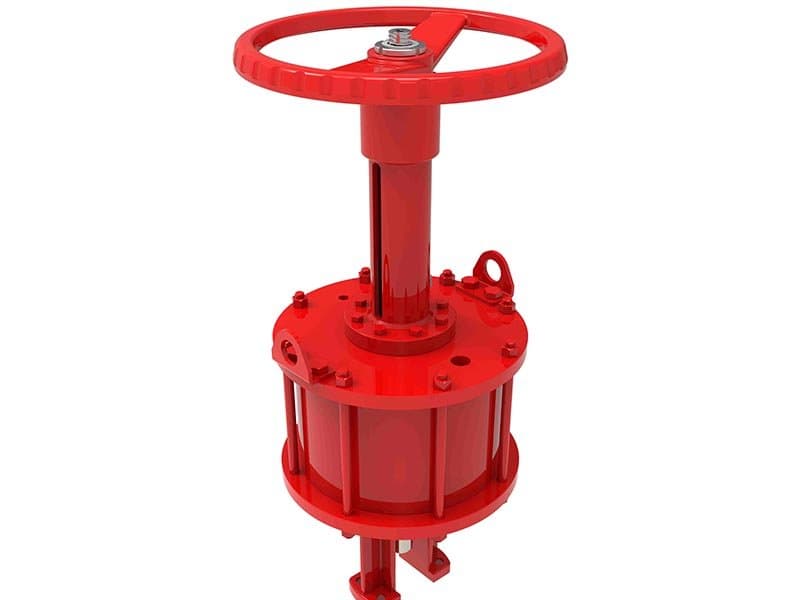
Giới thiệu Xi-lanh Hành Trình Tuyến Tính
Lò xo hồi vị (tác động đơn) hoặc tác động kép
500–50.000 lbf (diện tích lỗ × áp suất cấp)
40–150 psi (3–10 bar)
1–12 inch (25–300mm) tuyến tính
ISO 5211 (bề mặt lắp đặt)
Piston tác động kép trong thân xi lanh; vòng đệm O-ring hoặc vòng đệm môi; áp suất khí dẫn động piston theo cả hai hướng
Hộp lò xo bên trong (mẫu lò xo hồi vị); phạm vi điều chỉnh bằng cách chọn hộp lò xo
Mặt bích ISO 5211 hoặc khớp chữ U; giá đỡ trên yoke van; kết nối trục trực tiếp qua đai ốc nối hoặc kết nối yoke
Sức Mạnh Piston Nơi Màng Yếu Kém
Xi lanh hành trình thẳng phục vụ cùng loại van như bộ truyền động màng — van cầu, van cổng, van điều khiển cần lực đẩy tuyến tính. Nhưng chúng giải quyết hai vấn đề mà bộ truyền động màng không thể.
Lực đẩy cao hơn trong kích thước nhỏ hơn. Lỗ xi lanh thay thế diện tích màng. Đường kính lỗ nhỏ hơn màng để có lực đẩy tương đương, vì xi lanh piston chịu được áp suất cấp cao hơn — lên tới 150 psi so với 80 psi của màng. Áp suất cao hơn × diện tích nhỏ hơn = cùng lực đẩy với kích thước bộ truyền động nhỏ gọn hơn. Trên các lắp đặt thẳng đứng và giá đỡ ống chật hẹp nơi bộ truyền động màng không vừa giữa các đường ống liền kề, xi lanh piston lắp vào và cung cấp lực bạn cần.
Hành trình dài hơn mà không làm giảm lực đẩy. Bộ truyền động màng ngăn đạt tối đa khoảng 4 inch vì màng ngăn bị biến dạng và mất diện tích hiệu dụng khi hành trình dài hơn. Xi lanh piston chỉ kéo dài thân van. Hành trình 6, 8, 12 inch là tiêu chuẩn cho van cổng có hành trình trục dài, và vòng đệm O-ring vẫn hiệu quả ở bất kỳ vị trí nào dọc theo lỗ khoan. Lực đẩy không giảm theo chiều dài hành trình — diện tích piston không đổi cho dù piston nằm ở vị trí cách nắp cuối 1 inch hay 10 inch. Sự nhất quán đó rất quan trọng đối với van cổng, nơi việc mở hoàn toàn yêu cầu kéo dài trục van và lực đóng khi đóng hoàn toàn phải khớp với lực mở khi mở hoàn toàn.
Xi lanh piston trả giá cho kích thước nhỏ gọn bằng ma sát vòng đệm. Vòng đệm O-ring trên piston ma sát với bề mặt lỗ xi lanh. Lực ma sát đó làm giảm lực đẩy thực tại trục van — bạn cần áp suất cấp cao hơn để cung cấp cùng lực hiệu dụng mà bộ truyền động màng tạo ra ở áp suất thấp hơn. Trên van đóng/mở nơi trục di chuyển toàn hành trình mỗi chu kỳ, mất mát ma sát đó có thể chấp nhận được. Van đóng hoặc mở bất kể vài trăm pound ma sát.
Trên van điều khiển điều biến, ma sát tạo ra vấn đề khác — độ trễ. Bộ định vị ra lệnh điều chỉnh nhỏ, ví dụ 2% hành trình trục. Ma sát hấp thụ lực điều chỉnh trước khi trục di chuyển. Bộ định vị vượt quá ở lần điều chỉnh tiếp theo. Trục dao động quanh vị trí mục tiêu. Hiệu suất vòng điều khiển suy giảm. Van dao động. Biến quá trình dao động.
Bộ truyền động màng có ma sát vòng đệm không đáng kể. Màng uốn tự do — không có lực kéo O-ring chống lại bề mặt lỗ. Đối với dịch vụ điều biến nơi định vị chính xác quan trọng, bộ truyền động màng mang lại độ chính xác vị trí tốt hơn và phản hồi vòng điều khiển mượt mà hơn.
Chọn Dựa Trên Ứng Dụng
Sử dụng xi lanh piston cho van cổng có yêu cầu hành trình dài, trên các lắp đặt nơi không gian không đủ cho bộ truyền động màng, và cho dịch vụ đóng/mở nơi độ trễ không ảnh hưởng đến hiệu suất. Sử dụng bộ truyền động màng cho van điều khiển điều biến nơi độ chính xác vị trí là ưu tiên. Hai loại bộ truyền động chồng lấn trên cùng loại van nhưng phục vụ nhu cầu vận hành khác nhau.
A: Khi hành trình vượt quá 4 inch, khi không gian lắp đặt không đủ cho bộ truyền động màng, hoặc khi áp suất cấp trên 80 psi có sẵn và bạn muốn kích thước bộ truyền động nhỏ gọn. Van cổng có hành trình trục 6+ inch là ứng dụng xi lanh phổ biến nhất.
A: Không, trong phạm vi định mức. Vòng đệm O-ring piston xử lý 150 psi mà không có vấn đề mỏi. Lỗ xi lanh và nắp cuối được định mức cho áp suất cấp tối đa. Bộ truyền động màng không chịu được áp suất đó vì vật liệu màng mỏi dưới biến dạng áp suất cao lặp lại — vòng đệm piston không biến dạng, nó trượt.
A: Phụ thuộc vào đường kính lỗ, loại vòng đệm và tình trạng xi lanh. Vòng đệm O-ring trên xi lanh tiêu chuẩn tạo lực ma sát 50–200 lbf tùy thuộc kích thước lỗ. Vòng đệm môi giảm xuống 20–80 lbf nhưng đắt hơn. Trên lực đẩy đầu ra 5.000 lbf, lực ma sát đó là 1–4% — chấp nhận được cho dịch vụ đóng/mở. Trên lực đẩy đầu ra 500 lbf cho van điều khiển nhỏ, cùng tỷ lệ ma sát đó trở nên đáng kể.
A: Bạn có thể, và nhiều nhà máy làm vậy. Nhưng kỳ vọng độ trễ cao hơn bộ truyền động màng. Bộ định vị có phản hồi có thể bù đắp phần nào, nhưng dải chết giữa vị trí lệnh và vị trí thực tế sẽ rộng hơn. Nếu dung sai vòng điều khiển chặt, hãy chỉ định bộ truyền động màng thay thế.
A: Khớp hành trình xy lanh với hành trình trục van theo định mức. Van cầu thường cần 1–3 inch. Van cổng cần 4–12 inch tùy thuộc vào kích thước van và cấp áp suất. Bảng dữ liệu van của nhà sản xuất liệt kê hành trình trục — hãy mua hành trình xy lanh khớp với nó, không dài hơn. Hành trình thừa làm tăng chiều dài xy...
Thông Số Kỹ Thuật
| Parent Standards | ISO 5211, NAMUR, ATEX / IECEx |
| Parent Size Range | Torque 10 Nm - 10,000 Nm |
| Parent Pressure Class | Supply Pressure 4-8 bar |
Tải xuống sản phẩm
Cần Báo Giá?
Contact our engineering team for pricing and technical support on Xi-lanh Hành Trình Tuyến Tính.
Request a QuoteTìm Kiếm Thêm Giải Pháp?
Khám phá dải sản phẩm được thiết kế cho thách thức ngành của bạn.
Ball Valves
FLOWKS offers floating ball valve, trunnion mounted ball valve and top entry ball valve for oil & gas, petrochemical and power generation. Designed per API 6D, API 608 and ASME B16.34.
DBB Valves
FLOWKS Double Block & Bleed (DBB) valves provide dual isolation with bleed verification in a single compact body. Replacing traditional multi-valve installations, FLOWKS DBB valves reduce weight, space and potential leak paths. Available in bolted bonnet, all-welded and expanding gate designs per API 6D and API 607.
Gate Valves
FLOWKS gate valves for isolation service in piping systems. Flexible wedge, solid wedge, slab and expanding gate designs per API 600, API 602 and ASME B16.34.
Globe Valves
FLOWKS globe valves for throttling and isolation. Standard, angle, Y-pattern and bellows seal configurations per API 602 and BS 1868.