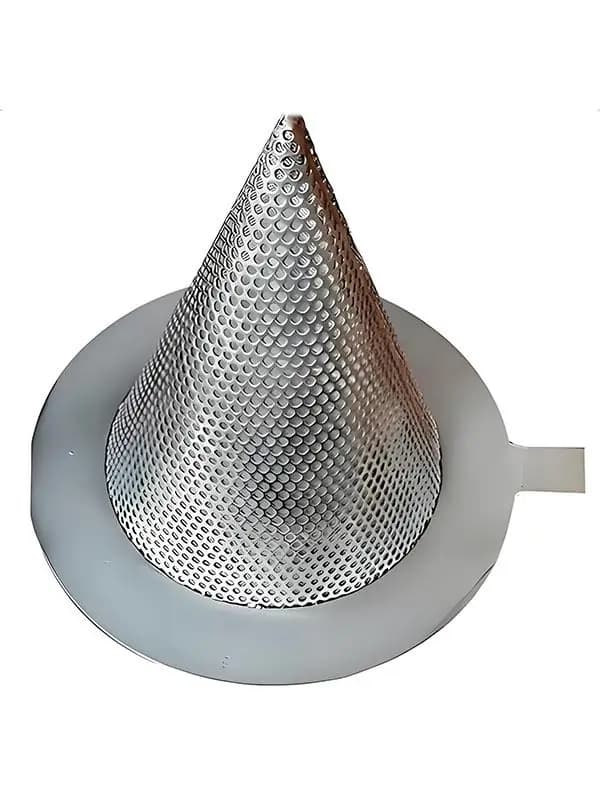
Giới thiệu Bộ Lọc Tạm Hình Nón
Kích thước: Được thiết kế riêng theo đường kính trong của ống — sản xuất để phù hợp với đường kính trong cụ thể của ống. Phạm vi phổ biến bao gồm các kích thước ống từ 2" đến 24".
Áp suất: Class 150 - 300 / PN 10-40 (chỉ dùng cho dịch vụ tạm thời — không được định mức cho lắp đặt vĩnh viễn. Áp suất thiết kế khớp với áp suất đường ống chỉ trong thời gian khởi động/vận hành thử)
Tiêu chuẩn: Không có tiêu chuẩn ngành nào quy định hình dạng của lưới lọc tạm thời — đây là các hạng mục chế tạo theo dự án cụ thể dựa trên thông số kỹ thuật đường ống của dự án. MSS SP-89 chỉ bao phủ các bộ lọc vĩnh viễn.
Vật liệu thân van: A240 304 (tấm thép không gỉ 304), A240 316 (tấm thép không gỉ 316). Không phải thân van đúc — được chế tạo từ tấm thép cán.
Bộ phận lọc: Bề mặt hình nón có đục lỗ. Đường kính lỗ từ 1mm đến 6mm, có thể lót lưới (20 - 100 mesh). Hình nón là bộ phận lọc — dòng chảy đi qua thành nón đục lỗ từ ngoài vào trong.
Thiết kế: Màn chắn hình nón đục lỗ được lắp giữa các mặt bích đường ống trong quá trình vận hành thử. Đỉnh nón hướng về phía hạ lưu. Được tháo ra sau 2-4 tuần khi các mảnh vụn ban đầu đã được làm sạch. Lắp đặt qua mặt bích hoặc tab hàn.
Bên Trong Đường Ống Mới Có Gì
Mọi hệ thống đường ống mới đều có mảnh vụn bên trong. Dù đội thi công có làm việc cẩn thận đến đâu — hàn, cắt, mài, lắp ráp — bên trong hệ thống ống mới lắp ráp vẫn chứa vật liệu không nên có ở đó. Xỉ hàn rơi vào bên trong ống từ quá trình hàn gốc. Phoi cắt từ quá trình chuẩn bị ống bằng cưa hoặc dụng cụ mài. Mảnh gioăng từ quá trình căn chỉnh và siết bu lông. Bụi bẩn lọt vào trong quá trình lưu kho và xử lý. Lớp gỉ hình thành trên bề mặt ống thép carbon trong những tuần hoặc tháng giữa lúc chế tạo và vận hành thử.
Lượng mảnh vụn này trong giai đoạn khởi động nặng hơn từ mười đến một trăm lần so với mảnh vụn vận hành bình thường mà bộ lọc vĩnh viễn xử lý. Bộ lọc vĩnh viễn — bộ lọc dạng rổ, bộ lọc chữ Y, bộ lọc kép — có màn lọc được thiết kế cho điều kiện vận hành liên tục. Hạt cát, sản phẩm ăn mòn, sinh vật phát triển, chất gây ô nhiễm quá trình. Các màn lọc này chạy ở độ đục lỗ 0,5mm hoặc lót lưới 40 mesh hoặc mịn hơn. Nếu bạn đặt màn lọc mịn đó vào đường ống trong giai đoạn khởi động, nó sẽ tắc nghẽn trong vài giờ. Đôi khi trong vài phút. Mảnh vụn khởi động lớn hơn, đa dạng hơn và phong phú hơn nhiều so với bất cứ thứ gì bộ lọc vĩnh viễn được thiết kế để bắt giữ.
Bộ lọc tạm thời hình nón tồn tại để xử lý tải trọng khởi động này. Độ đục lỗ lớn hơn — từ 1mm đến 6mm — cho phép lượng mảnh vụn khởi động đi qua mà không bị tắc nghẽn ngay lập tức trong khi vẫn bắt được các mảnh lớn gây hư hại cho thiết bị hạ lưu. Xỉ hàn, phoi cắt, mảnh gioăng, mảnh gỉ lớn. Bộ lọc hình nón bắt được những gì quan trọng trong quá trình vận hành thử và cho phép các hạt nhỏ hơn đi qua để được xả hoặc xử lý bởi bộ lọc vĩnh viễn sau khi được lắp đặt sau giai đoạn khởi động.
Tại Sao Là Hình Nón, Không Phải Màn Phẳng
Hình nón làm được hai việc mà màn phẳng không thể làm được.
Diện tích bề mặt. Một hình nón nằm bên trong ống có diện tích đục lỗ lớn hơn một đĩa phẳng ở cùng đường kính ống — khoảng 1,5 đến 2 lần tùy thuộc vào chiều dài nón. Diện tích bề mặt lớn hơn nghĩa là diện tích mở cho dòng chảy đi qua lớn hơn. Diện tích mở lớn hơn nghĩa là độ giảm áp trên mỗi đơn vị mảnh vụn thu được trên bề mặt thấp hơn. Trong giai đoạn khởi động, khi tải trọng mảnh vụn nặng và liên tục, diện tích bề mặt thêm đó giữ cho bộ lọc hoạt động lâu hơn trước khi cần làm sạch hoặc tháo ra. Màn phẳng bị tắc nhanh vì tất cả mảnh vụn thu trên một bề mặt nhỏ và chặn các lỗ đục nhanh chóng.
Phân bố dòng chảy. Hình nón trải dòng chảy đến trên toàn bộ bề mặt đục lỗ. Dòng chảy vào từ thượng lưu, chạm đỉnh nón trước tiên, và lan ra ngoài dọc theo thành nón về phía đáy. Vận tốc phân bố trên toàn bộ bề mặt nón thay vì tập trung ở tâm. Màn phẳng tạo ra kiểu dòng chảy khác — luồng vận tốc cao nhất chạm vào tâm màn và mảnh vụn tích tụ ở đó trước trong khi các mép ngoài thấy vận tốc thấp hơn và tích tụ chậm hơn. Tắc nghẽn cục bộ ở tâm chặn một phần không cân xứng của diện tích mở. Hình nón tránh được hiệu ứng tập trung này chỉ bằng hình dạng.
Tạm Thời Nghĩa Là Tạm Thời
Bộ lọc tạm thời hình nón không phải là thành phần đường ống vĩnh viễn. Kích thước đục lỗ quá thô cho việc lọc vận hành liên tục — độ đục lỗ 1mm đến 6mm sẽ không bắt được các hạt mịn mà bộ lọc vĩnh viễn của bạn xử lý. Kết cấu tấm chế tạo — tấm đục lỗ cán và hàn — không có độ bền kết cấu cho nhiều năm phục vụ áp suất liên tục. Thân bộ lọc đúc với bề mặt ngồi gia công và cụm nắp định mức được chế tạo cho lắp đặt vĩnh viễn. Bộ lọc tạm thời hình nón được chế tạo cho một khoảng thời gian vận hành thử.
Sau hai đến bốn tuần phục vụ, hãy kéo bộ lọc hình nón ra khỏi đường ống. Mở khớp mặt bích, tháo bộ lọc và các gioăng của nó, kiểm tra bên trong ống xem còn mảnh vụn không. Nếu hệ thống sạch — không thấy xỉ hàn, không phoi cắt,...
Thông Số Kỹ Thuật
| Body Materials | A105、SS304、SS316、F51, F55, F53, Hastelloy C、Monel 400 |
| Parent Standards | ASME B16.34, API 602, MSS SP-89 |
| Parent Size Range | 2" - 36" |
| Parent Pressure Class | Class 150 - 900 |
Tải xuống sản phẩm
| Vật Liệu Thân Van | A105、SS304、SS316、F51, F55, F53, Hastelloy C、Monel 400 |
Cần Báo Giá?
Contact our engineering team for pricing and technical support on Bộ Lọc Tạm Hình Nón.
Request a QuoteTìm Kiếm Thêm Giải Pháp?
Khám phá dải sản phẩm được thiết kế cho thách thức ngành của bạn.
Ball Valves
FLOWKS offers floating ball valve, trunnion mounted ball valve and top entry ball valve for oil & gas, petrochemical and power generation. Designed per API 6D, API 608 and ASME B16.34.
DBB Valves
FLOWKS Double Block & Bleed (DBB) valves provide dual isolation with bleed verification in a single compact body. Replacing traditional multi-valve installations, FLOWKS DBB valves reduce weight, space and potential leak paths. Available in bolted bonnet, all-welded and expanding gate designs per API 6D and API 607.
Gate Valves
FLOWKS gate valves for isolation service in piping systems. Flexible wedge, solid wedge, slab and expanding gate designs per API 600, API 602 and ASME B16.34.
Globe Valves
FLOWKS globe valves for throttling and isolation. Standard, angle, Y-pattern and bellows seal configurations per API 602 and BS 1868.