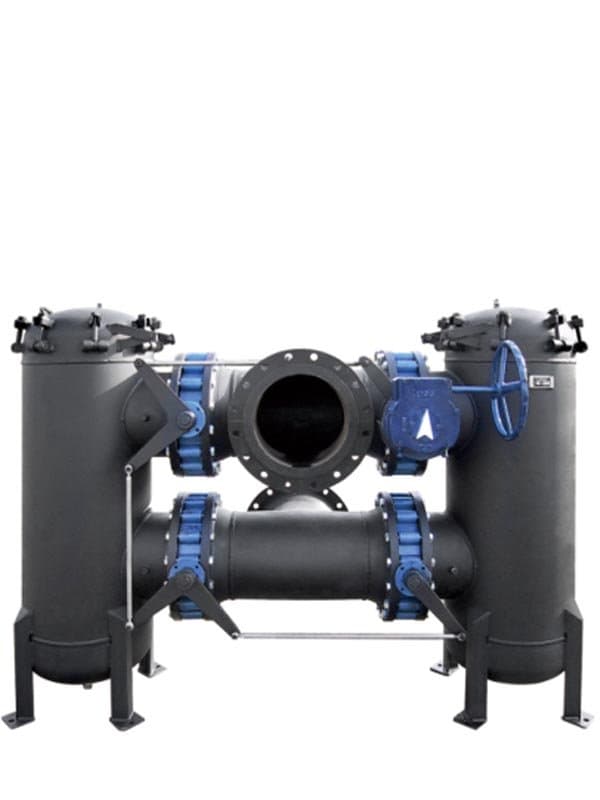
Bộ Lọc Rổ Kép
Giới thiệu Bộ Lọc Rổ Kép
Kích thước: 2" - 24" (DN50 - DN600)
Áp suất: Class 150 - 300 / PN 10-40
Tiêu chuẩn: MSS SP-89, theo tiêu chuẩn nhà sản xuất cho bộ lọc kép
Vật liệu thân: A216 WCB (thép cacbon đúc), A351 CF8M (thép không gỉ 316 đúc), A351 CF8 (thép không gỉ 304 đúc), gang dẻo (GGG40)
Bộ phận lọc: Màng lọc đục lỗ hoặc giỏ lót lưới. Đục lỗ màng lọc 0,5mm - 6mm. Lưới 20 - 200 mesh. Vật liệu giỏ phù hợp với thân.
Thiết kế: Hai buồng song song với van chuyển hướng (van nút hoặc van bi). Hoạt động dòng chảy liên tục—không dừng đường ống để bảo trì giỏ lọc.
Tại Sao Hai Buồng Lại Quan Trọng
Một số đường ống không thể dừng lại. Các nhà máy xử lý hóa chất vận hành các vòng phản ứng liên tục — bạn đóng đường cấp liệu ba mươi phút để vệ sinh giỏ lọc và toàn bộ mẻ sản phẩm bị hỏng. Mạch nước làm mát nhà máy điện lấy từ sông hồ — lượng rác thải tăng đột biến sau bão và chiếc giỏ lọc đơn đó nhanh chóng bị tắc, nhưng tuabin không dừng lại vì giỏ lọc cần vệ sinh. Tuần hoàn dầu nhiên liệu nhà máy lọc dầu, phun nước biển ngoài khơi — các hệ thống này chạy suốt ngày đêm vì dừng chúng tốn tiền thật hoặc tạo ra nguy hiểm thật.
Đó là toàn bộ lý do bộ lọc kép tồn tại. Một buồng xử lý dòng chảy. Buồng còn lại được cách ly, chờ sẵn. Khi giỏ hoạt động đầy và chênh áp của bạn bắt đầu tăng, bạn không tắt bất cứ thứ gì. Xoay van chuyển hướng. Dòng chảy chuyển sang buồng sạch trong vài giây. Buồng bẩn giờ đã được cách ly — mở nắp, kéo giỏ ra, vệ sinh nó, đặt lại, đóng nắp. Đường ống không bao giờ dừng. Sản xuất không bao giờ gián đoạn.
Bên trong Van Chuyển Hướng
Van chuyển hướng là thứ làm cho bộ lọc kép hoạt động, và lựa chọn giữa van phích cắm và van bi quan trọng hơn nhiều so với những gì bảng thông số kỹ thuật thừa nhận.
Van chuyển hướng dạng nút giúp đóng kín hoàn toàn giữa hai buồng. Nút van khít chặt vào thân van — tiếp xúc kim loại với kim loại tạo ra lớp bịt kín đáng tin cậy ngay cả khi có mảnh vụn trong dòng chảy. Tuy nhiên, việc vận hành van dạng nút cần nhiều lực hơn, đặc biệt là với kích thước lớn hơn. Nếu bạn đang sử dụng bộ lọc kép vận hành bằng tay có kích thước trên 8 inch với van chuyển hướng dạng nút, người vận hành cần lực đòn bẩy. Điều đó có nghĩa là tay cầm dài hơn, cần nhiều sức lực hơn, và trong một số trường hợp lắp đặt, bạn sẽ cần bộ truyền động thay vì tay quay.
Van chuyển hướng kiểu bi xoay dễ hơn. Một phần tư vòng và bạn đã chuyển buồng. Yêu cầu lực thấp hơn, điều này làm van bi phổ biến trên các thiết bị vận hành bằng tay. Sự đánh đổi là độ kín. Tiếp xúc bi với thân van thực hiện cách ly giữa các buồng, và trong dịch vụ bẩn — hạt mài mòn, bùn, tải lượng mảnh vụn cao — bề mặt bịt kín đó có thể bị mòn. Đó không phải là hỏng hóc, mà là sự xuống cấp dần dần. Các buồng bắt đầu rò rỉ vào nhau và bạn mất đi sự cách ly sạch cần thiết để tháo giỏ an toàn.
Cả hai thiết kế đều hoạt động. Câu hỏi là trong dòng chảy của bạn có gì và bạn muốn truyền động việc chuyển đổi như thế nào. Nước sạch với mảnh vụn thỉnh thoảng — van bi, xoay dễ, hoàn toàn đầy đủ. Tải lượng mảnh vụn nặng hoặc môi trường mài mòn — van phích cắm, kín hơn, lực xoay lớn hơn. Kích thước trên 12" và bạn có thể muốn chuyển đổi bằng bộ truyền động bất kể loại van nào.
Thực Tế Về Kích Thước và Chi Phí
Ở kích thước trên 12", bộ lọc kép trở nên đắt nhanh chóng. Hai thân đúc kích thước đầy đủ, cơ cấu van chuyển hướng được gia công vào đoạn kết nối, bốn cụm nắp, và tất cả các bệ đỡ giỏ bên trong. Bạn đang mua hai bộ lọc bắt bu lông lại với nhau với cơ cấu chuyển đổi ở giữa — và đó chính xác là những gì giá phản ánh. Nhưng đối với các ứng dụng nơi việc dừng định kỳ của bộ lọc giỏ đơn là không thể chấp nhận, bộ lọc kép là lựa chọn lọc liên tục duy nhất ở quy mô đường ống quy trình. Không có lựa chọn thay thế rẻ hơn nào cho bạn dòng chảy không gián đoạn với khả năng tiếp cận giỏ. Bộ lọc kép đắt hơn vì nó giải quyết một vấn đề không thể giải quyết bằng cách nào khác.
Đúng vậy, nhưng hướng của van chuyển hướng quan trọng. Lắp đặt thẳng đứng với dòng chảy đi lên — đảm bảo trục van chuyển hướng nằm ngang để trọng lực không làm lệch vị trí van. Dòng chảy thẳng đứng đi xuống cũng hoạt động, nhưng bạn cần xác nhận với nhà sản xuất rằng thiết kế bệ đỡ giỏ xử lý được hướng tải dòng chảy ngược. Hầu hết bộ lọc kép tiêu chuẩn được thiết kế cho lắp đặt ngang; lắp đặt dọc có thể thực hiện nhưng cần xem xét bố trí.
Chênh áp. Lắp đồng hồ đo hoặc bộ truyền DP qua buồng hoạt động. Khi chênh áp đạt ngưỡng cài đặt của bạn — thường là 5-15 psi trên mức cơ bản của giỏ sạch, tùy thuộc vào điều kiện dòng chảy của bạn — đó là điểm chuyển đổi của bạn. Một số người vận hành chuyển theo lịch thời gian thay vào đó, nhưng chênh áp là chỉ số đáng tin cậy vì tải lượng mảnh vụn thay đổi theo điều kiện thực tế, không theo lịch của bạn.
Chúng nên như vậy. Hai buồng lọc luân phiên nhau — nếu buồng A có lưới lọc 40 mắt lưới và buồng B có lưới lọc 100 mắt lưới, bạn sẽ nhận được hiệu quả lọc không nhất...
Thông Số Kỹ Thuật
| Size Range | 2" - 36" |
| Pressure Class | Class 150 - 2500 |
| Design Standard | ASME B16.34 |
| Body Materials | Assenbly |
| Parent Standards | ASME B16.34, API 602, MSS SP-89 |
| Parent Size Range | 2" - 36" |
| Parent Pressure Class | Class 150 - 900 |
Tải xuống sản phẩm
| Phạm Vi Cỡ | 2" - 36" |
| Lớp Áp Suất | Class 150 - 2500 |
| Tiêu Chuẩn Thiết Kế | ASME B16.34 |
| Vật Liệu Thân Van | Assenbly |
Cần Báo Giá?
Contact our engineering team for pricing and technical support on Bộ Lọc Rổ Kép.
Request a QuoteTìm Kiếm Thêm Giải Pháp?
Khám phá dải sản phẩm được thiết kế cho thách thức ngành của bạn.
Ball Valves
FLOWKS offers floating ball valve, trunnion mounted ball valve and top entry ball valve for oil & gas, petrochemical and power generation. Designed per API 6D, API 608 and ASME B16.34.
DBB Valves
FLOWKS Double Block & Bleed (DBB) valves provide dual isolation with bleed verification in a single compact body. Replacing traditional multi-valve installations, FLOWKS DBB valves reduce weight, space and potential leak paths. Available in bolted bonnet, all-welded and expanding gate designs per API 6D and API 607.
Gate Valves
FLOWKS gate valves for isolation service in piping systems. Flexible wedge, solid wedge, slab and expanding gate designs per API 600, API 602 and ASME B16.34.
Globe Valves
FLOWKS globe valves for throttling and isolation. Standard, angle, Y-pattern and bellows seal configurations per API 602 and BS 1868.