Giới thiệu Bộ Lọc Tạm Phẳng
Được chế tạo theo đường kính trong của ống — dải phổ biến 2" đến 24"
Class 150–300 / PN 10–40 (chỉ dùng tạm thời — không được định mức cho lắp đặt vĩnh viễn)
Chế tạo theo yêu cầu riêng của từng dự án — không có tiêu chuẩn ngành nào quy định hình dạng của bộ lọc tạm thời.
Tấm thép không gỉ A240 304 / A240 316 — đĩa và vòng mặt bích cắt từ tấm cán, không có thân đúc
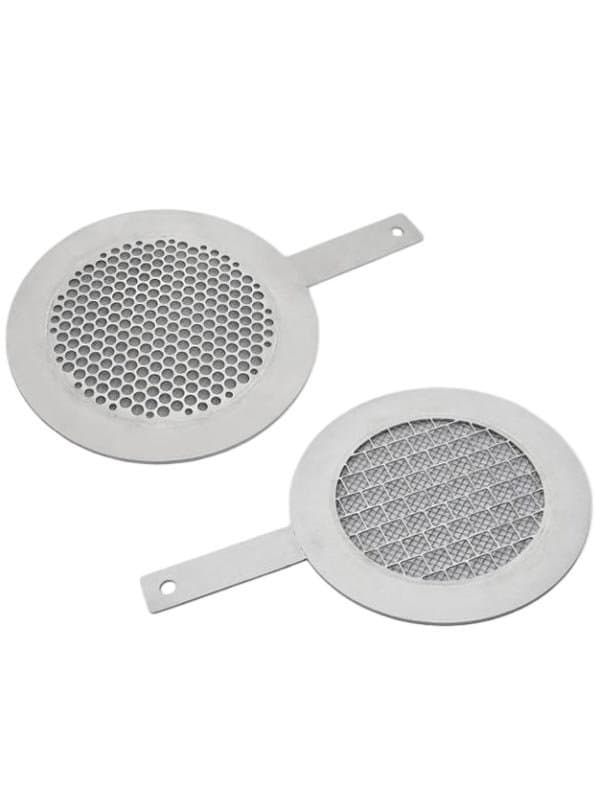
Đĩa phẳng đục lỗ — lỗ đục 1mm đến 6mm, lót lưới tùy chọn (20–100 mesh)
Đĩa phẳng lắp giữa các mặt bích đường ống, vuông góc với dòng chảy — cặn bẩn tích tụ trên bề mặt phía thượng nguồn, được loại bỏ sau khi hoàn tất vận hành thử
Tại Sao Hầu Hết Các Dự Án Bắt Đầu Với Đĩa Phẳng
Khi một đường ống mới đi vào hoạt động, việc phát sinh chất thải là điều chắc chắn — xỉ hàn, mảnh rỉ sét, bụi bẩn, mảnh gioăng. Cần phải có thiết bị để giữ lại những chất thải đó trước khi chúng đến các van, máy bơm và thiết bị đo ở phía hạ lưu. Lưới lọc tạm thời dạng phẳng là lựa chọn đầu tiên mà hầu hết các nhóm dự án thường sử dụng, và lý do rất đơn giản: nó hiệu quả, giá rẻ và lắp đặt chỉ trong vài phút.
Bạn cắt một đĩa tròn từ tấm đục lỗ, thêm vòng mặt bích hoặc tai hàn, và xong. Không cần tạo hình. Không cần cán. Không cần tính toán hình học hình nón. Trên một dự án xây dựng lớn — hàng trăm đoạn ống, hàng chục kích cỡ, thời hạn vận hành thử đang ép sát — sự đơn giản trong chế tạo đó rất quan trọng. Mỗi đĩa phẳng bạn đặt hàng có giá thấp hơn và giao nhanh hơn so với loại hình nón tương đương. Khi tiến độ gấp rút và ngân sách có hạn, đĩa phẳng thắng chỉ riêng về mặt hậu cần.
Lắp đặt cũng dễ dàng không kém. Tháo bu lông mặt bích, đặt đĩa vào với gioăng ở cả hai bên, siết lại. Đĩa mỏng — thép tấm 3 đến 6mm — nên hầu như không thay đổi khe hở mặt bích. Hai tuần sau khi đường ống sạch, tháo bu lông lần nữa, lấy đĩa ra, thay bằng miếng đệm hoặc gioăng vĩnh viễn. Không cần dụng cụ đặc biệt. Không rắc rối. Toàn bộ chu trình từ lắp đến tháo nhanh hơn cả thời gian đọc quy trình vận hành thử.
Thêm vào đó là lợi thế về không gian. Các đĩa phẳng hầu như không chiếm không gian theo trục — chỉ bằng độ dày của đĩa cộng với hai miếng đệm. Trong các hệ thống lắp đặt chật hẹp, nơi các mặt bích nằm sát nhau và không có chỗ cho phần thân kéo dài của bộ lọc hình nón, đĩa phẳng vẫn vừa vặn mà không cần phải thay đổi đường ống. Điều này rất quan trọng trong các bố trí nhà máy chật chội, nơi mỗi inch của giá đỡ đường ống đều có ý nghĩa.
Nơi Đĩa Phẳng Chạm Giới Hạn Của Nó
Đây là sự đánh đổi thật lòng. Một hình tròn phẳng có diện tích bề mặt nhỏ hơn một hình nón bao quanh cùng đường kính ống. Diện tích nhỏ hơn nghĩa là tổn thất áp suất cao hơn trên mỗi đơn vị cặn bẩn bị giữ lại — đĩa bị tắc nhanh hơn trong cùng điều kiện tải. Và phân bố dòng chảy không đều. Vận tốc dòng vào chạm tâm đĩa trước, tích tụ cặn ở đó trong khi vành ngoài ít bị tác động hơn. Tắc cục bộ ở tâm là một hiện tượng thực tế — không phải lý thuyết, đó là điều các vận hành viên nhìn thấy tại hiện trường.
Với tải cặn nhẹ hoặc các đợt khởi động ngắn nơi bạn sẽ tháo lưới lọc trước khi nó kịp tắc, những sự đánh đổi đó không quan trọng. Đĩa phẳng làm tốt công việc với chi phí thấp hơn và chế tạo đơn giản hơn. Nhưng nếu bạn đối mặt với cặn nặng — ví dụ một thời gian vận hành thử dài trên đường ống cũ rỉ sét nối vào hệ thống ống mới — lưới lọc tạm thời hình nón với diện tích bề mặt lớn hơn và phân bố dòng chảy tốt hơn cho bạn biên độ vận hành rộng hơn. Khoảng trống trước khi tắc nhiều hơn nghĩa là ít rủi ro dừng máy ngoài kế hoạch trong giai đoạn nhạy cảm nhất về tiến độ của dự án.
Nắm rõ lượng phế thải cần vận chuyển. Nắm rõ tiến độ. Chọn hình dạng phù hợp với cả hai yếu tố đó.
Ý Nghĩa Thực Sự Của Vật Liệu
Thép tấm A240 304 và 316 — đó là nguyên liệu chính cho mọi bộ phận của bộ lọc tạm thời dạng phẳng. Đĩa được cắt từ thép tấm đục lỗ. Vòng mặt bích được cắt từ thép tấm đặc cùng loại. Không có thân đúc, không rèn, không gia công phức tạp. Nó được chế tạo từ thép tấm cán, đó là lý do tại sao quá trình sản xuất nhanh chóng và việc truy xuất nguồn gốc vật liệu luôn được đảm bảo — một mã số lô sản xuất, một loại thép, một Giấy chứng nhận tuân thủ vật liệu.
Lớp lưới lót là tùy chọn. Nếu thiết bị hạ lưu của bạn nhạy cảm — van điều khiển lỗ nhỏ, lỗ đo lưu lượng, chi tiết bên trong bơm chính xác — bạn thêm một lớp lưới phủ lên đĩa đục lỗ để giữ các hạt mịn lọt qua các lỗ tròn từ 1mm đến 6mm. Lưới dao động từ 20 đến 100 mesh. Với bảo vệ khởi động thô sơ nơi bạn chỉ cần giữ hạt hàn và mảnh gỉ, tấm đục lỗ trần là đủ. Đừng đặc tả quá mức bộ phận lọc cho một lắp đặt tạm thời hai tuần — hãy khớp nó với những gì thực sự có trong đường ống.
A: Không. Nó chỉ được thiết kế cho dịch vụ khởi động và vận hành thử — thường từ 2 đến 4 tuần. Lắp đặt vĩnh viễn nghĩa là tải cặn liên tục mà không có kế hoạch tháo ra, và đĩa phẳng không được chế tạo cho việc đó. Sau khi vận hành thử, tháo lưới lọc và lắp gioăng hoặc vòng đệm vĩnh viễn.
Thông Số Kỹ Thuật
| Body Materials | A105、SS304、SS316、F51, F55, F53, Hastelloy C、Monel 400 |
| Parent Standards | ASME B16.34, API 602, MSS SP-89 |
| Parent Size Range | 2" - 36" |
| Parent Pressure Class | Class 150 - 900 |
Tải xuống sản phẩm
| Vật Liệu Thân Van | A105、SS304、SS316、F51, F55, F53, Hastelloy C、Monel 400 |
Cần Báo Giá?
Contact our engineering team for pricing and technical support on Bộ Lọc Tạm Phẳng.
Request a QuoteTìm Kiếm Thêm Giải Pháp?
Khám phá dải sản phẩm được thiết kế cho thách thức ngành của bạn.
Ball Valves
FLOWKS offers floating ball valve, trunnion mounted ball valve and top entry ball valve for oil & gas, petrochemical and power generation. Designed per API 6D, API 608 and ASME B16.34.
DBB Valves
FLOWKS Double Block & Bleed (DBB) valves provide dual isolation with bleed verification in a single compact body. Replacing traditional multi-valve installations, FLOWKS DBB valves reduce weight, space and potential leak paths. Available in bolted bonnet, all-welded and expanding gate designs per API 6D and API 607.
Gate Valves
FLOWKS gate valves for isolation service in piping systems. Flexible wedge, solid wedge, slab and expanding gate designs per API 600, API 602 and ASME B16.34.
Globe Valves
FLOWKS globe valves for throttling and isolation. Standard, angle, Y-pattern and bellows seal configurations per API 602 and BS 1868.