Hastelloy Valve
About
Why Hastelloy Beats Stainless When Your Process Fluid Can't Be Tamed
Let's be blunt. If 316L holds up in your system, you don't need Hastelloy. But if you've already watched stainless valves pit, crack, or dissolve inside six months — you're in the territory where this nickel-molybdenum-chromium alloy earns its absurd price tag.
Hastelloy C276 isn't just "better stainless." It's fundamentally different chemistry. The 16% molybdenum content gives it a fighting chance against reducing acids (hydrochloric, sulfuric at concentration levels that eat 316L alive). The 15% chromium and 4% tungsten handle oxidizing conditions. Most materials fail at one end of that spectrum. C276 covers both. That's why it shows up in flue gas desulfurization units — the slurry in those scrubbers swings between oxidizing and reducing depending on oxygen levels, temperature, and pH. A valve that only handles one mode is a valve that fails on shift days.
Real-world win: HF alkylation units in refineries. The hydrofluoric acid environment destroys nearly everything. C276 valves in those circuits routinely run 5+ years without internal degradation. That's not marketing — that's plant data from operators who track every replacement.
Where It Actually Falls Short (Because No Material Is Perfect)
Price. Let's not pretend otherwise. A Hastelloy C276 gate valve costs 8–12x what a 316L equivalent runs. And the lead times? 16–20 weeks for castings if your supplier doesn't stock. That's not a supply chain hiccup — that's the normal state of affairs for a niche superalloy.
Welding requires discipline. C276 works fine with GTAW and GMAW using matching filler (ERNiCrMo-4), but interpass temperature must stay below 100°C, and you need aggressive purge gas coverage. Skip the purge? You get oxide lines that become corrosion initiation points. I've seen shops try to fast-track Hastelloy welds the same way they handle stainless — and the radiograph always catches the result.
C22 (N06022) is the upgrade if you're fighting crevice corrosion in high-chloride, high-temperature service. It costs even more, but the PREN number jumps significantly. Worth it for offshore seawater duty. Not worth it for a chemical tank where C276 already runs fine.
Buying Advice That Actually Helps
Don't spec Hastelloy as a "just in case" upgrade from stainless. That's how you burn budget without gaining reliability. Spec it when your corrosion engineer specifically identifies media that stainless can't handle — and document that decision for procurement.
Stock one or two common sizes (2" Class 300 flanged gate, 3" Class 150 globe) if your plant runs C276 anywhere. Emergency replacements on this material are a nightmare because foundries don't keep inventory. Having a shelf spare saves you from the 18-week scramble.
Check your flange bolting material. Running Hastelloy valve bodies with B7 studs because "it's cheaper" creates a galvanic mismatch in chloride service. Use B8M or matching alloy bolting — the cost difference is small, the failure risk reduction is large.
A: Yes, but it's overkill cost-wise unless you also deal with acidic process streams in the same system. For pure seawater, 254SMO or titanium often gives equivalent performance at lower cost.
A: C22 has higher chromium (22% vs 15%) and lower molybdenum (13% vs 16%). Better crevice corrosion resistance in high-chloride oxidizing conditions. C276 is slightly stronger in pure reducing acid environments. Most chemical plants stick with C276. Offshore and marine increasingly spec C22.
A: No PWHT required for C276 or C22 — that's one of their actual advantages over some other nickel alloys. Solution anneal only if you need to restore full corrosion resistance after heavy cold working.
A: Cast C276 (CW-12MW per ASTM A494) has slightly different chemistry limits but meets the same corrosion benchmarks for most services. For extreme crevice conditions, wrought forgings give a marginal edge due to cleaner microstructure.
Technical Specifications
| Size Range | 1/2" - 6" |
| Pressure Class | Class 150 - 600 |
| Design Standard | ASME B16.34, API 6D,NACE MR0175 |
| Body Materials | Monel, Hastelloy, Zirconium, Titanium, Aluminum Bronze, Duplex Stainless Steel, Super Duplex Stainless Steel, Inconel, Incoloy, Monel Copper, Tantalum, Nickel-based Alloy, Cobalt-based Hard Alloy, Alloy20, C276, C22, B3, Inconel625, Inconel718, 904L, 316Ti |
| Parent Standards | ASME B16.34, NACE MR0175 |
| Parent Size Range | 2" - 24" |
| Parent Pressure Class | Class 150 - 1500 |
Product Downloads
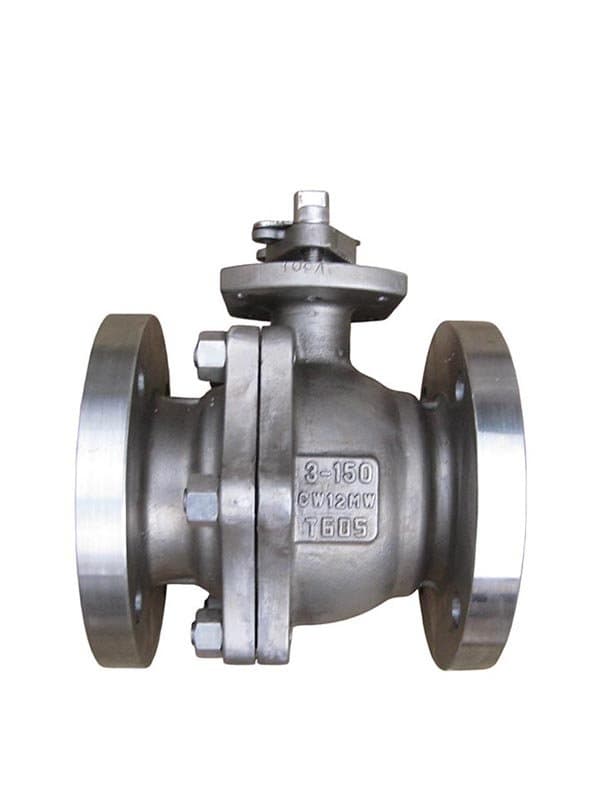
| Size Range | 1/2" - 6" |
| Pressure Class | Class 150 - 600 |
| Design Standard | ASME B16.34, API 6D,NACE MR0175 |
| Body Materials | Monel, Hastelloy, Zirconium, Titanium, Aluminum Bronze, Duplex Stainless Steel, Super Duplex Stainless Steel, Inconel, Incoloy, Monel Copper, Tantalum, Nickel-based Alloy, Cobalt-based Hard Alloy, Alloy20, C276, C22, B3, Inconel625, Inconel718, 904L, 316Ti |
Need a quote?
Contact our engineering team for pricing and technical support on Hastelloy Valve.
Request a QuoteLooking for more options?
Explore our complete range of industrial valves or contact us for custom solutions.
Ball Valves
FLOWKS offers floating ball valve, trunnion mounted ball valve and top entry ball valve for oil & gas, petrochemical and power generation. Designed per API 6D, API 608 and ASME B16.34.
DBB Valves
FLOWKS Double Block & Bleed (DBB) valves provide dual isolation with bleed verification in a single compact body. Replacing traditional multi-valve installations, FLOWKS DBB valves reduce weight, space and potential leak paths. Available in bolted bonnet, all-welded and expanding gate designs per API 6D and API 607.
Gate Valves
FLOWKS gate valves for isolation service in piping systems. Flexible wedge, solid wedge, slab and expanding gate designs per API 600, API 602 and ASME B16.34.
Globe Valves
FLOWKS globe valves for throttling and isolation. Standard, angle, Y-pattern and bellows seal configurations per API 602 and BS 1868.