Product Range
Complete range of industrial valves for every application.
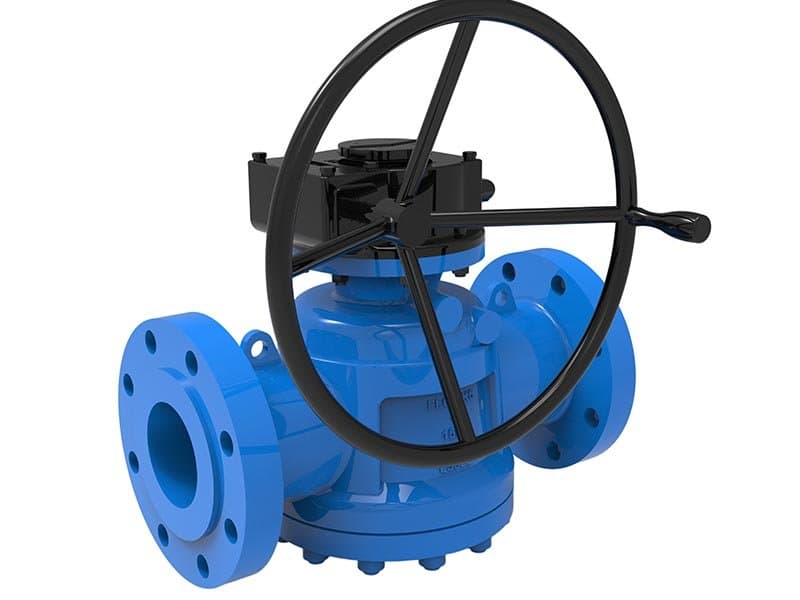
Oil Lubricated Plug Valve
Quick Specs Size: 2" - 24" (DN50 - DN600) Pressure: Class 150 - 600 / PN 10-100 Standard: API 6D, API 599, ASME B16.34 Body Materials: A216 WCB, A217 WC6/WC9 (Cr-Mo), A351 CF8M, A182 F316 (forged) Seat: Metal-to-metal with lubricant film seal Design: Tapered plug, 90° rotation, external lubricant injection When Soft Seats Won't Survive Crude oil carries aromatics. Natural gas carries condensates. Refinery streams carry mixtures that eat elastomer seats from the inside out — PTFE swells, Viton hardens, EPDM cracks. When your line media is hostile to every soft seat option on the shelf, you need metal seating that seals without relying on an insert. That's where the lubricated plug valve earns its place. The tapered plug sits inside a matching tapered body bore — same geometry, same taper angle, metal against metal. Without lubricant those two surfaces would gall and seize, because the taper forces increasing contact area as the plug rotates toward closed. The lubricant injection system solves both the sealing problem and the friction problem at once. You inject grease through external fittings before each operation cycle. A few pumps from a grease gun, then turn the valve. The lubricant flows through internal distribution grooves on the plug surface and fills the microscopic gaps between plug and body — forming a hydrostatic film that holds line pressure and reduces operating torque simultaneously. The grease isn't just a convenience. It's the primary seal. The Taper Geometry That Makes It Work The taper is the whole reason this valve seals reliably. As the plug rotates toward closed, the narrowing taper increases the contact pressure between plug and body bore. That's what forces the lubricant film into every surface irregularity — the geometry itself pressurizes the seal layer. Open the plug, and the taper relaxes. Close it, and the taper compresses. It's a self-adjusting seal that doesn't depend on spring force or external loading. Lubricant injection ports on the body exterior connect to internal distribution grooves machined into the plug surface. You see those fittings on the outside — typically one or two per valve, depending on size. Inject before each cycle for infrequent-service valves, or set up periodic injection schedules for valves in frequent operation. Either way, maintaining the grease film is what maintains the seal. Neglect the injection schedule and the plug will eventually bind. Built for Pipeline Isolation Points API 6D pipeline specifications call for lubricated plug valves on isolation points where metal seating is mandatory and the line media won't tolerate elastomer or PTFE. That's not a niche requirement — it's standard practice on crude trunk lines, gas transmission headers, and refinery crossover manifolds. Class 150 through 600 covers the pressure range most pipelines operate in. Sizes from 2" through 24" handle the diameter range from branch connections to main line block valves. Body material options cover the temperature and corrosion spectrum. WCB for ambient carbon steel service. WC6 and WC9 for elevated-temperature Cr-Mo applications — steam lines, high-temperature hydrocarbon service. CF8M for corrosion-resistant stainless requirements. F316 forged for high-pressure stainless where casting integrity isn't sufficient. Fire-safe configurations are available when you specify fire-resistant grade lubricant — the valve maintains seal integrity under fire conditions because the metal-to-metal seat doesn't burn away. FAQ A: For infrequent-service isolation valves — inject before each operation cycle. A few pumps of grease gun, then turn the plug. For valves that cycle regularly, set a periodic injection schedule based on your operating conditions. Most pipeline operators inject weekly or monthly on frequent-cycle valves. A: The plug will eventually bind against the body bore. Without the lubricant film, the taper geometry forces direct metal-to-metal contact — and those surfaces gall. Operating torque increases, then the plug seizes. You'll need to force lubricant into the stuck valve and work it free, which is avoidable maintenance if you follow the injection schedule. A: The lubricant film seal provides very low leakage — typically within API 6D acceptable limits for metal-seated valves. It will not achieve bubble-tight zero leakage like a soft seated design. If your specification demands zero visible leakage, consider a soft seated plug valve instead, provided your line media is compatible with the seat material. A: Yes, when you specify fire-resistant grade lubricant. The metal-to-metal seat doesn't burn away under fire conditions — the seat integrity is maintained by the metal surfaces, not by an elastomer that would be destroyed. The lubricant film may degrade, but the metal seating provides backup seal capability. A: The taper provides self-adjusting...
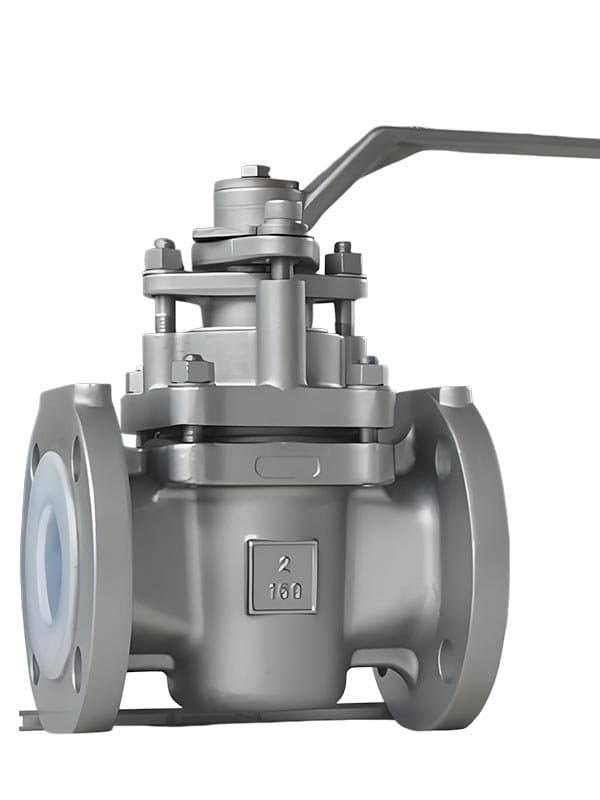
Soft Seated Plug Valve
Quick Specs Size: 1/2" - 12" (DN15 - DN300) Pressure: Class 150 - 300 / PN 10-40 Standard: API 599, MSS SP-111, ASME B16.34 Body Materials: A216 WCB, A351 CF8M, A351 CF8, ductile iron (GGG40) Seat: PTFE, RPTFE, FEP encapsulated, EPDM, Viton, NBR Design: Cylinder or tapered plug with soft seat inserts, 90° rotation, no lubricant required Zero Leakage — No asterisks, no disclaimers Metal-seated plug valves always have some residual leakage. The surface finish isn't perfect, the contact isn't uniform across the full seat circumference, and microscopic pathways let trace amounts of fluid pass. That's the physics of metal against metal — you can improve it, but you can't eliminate it entirely. Soft seated plug valves eliminate it. The seat insert compresses against the plug face as the plug rotates to closed position. PTFE, Viton, EPDM, NBR — whatever seat material you specify, it flows into every surface irregularity under compression and fills every gap. The result is bubble-tight shutoff. Zero visible leakage at rated pressure. No asterisks, no "within acceptable limits," no qualification. The seat does what metal can't. That's why soft seated plug valves dominate in water treatment, chemical processing, and any application where zero leakage is a specification requirement, not a wish list item. When your isolation point has to hold with no passing — shutdown interlocks, sample connections, drain isolation on hazardous lines — soft seating is the right call. PTFE: The Seat That Does Two Jobs PTFE is the workhorse. Chemically inert — it handles virtually every process fluid without degradation. Self-lubricating — the plug rotates against PTFE with lower friction than any metal-to-metal contact, which means lower operating torque and no external grease injection. Handles temperatures up to approximately 200°C continuous. And it seals bubble-tight every cycle. The limitation: PTFE cold-flows under sustained pressure loading. The material slowly deforms under the compressive force of the plug face pressing against it. After hundreds of cycles at rated pressure, the seat footprint changes shape — it creeps. Reinforced PTFE (RPTFE) addresses this by adding glass fiber or carbon filler. The reinforcement reduces cold-flow deformation and increases pressure resistance, while keeping the chemical inertness and self-lubricating properties that make PTFE useful in the first place. RPTFE is the practical upgrade when your application runs at the top of the pressure range or requires more cycles before seat replacement. Viton covers aggressive chemical service at higher temperatures — acids, solvents, hydrocarbon streams that would attack other elastomers. EPDM handles water and steam service. NBR covers oil and fuel applications at moderate temperatures. Each seat material has a specific range where it outperforms the alternatives, and the wrong choice fails faster than no choice at all. What Fire-Safe Really Means Here Soft seats burn. PTFE melts at roughly 327°C — well below fire temperatures. Viton and EPDM decompose under fire exposure. That's the fundamental tradeoff of soft seating: you get zero leakage in normal operation, but you lose seal integrity if fire reaches the valve. Fire-safe versions solve this with FEP-encapsulated metal inserts. Under normal operation, the FEP outer layer provides the soft-seat sealing — zero leakage, low torque, same performance you expect from a PTFE seat. When fire burns the FEP away, the metal insert underneath maintains seal integrity. The valve transitions from soft-seat sealing to metal-seat backup without external intervention. It's not zero leakage under fire conditions — it's acceptable leakage that meets fire-test standards. But the valve doesn't fail catastrophically, which is what fire-safe specifications require. FAQ A: It depends on operating pressure and temperature. At moderate pressure with infrequent cycling, PTFE seats last thousands of cycles. At rated pressure with frequent cycling, cold-flow deformation becomes noticeable after several hundred cycles. RPTFE seats extend that range significantly. Plan seat replacement based on your actual operating conditions — there's no universal number. A: Yes — PTFE and Viton both seal bubble-tight on gas. The key consideration is gas composition. Natural gas with condensate aromatics may degrade Viton over time. Pure dry gas works fine with PTFE. Wet gas with H2S requires seat material evaluation for chemical compatibility before specification. A: Soft seat integrity depends on uniform compression across the full seat circumference. At larger diameters, maintaining that uniformity becomes difficult — the seat insert has to cover more surface area, and dimensional variations in the body bore affect seal consistency. Metal-seated lubricated designs handle larger sizes more reliably. For applications above...
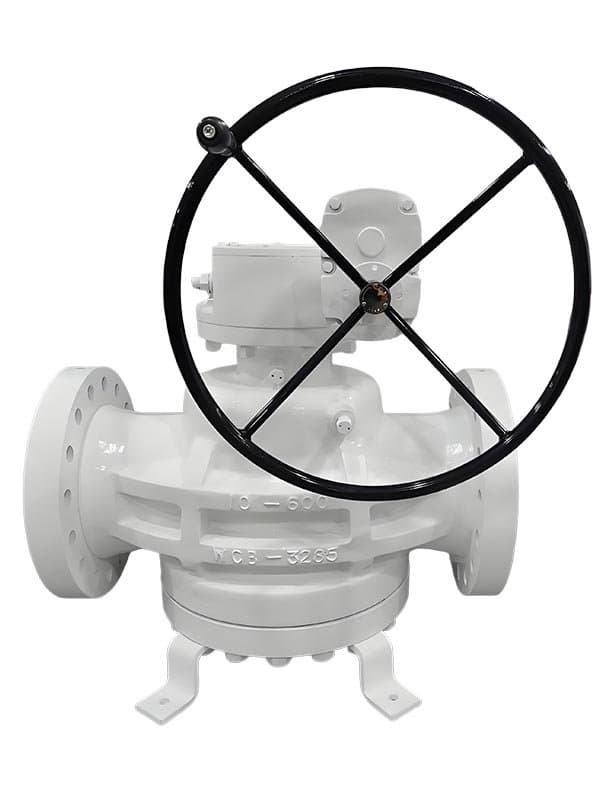
Pressure Balanced Plug Valve
Quick Specs Size: 2" - 24" (DN50 - DN600) Pressure: Class 150 - 900 / PN 10-150 Standard: API 6D, API 599, ASME B16.34 Body Materials: A216 WCB, A217 WC6/WC9, A351 CF8M, A182 F316 Seat: Metal-to-metal (lubricated) or soft seated (PTFE/RPTFE/Viton) Design: Pressure balanced plug with internal bypass passages, 90° rotation The Torque Problem That Nobody Talks About Here's what happens inside an unbalanced plug valve at Class 600 on a 12" line: line pressure pushes on one side of the plug face with nowhere for that force to go except into the body bore. At 600 psi across a 12" diameter, you're looking at thousands of pounds of unbalanced hydraulic force. The operator has to overcome that force to turn the plug — and at those numbers, manual operation becomes physically impossible. Pneumatic actuators struggle. Electric actuators need oversized motors. The torque requirement dictates the actuator specification, and the actuator cost follows. Pressure balanced plug valves eliminate that hydraulic force. Internal bypass passages connect upstream and downstream pressure to both sides of the plug simultaneously. Upstream pressure pushes on the upstream plug face. The same pressure is routed through internal channels to push on the downstream plug face from the opposite direction. The two forces cancel out. Net hydraulic force on the plug drops to near zero. The operator only needs to overcome mechanical friction — not hydraulic pressure. That's the difference between a valve you can turn by hand and a valve that requires a multi-thousand-dollar actuator package. You can manually operate a 16" Class 600 pressure balanced plug valve. You can't manually operate the same size and class with an unbalanced design. For pipeline isolation points at high pressure and large diameter, pressure balancing isn't a luxury — it's the only practical way to keep operating torque within manageable limits. How the Bypass Passages Work Inside the Plug The internal bypass passages are machined directly into the plug assembly. Channels connect the upstream cavity to the downstream side of the plug face, and vice versa. When line pressure enters the valve, it flows through these passages to both sides of the plug before the plug starts rotating. The pressure equalization happens automatically — no operator intervention, no external balancing lines, no control system required. The passages add complexity inside the plug. More machined features mean more potential leak paths inside the assembly itself. The plug has to seal those internal channels against cross-flow when the valve is in the closed position — otherwise the bypass passages would bypass the isolation function the valve is supposed to provide. Internal O-rings or metal-to-metal seated bypass closures handle that requirement. It's additional sealing work inside the plug, but the torque reduction justifies the complexity every time on high-pressure large-diameter applications. Two Seat Options on the Same Platform Pressure balanced plug valves aren't locked into one seat type. Metal-to-metal lubricated seating works when your line media degrades elastomer seats — crude oil, natural gas, refinery streams with aggressive chemistry. Soft seated PTFE or Viton inserts work when your specification demands zero leakage and the media is compatible with the seat material. Both seat types are available on the pressure balanced platform. That flexibility matters on pipeline isolation points where the same valve specification might need to cover different service conditions at different locations. A 16" Class 600 isolation valve on a crude trunk line needs lubricated metal seating. The same size and class on a water injection line might need PTFE soft seating for zero leakage. You don't change the body design or the pressure balancing geometry — you change the seat configuration. The torque advantage stays the same regardless of seat type. FAQ A: The crossover point depends on size and media pressure. Generally, above Class 300 on sizes 10" and larger, unbalanced plug torque starts exceeding practical manual operation limits. At Class 600 and above on any size above 6", pressure balancing is standard practice. Below Class 150 on smaller sizes, unbalanced designs work fine — the hydraulic force is manageable. A: No — when the valve is fully closed, the bypass passages are internally sealed. O-rings or metal-to-metal seated closures inside the plug block cross-flow through the balancing channels. The passages only equalize pressure across the plug faces while the plug is in transit between open and closed positions. Shutoff integrity is maintained by the primary seat, not compromised by the balancing geometry. A: Not practically. The bypass passages are machined into the plug assembly during manufacturing — you can't retrofit internal channels into a solid plug. Pressure...
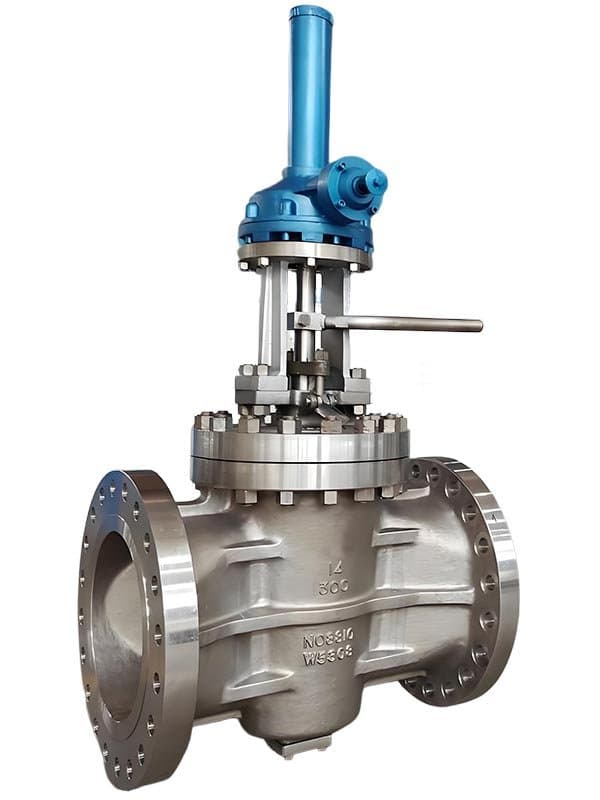
Lift Type Plug Valve
Quick Specs 1/2" – 4" (DN15 – DN100) Class 150 – 300 / PN 10-40 API 599, MSS SP-111, manufacturer-specific A216 WCB, A351 CF8M, A182 F316 (forged), brass/bronze for small sizes Metal-to-metal (plug face against body seat ring) or soft seated (PTFE/RPTFE insert). Metal seats available with Stellite overlay for abrasive/cyclic service. Lift-type operation — plug lifts off seat before rotating, then reseat. Two-step motion: lift → rotate → reseat. Zero sliding contact during rotation. How It Actually Moves Most plug valves rotate the plug right across the seat surface. Every turn scrapes the seat a little. Over hundreds of cycles on a metal-to-metal valve, that scraping adds up — galling, seat scoring, torque spikes halfway through the stroke. You feel it in the handle. The valve gets harder to turn. The lift type plug valve sidesteps that problem entirely. Before the plug rotates, it lifts straight up off the seat. The plug is airborne while it turns 90° to the new position. Then it drops back down onto the seat. Lift, rotate, reseat — three distinct motions, zero sliding contact while the plug is turning. No scraping. No galling. No mid-stroke torque spike. The seating surface stays clean because nothing rubs across it during rotation. Why It Stops at Four Inches Lift-type motion needs more stem travel than a simple quarter-turn. The stem has to move up, then rotate, then move down. That extra travel distance scales with valve size — a 4-inch valve lifts a few millimeters, which is manageable. A 12-inch valve would need to lift far enough to clear a much larger seat diameter, and the mechanical package gets unwieldy fast. That's why lift type plug valves live in the small-bore world. Half-inch through four-inch. Instrument isolation. Sampling points. Chemical injection lines. Places where you need metal-seat shutoff but the valve stays small enough that the lift distance is short and the mechanism stays compact. Eccentric plug designs handle larger sizes by offsetting the shaft and camming the plug off the seat at an angle. Different mechanical approach, same goal. But for small-bore applications where seating wear is the primary concern, lift type gives you the cleanest action available. When Metal Seats with Stellite Make Sense Soft seats (PTFE, RPTFE) work well in clean, low-temperature service. They seal tight, they're inexpensive, and they don't need the lift mechanism to protect them — soft material doesn't gall the way metal does. Metal-to-metal seats are where the lift type earns its keep. Abrasive slurries, cyclic service with hundreds of actuation cycles per week, high-temperature processes that would destroy PTFE — these are the applications where you need a hard seat that survives. And a hard seat that you never scrape across during rotation. Stellite overlay on the seat faces takes that durability further. Stellite resists abrasion, resists galling, and holds up in services that would chew through standard stainless seat surfaces. Combined with the lift-type motion that eliminates sliding contact, you get a seating pair that can cycle repeatedly without progressive wear. FAQ A: No. Lift type valves are manufactured up to 4-inch. At larger sizes, the lift distance becomes impractical. Use an eccentric plug valve or a different valve type for 6-inch and above. A: Yes. The stem needs axial travel in addition to rotation. Actuator selection must account for the lift stroke before rotation begins. Handle-operated versions use a cam or thread-driven mechanism that manages the lift-rotate-reseat sequence internally. A: Both designs eliminate sliding seat contact, but they do it differently. Eccentric designs offset the shaft so the plug cams off the seat at an angle. Lift type raises the plug straight up. In small sizes, the lift type provides the most direct seating action with the simplest geometry. In larger sizes, eccentric designs are more practical. A: Fire-safe certification depends on the manufacturer and configuration. Metal-to-metal seated versions with appropriate body materials can meet API 607 fire-test requirements. Soft-seated versions rely on the metal backup seat for fire-safe shutoff after the soft insert burns out. Check with the manufacturer for specific certifications. A: Ball valves seal with a soft seat against a rotating ball — the ball slides across the seat every turn. In abrasive or high-cycle service, that sliding contact wears the seat. A lift type plug valve with metal seats eliminates that sliding contact entirely. If your service conditions would degrade a ball valve seat over time, the lift type plug valve gives you a more durable sealing option.
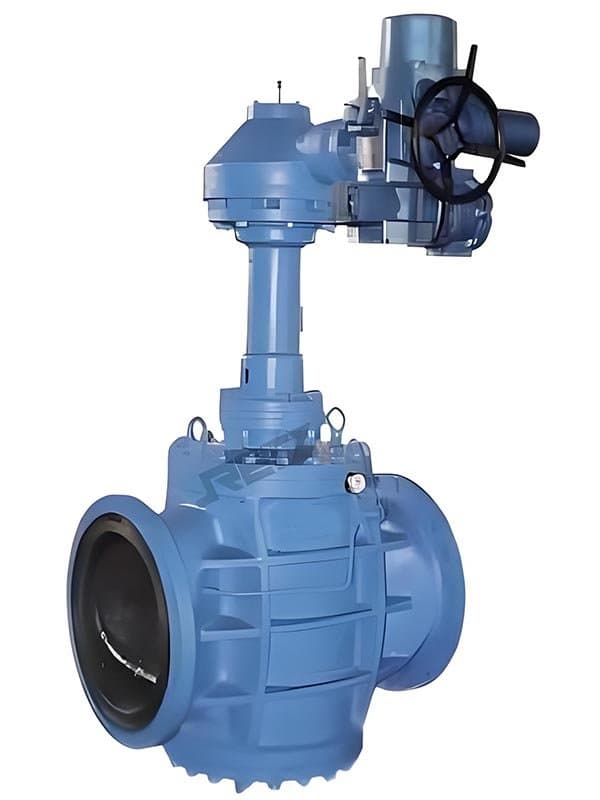
Expanding Plug Valve-Venturi
Quick Specs 2" – 24" (DN50 – DN600) Class 150 – 600 / PN 10-100 API 6D, API 599, ASME B16.34, API 607 (fire-safe available) A216 WCB, A217 WC6/WC9, A351 CF8M Metal-to-metal, expanding plug mechanism. Central core drives expandable sealing elements outward against body seat faces for DBB sealing in a single valve body. Venturi bore — reduced flow passage at the seat area. Expanding plug seals against venturi seat faces. Some pressure drop when open; compact seat geometry improves mechanism reliability. Double Block and Bleed in One Body Pipeline isolation specifications often call for double-block-and-bleed — two independent sealing boundaries with a bleed port between them so you can verify that both seats are holding. The traditional approach is two separate valves piped in series with a bleed tee between them. Two valves. Two sets of flanges. Two bodies. Two bolt-up joints. And the space between them that has to stay accessible for the bleed connection. The expanding plug valve does all of that in one valve body. The plug assembly has a central core and two expandable sealing elements — slips or wedges — that move outward against the body seat faces when the plug reaches the closed position. Both upstream and downstream seats seal simultaneously. Two independent sealing boundaries, one body, one bolt-up joint. The bleed port is built into the valve body between the two seat faces. One valve instead of two. Less piping, fewer flanged connections, less weight, less installed cost. And the double-block seal is inherent to the valve design — it's not an arrangement you have to specify and assemble on site. Why the Venturi Bore Helps The venturi bore reduces the body diameter at the seat area. Smaller seat faces mean the expanding slips have less circumference to seal against. Less expansion travel. A more compact mechanism. At large sizes — 16 inches, 24 inches — that compactness matters. A full-bore expanding plug at 24 inches has to push slips outward against a seat circumference nearly two feet across. The venturi constriction brings that seat diameter down, and the mechanism gets simpler and more reliable. The tradeoff is straightforward: the venturi constriction restricts flow when the valve is open. You get a pressure drop through the reduced bore area. In isolation applications where the valve sits closed most of the time and only opens for pipeline blowdown or maintenance access, that pressure drop during the brief open periods rarely matters. The valve is there to isolate, not to flow. But if your application calls for continuous flow through an open valve, the venturi pressure drop is permanent. You pay for it every hour the valve stays open. In those cases, you need to decide whether the compact mechanism and easier maintenance of the venturi design outweigh the energy cost of that permanent restriction. Pipeline Isolation — Where These Valves Dominate Pipeline isolation is the core application. Transmission pipelines, gathering systems, compressor station isolation, meter station block valves — these are the services where DBB is a specification requirement and a single-valve solution beats a dual-valve assembly every time. Expanding plug valves with venturi bore dominate this market for three reasons: DBB in one body, compact mechanism that stays reliable at large sizes, and lower manufacturing cost than full-bore expanding plugs because the seat geometry is smaller. Pipeline operators know these valves. They're a standard piece of the isolation toolkit. Fire-safe configurations are available for pipeline sections that cross fire-risk zones. API 607 testing confirms the metal seats hold after fire exposure — the expanding mechanism re-engages after cooling, and both sealing boundaries remain functional. FAQ A: Yes. The reduced bore at the seat area blocks pigging tools. If pigging is a requirement, use the full-bore expanding plug valve instead. The venturi design is for isolation applications where the valve stays closed and pigging through the valve is not needed. A: When the plug reaches the closed position, the central core drives the expandable sealing elements outward against both upstream and downstream body seat faces. The radial expansion creates two independent metal-to-metal sealing boundaries — one facing upstream, one facing downstream. Both engage at the same time. A: DBB capability depends on the manufacturer's design and testing. API 6D pipeline valves can be certified for DBB function per the standard's definitions. Verify with the manufacturer that the specific model meets the DBB requirement your specification calls for. A: Expanding plug valves are designed for isolation service — infrequent cycling, long periods in the closed position. Frequent cycling adds wear to the expanding elements and the seat faces. For high-cycle applications, a different valve...
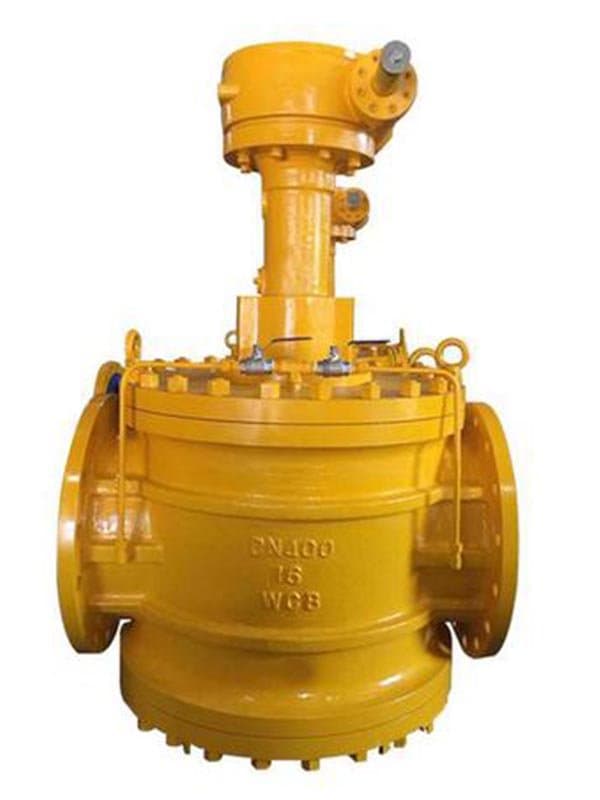
Expanding Plug Valve-Full Bore
Quick Specs 2" – 36" (DN50 – DN900) Class 150 – 600 / PN 10-100 API 6D, API 599, ASME B16.34, API 607 (fire-safe available) A216 WCB, A217 WC6/WC9, A351 CF8M, A351 CF8 Metal-to-metal, expanding plug mechanism — central core + expandable sealing elements for DBB sealing against full-diameter seat faces. Full-bore (full-port) flow passage. Body bore at the seat area matches nominal pipe diameter. Piggable when open. Zero pressure drop in open state. Everything the Venturi Gives You, Plus an Open Bore The full-bore expanding plug valve delivers the same DBB function as the venturi version — two independent sealing boundaries in a single valve body, expandable slips that seal simultaneously against upstream and downstream seat faces, a built-in bleed port between the seats. Same isolation capability. Same single-valve DBB package. What's different is the bore. Full bore means the body passage at the seat area matches the pipeline diameter. No constriction. No reduced cross-section. When the valve is open, the flow passage is the same diameter as the pipe on both sides. Two things change when you open up the bore. First: pigging. Pipeline pigs, cleaning tools, scraping tools, inspection pigs — they all need a full-diameter bore to pass through. A venturi constriction blocks the pig. Full-bore passage lets it go. If your pipeline specification requires piggable valves at isolation points, the full-bore expanding plug is the only plug valve design that gives you DBB isolation and piggable flow in one body. Second: pressure drop. In continuous-flow applications where the valve stays open most of the time, the venturi constriction adds a permanent pressure loss. Every hour, every day, that loss is there. Full-bore passage eliminates it. Open bore matches the pipe diameter, flow goes through unobstructed, and your pump or compressor doesn't have to compensate for a restriction that shouldn't be there. The Mechanical Cost of a Full-Diameter Seat Full-diameter seat faces are larger. The expanding slips have to seal against a seat circumference that matches the full pipe diameter — not a reduced venturi diameter. More circumference means more expansion travel, larger sealing elements, and a heavier mechanism. At 12 inches and below, the difference is modest. The full-bore mechanism is still compact enough to be straightforward. At 24 inches and 36 inches, the expanding elements are pushing outward against a seat circumference two or three feet across. The mechanism gets bigger, more complex, and more expensive to manufacture. That's the tradeoff. Full bore gives you piggable flow and zero pressure drop. It costs more — especially at large sizes — because the expanding mechanism has to work against a larger seat. When your specification demands pigging or zero open-state pressure drop, the cost is justified. When it doesn't, the venturi version gives you the same DBB function for less money and with a simpler mechanism. Where Full Bore Wins Transmission pipeline isolation at stations where pigs run through. That's the primary application. Pipeline operators run pigs regularly for cleaning, inspection, and integrity verification. Every isolation valve on a piggable section has to let the pig pass. A venturi valve blocks the pig — the crew has to remove the valve or install a bypass every time they run one. Full-bore expanding plug valves eliminate that problem. Continuous-flow isolation points — meter stations, compressor station block valves that sit open for months and only close for maintenance — also benefit from full bore. The open-state pressure drop through a venturi valve accumulates over time. In continuous service, eliminating that drop saves pumping energy and reduces operating cost. Fire-safe configurations are available. API 607 testing confirms both sealing boundaries hold after fire exposure, and the full-bore passage doesn't compromise fire-test performance. FAQ A: Standard cleaning pigs and inspection pigs pass through the full-bore open passage. Verify pig dimensions with the valve manufacturer — some expanding plug designs have minor internal features that may affect specific pig types. In general, full-bore expanding plug valves are piggable for standard pipeline pigging programs. A: Larger seat circumference requires larger expanding sealing elements and more expansion travel. The mechanism components — slips, wedges, core, seat faces — all scale with the bore diameter. At 24"–36", the mechanical package is substantially larger than the equivalent venturi design. A: Yes. The expanding mechanism creates two independent sealing boundaries against the full-diameter upstream and downstream seat faces. DBB function is the same — the only difference is the seat diameter the slips seal against. A: That's exactly where full bore delivers its pressure-drop advantage. The venturi version...
Technical Overview
Plug valves rotate a cylindrical or tapered plug 90° inside the body bore to open or close the flow passage. The plug itself is the sealing element—its outer surface contacts the body seat surface directly, or through an intermediate seat insert, to achieve shutoff. That direct plug-to-seat interface is the fundamental characteristic that distinguishes plug valves from ball valves (where a separate seat ring contacts the ball) and gate valves (where a flat gate slides between two seat rings). FLOWKS manufactures six plug valve configurations spanning three seating philosophies and three mechanical motion types. Lubricated plug valves inject sealant through external fittings into internal distribution grooves on the tapered plug surface—the lubricant film creates both the primary sealing boundary and the rotational lubrication layer that prevents metal galling. Soft seated plug valves use PTFE, reinforced PTFE, Viton, EPDM, or NBR inserts bonded to the body bore or plug surface—soft seat compression fills surface irregularities for bubble-tight zero leakage, no external lubricant needed. Pressure balanced plug valves route line pressure to both sides of the plug through internal bypass passages—hydraulic forces cancel out, operating torque stays manageable at Class 600-900 and 12"-24" sizes where unbalanced torque would exceed manual or actuator capability. Lift type plug valves raise the plug off the seat before rotating—zero sliding contact during rotation eliminates seat wear, limited to 1/2"-4" sizes where the lift distance is short. Expanding plug valves (Venturi) use expandable sealing elements (slips/wedges) that move outward against reduced-diameter body seat faces—double-block-and-bleed sealing in a single valve body, with some open-state pressure drop through the venturi constriction. Expanding plug valves (Full Bore) apply the same expanding mechanism against full-diameter seat faces—DBB sealing plus piggable unrestricted flow passage, at higher mechanical complexity and cost than the venturi design.
FLOWKS plug valves provide quarter-turn shutoff through direct plug-to-body sealing contact across the widest range of pressure and seating requirements. Oil lubricated plug valves create a hydrostatic seal through injected lubricant film between tapered plug and body bore—specified for crude oil, natural gas, and refinery service where line media degrades elastomer seats. Soft seated plug valves achieve bubble-tight zero leakage through PTFE, reinforced PTFE, Viton, or EPDM seat inserts—no external lubricant, lower torque, ideal for chemical, water, and process isolation up to Class 300. Pressure balanced plug valves cancel hydraulic force on the plug face through internal bypass passages—manageable operating torque at Class 600-900 on 12" through 24" pipeline isolation where unbalanced torque exceeds actuator capability. Lift type plug valves raise the plug off the seat before rotation—zero sliding friction, zero seat wear, limited to 1/2"-4" sizes for instrument and sampling isolation. Expanding plug valves (Venturi) deliver double-block-and-bleed sealing in a single valve body through outward-expanding sealing elements against reduced-diameter seat faces—compact seat geometry, some open-state pressure drop. Expanding plug valves (Full Bore) provide DBB sealing plus piggable unrestricted flow passage through full-diameter expanding slips—zero open-state pressure drop, pigging-compatible, at higher mechanical complexity.
Product Downloads
Technical Articles
Read our latest technical articles and industry insights.

Control Valve Actuator Types: Pneumatic vs Electric vs Hydraulic Selection Guide
11 min read

Control Valve Cavitation and Flashing: Causes, Diagnosis and Solutions
10 min read

304 vs 316 Stainless Steel Valves: Corrosion Resistance & Working Condition Selection Guide
5 min read
Engineering Calculators
Free online engineering calculators for valve selection and sizing.
Industries Using This Product
Applications across various industrial sectors.
Looking for more options?
Explore our complete range of industrial valves or contact us for custom solutions.
Ball Valves
FLOWKS offers floating ball valve, trunnion mounted ball valve and top entry ball valve for oil & gas, petrochemical and power generation. Designed per API 6D, API 608 and ASME B16.34.
DBB Valves
FLOWKS Double Block & Bleed (DBB) valves provide dual isolation with bleed verification in a single compact body. Replacing traditional multi-valve installations, FLOWKS DBB valves reduce weight, space and potential leak paths. Available in bolted bonnet, all-welded and expanding gate designs per API 6D and API 607.
Gate Valves
FLOWKS gate valves for isolation service in piping systems. Flexible wedge, solid wedge, slab and expanding gate designs per API 600, API 602 and ASME B16.34.
Globe Valves
FLOWKS globe valves for throttling and isolation. Standard, angle, Y-pattern and bellows seal configurations per API 602 and BS 1868.