Oil & Gas
Upstream, midstream and downstream valve solutions meeting API 6D, API 607 fire-safe requirements. From wellhead to refinery, FLOWKS provides reliable valve solutions for the most demanding oil and gas applications.
Recommended Solutions
Trunnion Mounted Ball Valve
Anchored ball design with spring-loaded seats for reliable sealing in high-pressure service. Side-entry and forged body options available.
Slab Gate Valve
Through-conduit slab gate design for pipeline applications with full bore flow.
Dual Plate Check Valve
Compact wafer or lug type dual plate check valve with torsion spring for fast closure.
Full Bore DBB Valve
Full bore passage with double block and bleed capability. Flanged or butt-weld ends. Reduces pipeline inventory and maintenance cost.
Applications in Oil & Gas
Upstream -- Wellhead & Christmas Tree
High-pressure wellhead isolation valves controlling crude oil and natural gas flow from reservoir to surface. Trunnion-mounted ball valves with metal seats handle abrasive sand-laden fluids and sour gas (H2S) service. API 6A wellhead equipment standards apply with PSL 2-3 specification levels.
Midstream -- Pipelines & Terminals
Long-distance transmission pipelines require double block and bleed (DBB) valves for segment isolation, pig launcher/receiver isolation, and meter station bypass. Full-bore designs enable in-line inspection (pigging). API 6D pipeline valves with welded body construction minimize leak paths.
Downstream -- Processing & Refining
Refinery process units including crude distillation, catalytic cracking, and hydroprocessing require valves handling high-temperature hydrocarbons, hydrogen service, and corrosive sour water. Gate valves for isolation, globe valves for throttling, and control valves for automated process control.
Offshore Platforms & FPSO
Offshore platforms and FPSO vessels demand compact, lightweight valve designs with fire-safe certification (API 607/6FA). Top-entry ball valves enable in-line maintenance without removal from pipeline. All-welded DBB valves eliminate body joint leaks in hazardous offshore environments.
Industry Standards
Pipeline & Piping Valves
Design, manufacturing, testing of pipeline valves
Wellhead & Christmas Tree Equipment
Specification for wellhead and tree valves
Fire Test for Soft-Seated Valves
Fire resistance testing for quarter-turn valves
Fire Test for Valves
Fire resistance test requirements
Sour Service Materials
Material requirements for H2S service
Pipeline Valves (API 6D equivalent)
International pipeline valve standard
Materials Available
- ●A105
- ●LF2 (Low-Temp)
- ●F5/F9/F11/F22 (Chrome-Moly)
- ●316SS
- ●Duplex 2205
- ●Inconel 625
- ●Inconel 825
Frequently Asked Questions
What valve types are used in sour gas (H2S) service?+
Why use trunnion-mounted ball valves instead of floating ball valves in pipelines?+
What is double block and bleed (DBB) and why is it required?+
Are your valves fire-safe certified?+
Related Articles
Technical insights and case studies related to oil & gas applications.
API 6D, pipeline valves, DIB-1, DIB-2, valve procurement, PHMSA compliance, ball valve, gate valve, check valve
The 25th Edition of API 6D introduces revised DIB-1 and DIB-2 definitions, extended hydrostatic test durations, enhanced traceability marking, and updated actuator interface requirements. With PHMSA incorporating the edition by reference into US pipeline regulations, procurement teams must update sp
⏱ 5 min readAPI 6D 25th Edition: Valve Spec Changes & Procurement Impact
The 25th Edition of API 6D introduces revised DIB-1 and DIB-2 definitions, extended hydrostatic test durations, enhanced traceability marking, and updated actuator interface requirements. With PHMSA incorporating the edition by reference into US pipeline regulations, procurement teams must update sp
⏱ 5 min read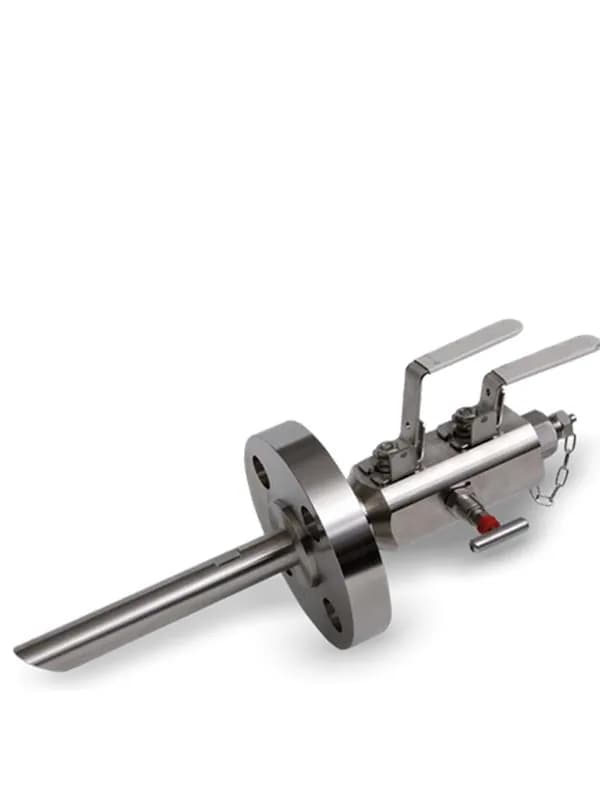
Why DBB Valves With Sampling Needles Must Perform Wake Frequency (Vortex-Induced Vibration) Calculations — The Complete Engineering Rationale
DBB valves with sampling needles face vortex-induced vibration risks that standard thermowell calculations don't cover. Learn the failure chain, governing standards, and design fixes — with formulas and field-proven
⏱ 20 min read