products.productRange
Gama completa de válvulas industriales para toda aplicación.
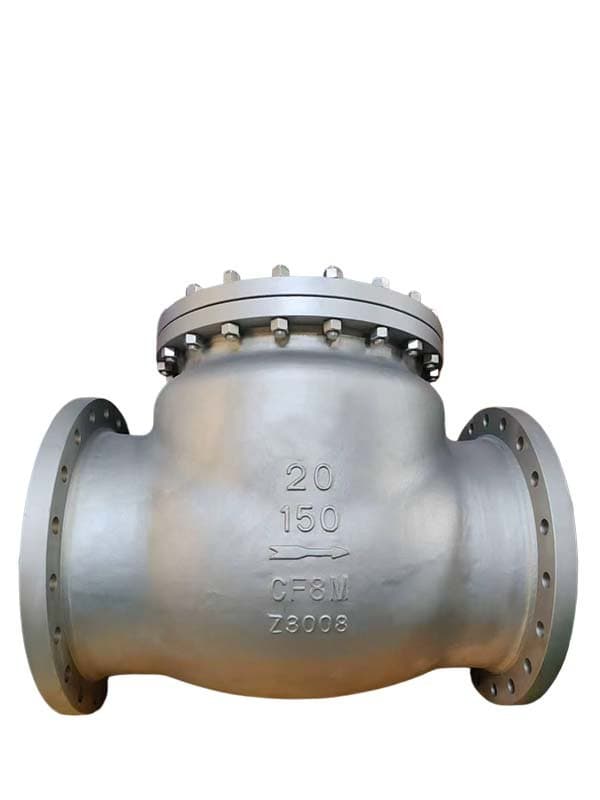
Válvula de Retención de Bisagra
Tamaño: 2" - 24" (DN50 - DN600) Presión: Clase 150 - 600 / PN 10-100 Norma: API 6D, ASME B16.34, MSS SP-71 Materiales del Cuerpo: A216 WCB, A351 CF8M, A351 CF8, hierro fundido (GG25), hierro dúctil (GGG40) Asiento: Metal contra metal: la cara del disco contacta el anillo de asiento del cuerpo para el cierre. Recubrimiento de Stellite en disco y anillo de asiento disponible para servicio abrasivo/erosivo. Disco: Disco oscilante sobre pasador de bisagra: el disco se abre con el flujo directo (hasta 80° de ángulo máximo de apertura), se cierra cuando el flujo directo se detiene. El pasador de bisagra está montado dentro del diámetro interior del cuerpo en el lado de entrada. El peso del disco y la velocidad del flujo determinan la dinámica de apertura. Diseño: Extremos bridados o soldados a tope. Paso del cuerpo de diámetro completo: el ángulo de apertura del disco no restringe el flujo cuando está completamente abierto. Tapa de cuerpo atornillada para acceso al pasador de bisagra. El disco oscila libremente: sin asistencia de resorte, cierre por gravedad. Por Qué la Clapeta Oscilante es la Opción Predeterminada Entre a cualquier sala de bombas y encontrará válvulas de retención de clapeta oscilante en las líneas de descarga. No porque sean sofisticadas, no lo son. Son la opción predeterminada porque el mecanismo es extremadamente simple. Un disco cuelga de un pasador de bisagra dentro del cuerpo. El flujo directo lo empuja para abrirlo. El flujo se detiene, el disco vuelve a cerrarse por gravedad. Sin resortes. Sin mecanizado de tolerancia estrecha. Sin piezas que se desgasten por fricción entre sí en cada ciclo. Esa simplicidad se traduce directamente en fiabilidad. Menos piezas móviles, menos modos de fallo, intervalos de servicio más largos. Para una línea de descarga de bomba donde la bomba funciona de manera constante y la válvula de retención permanece abierta la mayor parte del día, no necesita nada más complicado. Baja Caída de Presión: Paso Completo a 80° de Apertura Aquí está el dato clave: ángulo máximo de apertura del disco de 80°. Con el flujo a pleno rendimiento, el disco gira a 80° y el recorrido del flujo a través del cuerpo de la válvula es prácticamente total. El disco no se encuentra en medio del flujo, regulando su paso como ocurre en una válvula de retención de elevación o en un diseño de doble placa, donde el pasador de bisagra y el resorte ocupan el orificio. Esa baja caída de presión es la razón por la que las de bisagra dominan en las líneas de descarga de bombas. Dimensionaste esa bomba para entregar un caudal determinado a una altura determinada. Lo último que quieres es que una válvula de retención consuma 2-3 psi de la salida de tu bomba solo por estar ahí haciendo su trabajo. Con una de bisagra abierta a 80°, la pérdida de presión a través de la válvula es mínima: casi como un tramo de tubería abierto del mismo diámetro. Asiento Metal con Metal — y Cuándo Necesitas Stellite El asiento estándar es la cara del disco contra el anillo de asiento del cuerpo, metal contra metal. Ese es el predeterminado porque funciona en la gama más amplia de condiciones de proceso: vapor, agua, aceite, gas, temperaturas moderadas, ciclos frecuentes. El disco contacta el anillo de asiento con la fuerza suficiente para sellar bajo contrapresión normal. Pero si tu medio de proceso lleva partículas abrasivas—arena en servicio de agua, finos de catalizador en refinerías, escoria en agua de enfriamiento de acerías—el asiento simple de metal contra metal se desgasta rápido. La cara del disco y el anillo de asiento se erosionan por el impacto de partículas cada vez que la válvula cicla. El recubrimiento de Stellite tanto en la cara del disco como en el anillo de asiento es la mejora para servicio abrasivo y erosivo. El Stellite es una aleación de cobalto-cromo que resiste la erosión y la abrasión mucho mejor que el acero al carbono o el inoxidable base. Cuesta más, pero mantiene la superficie de sellado del asiento intacta durante años en lugar de meses en medios abrasivos. El Golpe — Qué Pasa Cuando la Bomba se Dispara Esta es la limitación real de la de bisagra. Cuando el flujo hacia adelante se detiene abruptamente—disparo de bomba, parada de emergencia, falla de energía—el disco oscila hacia atrás rápido y golpea el asiento con impacto. Sin resorte que lo frene. Sin amortiguador que lo atenúe. Solo gravedad y presión de flujo inverso acelerando el disco contra el asiento. Esa acción de golpeteo causa tres problemas. Golpe de ariete—el pico de presión por el cierre repentino del disco viaja de vuelta por la tubería y puede dañar soportes de tubería, reventar accesorios o sobrecargar equipos aguas abajo. Daño al asiento—el golpeteo repetido deforma la superficie de sellado del asiento con el tiempo, y la válvula empieza a fugarse en dirección de cierre. Desgaste del disco—el pasador de...
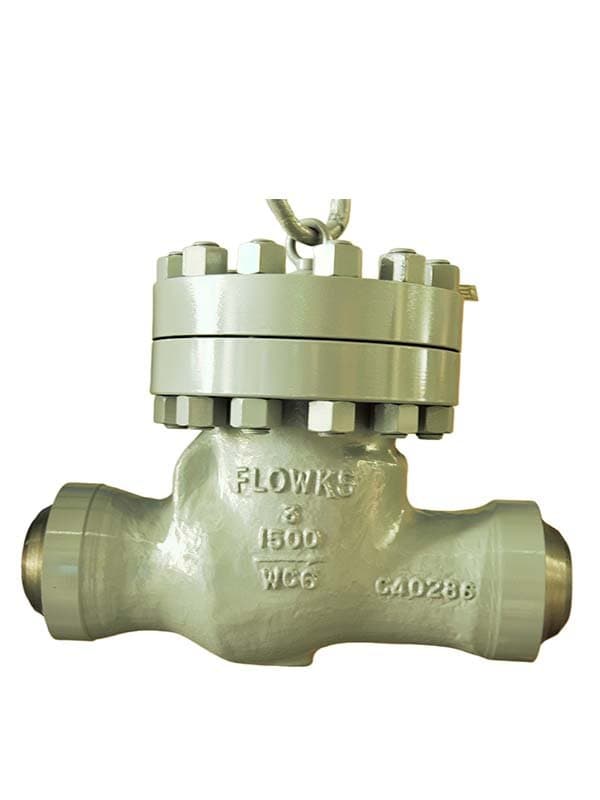
Válvula de Retención de Bisagra con Soldadura a Tope
Tamaño: 2" - 24" (DN50 - DN600) Presión: Clase 150 - 2500 / PN 10-420 Estándar: API 6D, ASME B16.34, MSS SP-71 Materiales del Cuerpo: A182 F316 (forjado), A182 F304 (forjado), A182 F22/F91 (Cr-Mo forjado para alta temperatura). El cuerpo forjado elimina defectos de fundición en clasificaciones de alta presión. Asiento: Metal con metal con recubrimiento estándar de Stellite—las aplicaciones de alta presión exigen superficies de asiento más duras que sobrevivan la fuerza de impacto del golpeteo del disco en Clase 600+. Disco: Disco oscilante sobre pasador de bisagra, mismo mecanismo que la de bisagra con bridas. Ángulo de apertura hasta 80°. Cierre por gravedad. Diseño: Extremos para soldar a tope—la válvula se suelda directamente en la tubería. Sin conexiones bridadas, sin rutas de fuga por empaquetadura de brida. Cuerpo forjado para integridad de alta presión. Opciones de tapa atornillada o soldada (la tapa soldada elimina una ruta de fuga potencial más para servicio de presión/temperatura extrema). Por Qué Soldar a Tope en Lugar de Bridado Dos razones. Ambas se reducen a lo mismo: no quieres rutas de fuga en un componente pasivo que opera automáticamente sin intervención manual. Razón uno—alta presión. En Clase 600 y superior, las conexiones bridadas se vuelven costosas. Las bridas son más pesadas, los pernos son más grandes y las empaquetaduras se convierten en una responsabilidad de confiabilidad. Las empaquetaduras de alta presión fluyen en frío bajo carga sostenida. Se deforman. Filtran. Una de bisagra bridada en Clase 900 con empaquetadura con fugas significa que tienes que detener la línea para re-apretar o reemplazar la empaquetadura, porque no puedes apretar una brida en una válvula de retención en operación—no puedes acceder a ella de forma segura bajo presión. La soldadura a tope elimina la empaquetadura por completo. La válvula se suelda directamente en la tubería. Junta permanente, cero ruta de fuga por empaquetadura. Razón dos: servicio peligroso y de alta temperatura. Servicio de hidrógeno, vapor a 600°F y superior, líneas de gas de alta presión. Cada junta con brida es un punto potencial de emisión. La junta, la relajación del esfuerzo de los pernos a lo largo de los ciclos térmicos, la condición de la cara de la brida después de años de servicio. En una válvula de retención—un componente que permanece pasivo, operando automáticamente según la dirección del flujo—no se tiene oportunidad de monitorear o apretar una conexión bridada durante la operación. Suéldela a tope y la unión es permanente. Sin junta que se degrade. Sin pernos que se aflojen. Sin caras de brida que inspeccionar. Cuerpo Forjado — Sin Defectos de Fundición a Alta Presión Los cuerpos fundidos funcionan bien en Clase 150 y 300. El proceso de fundición produce piezas con espesor de pared adecuado y niveles de porosidad aceptables para esos rangos de presión. En Clase 600 y superior—Clase 900, 1500, 2500—los defectos de fundición se vuelven inaceptables. La porosidad en un cuerpo fundido bajo presión alta sostenida puede filtrarse a través de la pared del cuerpo. Las cavidades de contracción superficiales pueden iniciar grietas bajo carga cíclica de presión. Los cuerpos forjados eliminan esos defectos. El proceso de forjado compacta la estructura del grano metálico, cierra los vacíos internos y produce un cuerpo con propiedades mecánicas uniformes en todo el espesor de la pared. Sin porosidad. Sin cavidades de contracción. Sin defectos internos que se conviertan en rutas de fuga bajo servicio de presión alta sostenida. Por eso la especificación del material es A182—acero inoxidable forjado y aleación Cr-Mo forjada. F316 y F304 para servicio corrosivo a alta presión. F22 y F91 para servicio de alta temperatura donde se necesita la resistencia de la aleación Cr-Mo a temperaturas de operación de 600°F+. Todo forjado, todo libre de defectos en las clasificaciones de presión donde la fundición no puede garantizar la integridad. Recubrimiento de Stellite — Estándar, No Opcional En una válvula de retención oscilante bridada en Clase 150, el recubrimiento de Stellite en el asiento es opcional porque la fuerza de impacto del disco a baja presión es manejable. El asiento de metal base sobrevive. En una válvula de retención oscilante de soldadura a tope en Clase 600+, el recubrimiento de Stellite en la cara del disco y el anillo del asiento es estándar. He aquí por qué: la fuerza de golpe aumenta con la clasificación de presión. En Clase 600, el disco golpea el asiento con significativamente más fuerza que en Clase 150 porque la contrapresión que impulsa el cierre del disco es mayor. Esa mayor fuerza de impacto deforma la superficie del asiento de metal base más rápido—el ciclado repetido en Clase 600+ golpea el anillo del asiento cada vez que el disco se cierra. El recubrimiento de Stellite resiste esa deformación por...
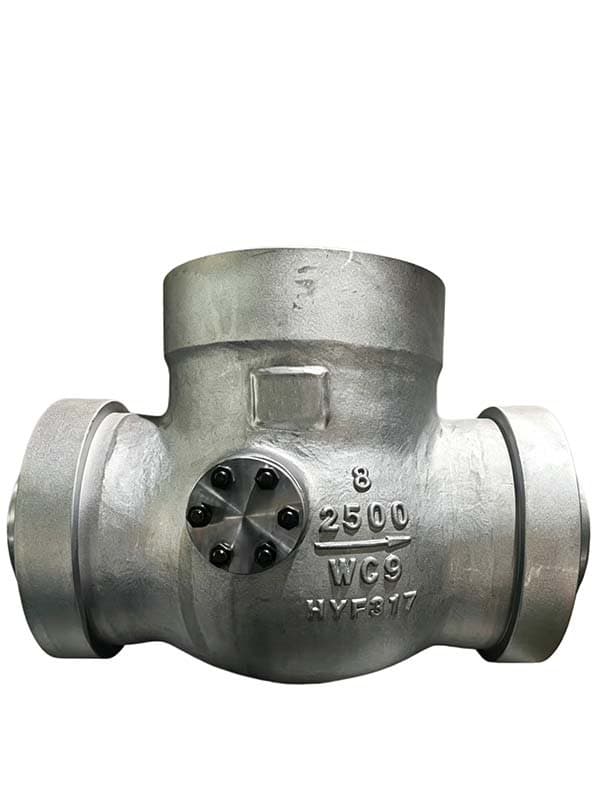
Válvula de Retención de Bisagra con Pasador Externo
Tamaño: 2" - 24" (DN50 - DN600) Presión: Clase 150 - 600 / PN 10-100 Estándar: API 6D, ASME B16.34, específico del fabricante para mecanismo de pasador externo Materiales del Cuerpo: A216 WCB, A351 CF8M, A351 CF8 Asiento: Metal contra metal, recubrimiento de Stellite opcional Disco: Disco oscilante con mecanismo externo de amortiguador/pasador—el pasador de bisagra se extiende a través de la pared del cuerpo hacia un cilindro amortiguador externo montado en el exterior del cuerpo de la válvula. El amortiguador contiene un cilindro hidráulico o cámara neumática que se conecta al disco a través del pasador de bisagra extendido. La resistencia del amortiguador reduce la velocidad de cierre del disco—en lugar de cerrarse de golpe instantáneamente, el disco se cierra gradualmente en 1-3 segundos. Diseño: Extremos bridados. Cilindro amortiguador externo montado en el exterior del cuerpo, conectado al pasador de bisagra del disco a través de una penetración sellada en la pared del cuerpo. Velocidad de cierre ajustable—los ajustes de la válvula del amortiguador controlan la rapidez con que se cierra el disco. Asistencia de apertura opcional (aire/hidráulica) para levantar el disco en arranques de bajo flujo. El Problema del Golpe de Ariete—y Cómo lo Resuelve el Amortiguador Las válvulas de retención oscilantes estándar se cierran de golpe. Cuando el flujo directo se detiene, el disco vuelve al asiento en una fracción de segundo—la gravedad y la contrapresión lo aceleran, sin resistencia, sin amortiguación. Ese cierre rápido genera golpe de ariete. Un pico de presión viaja de regreso por la tubería debido al impacto repentino del disco, y ese pico puede dañar soportes de tubería, reventar accesorios, agrietar soldaduras o sobrecargar equipos aguas abajo. Si alguna vez ha escuchado un sistema de tuberías golpear al pararse una bomba, eso es golpe de ariete de una válvula de retención que se cierra de golpe. No es un riesgo teórico—es un evento mecánico real que causa daños reales, especialmente en tuberías largas donde la onda de presión tiene tiempo de acumular amplitud. El amortiguador de pasador externo elimina ese golpe al reducir la velocidad de cierre del disco. El pasador de bisagra se extiende a través de la pared del cuerpo y se conecta a un cilindro amortiguador hidráulico o neumático en el exterior de la válvula. A medida que el disco oscila hacia la posición cerrada, el amortiguador absorbe la energía de cierre y desacelera el disco hasta una velocidad de asentamiento controlada y gradual. En lugar de cerrarse de golpe en 0.1 segundos, el disco se cierra suavemente en 1-3 segundos. El pico de presión no ocurre porque el disco no está acelerando hacia el asiento—el amortiguador lo está bajando gradualmente. Golpe de ariete eliminado. Daño por impacto en el asiento eliminado. El disco alcanza la posición cerrada sin el impacto violento que destruye las superficies del asiento en válvulas de retención oscilantes estándar tras ciclos repetidos. Velocidad de Cierre Ajustable—Ajústela a Su Tubería No todas las tuberías necesitan la misma velocidad de cierre. Una línea de proceso corta con alta contrapresión necesita que el disco se cierre relativamente rápido—si el disco tarda demasiado en asentarse, el flujo inverso se establece y la caída de presión a través de la válvula se invierte antes de que el disco alcance el asiento. Una tubería de transmisión larga con baja contrapresión necesita un cierre más lento—el riesgo de golpe de ariete aumenta con la longitud de la tubería, y cuanto más larga es la línea, más energía transporta la onda de presión. Los ajustes de la válvula del amortiguador le dan ese rango de ajuste. Usted sintoniza la velocidad de cierre para que coincida con las condiciones de la tubería. Lo suficientemente rápido para evitar que se establezca el flujo inverso. Lo suficientemente lento para eliminar el golpe de ariete. Es un equilibrio, y el amortiguador ajustable le permite encontrarlo durante la puesta en marcha en lugar de adivinar durante la especificación. Esta es la ventaja sobre los esquemas de amortiguación no ajustables. Algunos diseños de retención oscilante usan un contrapeso o un amortiguador interno con amortiguación fija—una velocidad de cierre, sin ajuste en campo. Si la velocidad de cierre no coincide con la tubería, está atascado. El amortiguador de pasador externo es ajustable en campo a través de los ajustes de la válvula del amortiguador. Cambie el ajuste, cambie la velocidad de cierre. Sin necesidad de reemplazar la válvula. Asistencia de apertura: cuando la velocidad del flujo no es suficiente. En el arranque, la velocidad de flujo a través de la tubería comienza en cero y aumenta gradualmente. El disco de una retención oscilante estándar comienza cerrado y se abre gradualmente a medida que aumenta la velocidad. A velocidades de flujo bajas—arranque...
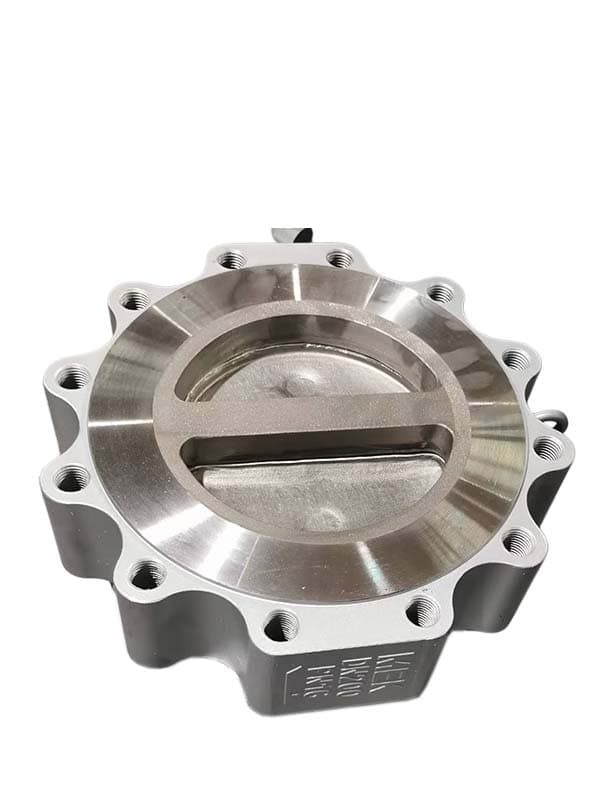
Válvula de Retención de Doble Placa Tipo Lug
Tamaño: 2" - 48" (DN50 - DN1200) Presión: Clase 150 - 600 / PN 10-100 Norma: API 6D, ASME B16.34, MSS SP-126 (retención de doble disco), AWWA C508 (obras hidráulicas) Materiales del cuerpo: A216 WCB, A351 CF8M, A351 CF8, hierro dúctil (GGG40) Asiento: Metal contra metal o con asiento blando: las válvulas de retención de doble disco comúnmente usan una combinación: anillo de asiento metálico en el cuerpo + sello de elastómero o PTFE en el borde del disco para cierre hermético sin burbujas. Discos metal contra metal disponibles para servicio de alta temperatura. Placas: Dos placas semicirculares (medios discos) articuladas en un pasador de bisagra central dentro del diámetro interior del cuerpo. Las placas se abren girando lejos de la superficie del asiento con el flujo hacia adelante: cada placa oscila hasta aproximadamente 60-80° de posición abierta. Un resorte de torsión en el pasador de bisagra ayuda al cierre de las placas cuando la velocidad del flujo hacia adelante disminuye. Las placas se cierran con movimiento casi simultáneo asistido por resorte. Diseño: Cuerpo tipo lug: orificios roscados tipo lug en ambos lados de la brida del cuerpo. El formato lug permite la instalación entre dos bridas con pernos a través de los orificios lug, o como terminación de línea con una brida cegada. Dimensión cara a cara corta (patrón API 6D). Cierre asistido por resorte. Compacto y de cierre rápido: dos medios discos superan a un disco completo. El diseño de doble placa divide la función de retención entre dos placas semicirculares en lugar de un disco oscilante completo. Cada placa es más liviana que un disco completo. Cada placa oscila a través de un arco más corto para alcanzar la posición cerrada. Esa masa más liviana y menor recorrido se traducen directamente en un cierre más rápido: aproximadamente 0,2-0,5 segundos con asistencia de resorte, en comparación con 0,5-1,0 segundos para una válvula de retención de oscilación de disco completo por gravedad. Un cierre más rápido significa que pasa menos volumen de flujo inverso a través de la válvula antes de que se cierre. En la protección de descarga de bombas, eso importa. Incluso un pequeño volumen de flujo inverso puede hacer girar la bomba hacia atrás: la rotación inversa causa daño mecánico al impulsor, cojinetes y eje de la bomba. La válvula de retención de doble placa se cierra lo suficientemente rápido para limitar el flujo inverso a un volumen que no establezca una rotación inversa sostenida. Una válvula de retención de oscilación estándar que cierra en 0,5-1,0 segundos permite más flujo inverso a través de la válvula antes de que el disco asiente, y en algunas instalaciones de bombas ese volumen adicional es suficiente para que la bomba comience a girar hacia atrás. El resorte de torsión añade fuerza de cierre más allá de la gravedad. Cuando la velocidad del flujo hacia adelante cae por debajo del umbral que mantiene las placas abiertas, el resorte impulsa las placas hacia la posición cerrada incluso si no hay contrapresión que las empuje a cerrarse. Esa asistencia de resorte es esencial para instalaciones verticales, con flujo ascendente, donde la gravedad no ayuda a cerrar las placas. En una tubería vertical, un disco de retención de oscilación por gravedad queda colgando abierto y depende completamente del flujo inverso para empujarlo a cerrarse. El resorte de doble placa cierra las placas independientemente de la orientación. Sello Blando para Hermeticidad sin Burbujas: Metal para Alta Temperatura Las válvulas de retención de doble disco comúnmente usan una disposición de asiento híbrida: anillo de asiento metálico en el cuerpo con sello de elastómero o PTFE en el borde del disco. El anillo de asiento metálico proporciona integridad estructural en el diámetro interior del cuerpo. El sello blando en el borde del disco se comprime contra el anillo de asiento cuando los discos se cierran, creando un cierre hermético sin burbujas que el asiento metal contra metal no puede lograr consistentemente a baja contrapresión. Si su línea de proceso necesita cero fugas en la dirección de cierre (líneas de dosificación química, sistemas de calefacción de circuito cerrado, aplicaciones donde incluso un flujo inverso mínimo contamina el proceso aguas arriba), los discos dobles con asiento blando le dan ese sello hermético sin burbujas en condiciones normales de contrapresión. El sello de elastómero o PTFE es reemplazable durante el mantenimiento sin necesidad de re-mecanizar el anillo de asiento. Para servicio de alta temperatura donde los sellos de elastómero y PTFE se degradan (vapor por encima de 400°F, servicio de aceite caliente, líneas de alimentación de calentadores), los discos metal contra metal son la especificación. El borde del disco contacta directamente el anillo de asiento metálico, sin sello blando. El cierre no es hermético sin burbujas a...
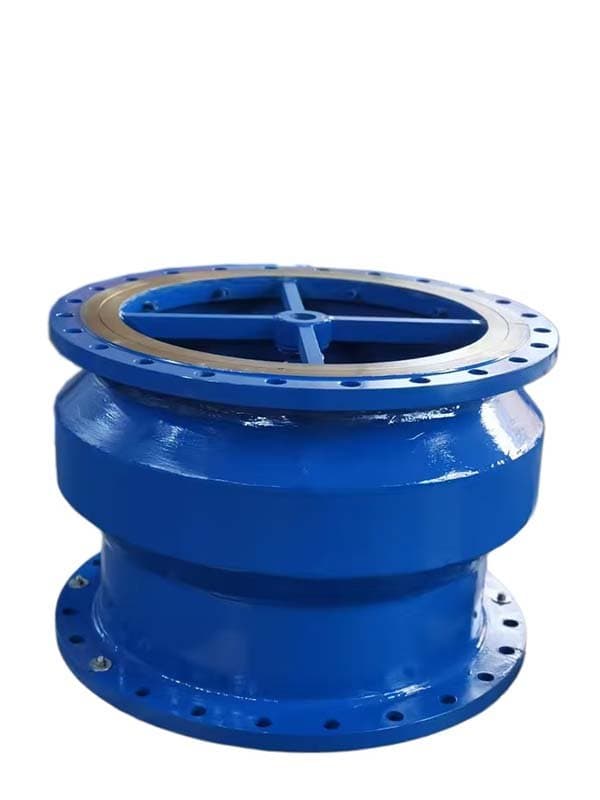
Válvula de Retención de Elevación Vertical
Tamaño: 1/2" - 4" (DN15 - DN100) Presión: Clase 150 - 600 / PN 10-100 Estándar: ASME B16.34, MSS SP-80 Materiales del cuerpo: A216 WCB, A351 CF8M, A182 F316 (forjado), bronce/latón para tamaños pequeños Asiento: Metal contra metal o asiento blando (cara de disco de PTFE/RPTFE contra anillo de asiento metálico) Disco: Disco de elevación: se eleva verticalmente del anillo de asiento con el flujo directo y vuelve a caer sobre el asiento cuando el flujo se detiene Diseño: Orientación vertical del cuerpo, flujo ascendente, manguito guía del disco, tapa atornillada, extremos roscados/soldados a tope/bridados Cuando la velocidad de cierre realmente importa Esto es lo que la mayoría de la gente pasa por alto sobre las válvulas de retención: el tiempo que tarda el disco en alcanzar la posición cerrada determina cuánto flujo inverso se escapa antes de que la válvula se cierre. En una línea de 2" a velocidad de flujo moderada, el volumen de flujo inverso por segundo es pequeño. Pero los sistemas de diámetro pequeño a menudo protegen instrumentos, sellos de bombas o conexiones de proceso delicadas. Incluso unas pocas onzas de flujo inverso pueden causar problemas. Las válvulas de retención de elevación vertical cierran más rápido que las de clapeta oscilante porque la distancia de recorrido del disco es corta: aproximadamente de 1/4 a 1/2 del diámetro de la tubería. Un disco de clapeta oscilante recorre un arco de 80°. Ese arco cubre más distancia que una elevación vertical que simplemente se levanta del asiento y vuelve a caer. Un recorrido más corto significa que el disco llega al asiento más rápido cuando el flujo directo se detiene. En líneas de descarga vertical de bombas y columnas de protección de instrumentos donde se desea que la válvula se cierre antes de que pase cualquier volumen inverso significativo, esa ventaja de velocidad es real. La guía del disco marca la diferencia Los discos de clapeta oscilante pueden desviarse lateralmente mientras oscilan: la bisagra permite cierto movimiento de lado a lado, especialmente a velocidades de flujo bajas. Esa desviación significa que el disco podría no aterrizar perfectamente centrado en el asiento cada vez. A lo largo de miles de ciclos, esa imprecisión se acumula en desgaste del asiento y fugas. Las válvulas de retención de elevación vertical resuelven esto con un manguito guía del disco dentro del orificio del cuerpo. El disco está restringido: se eleva verticalmente, desciende verticalmente y permanece centrado en el anillo de asiento durante ambas carreras. Sin desviación lateral, sin desalineación. Esa precisión de guía proporciona un mejor contacto con el asiento que un disco de oscilación libre, y un mejor contacto con el asiento significa mayor vida útil del asiento y cierre más hermético. La contrapartida: la guía del disco se encuentra dentro de la trayectoria del flujo y restringe el área de paso. Las válvulas de elevación vertical tienen una mayor caída de presión que las de clapeta oscilante en el mismo tamaño. En tamaños de 1/2" a 2", donde el área de flujo ya es limitada, esa caída de presión es aceptable: no se están moviendo volúmenes masivos a través de una línea de 1". En tamaños de 3" y 4", comience a comparar los valores de caída de presión con las de clapeta oscilante o de doble placa si la eficiencia del flujo es importante para su aplicación. Solo vertical: esa es la regla Las válvulas de retención de elevación vertical requieren tubería vertical con flujo ascendente. El disco se eleva hacia arriba con el flujo directo y vuelve a caer por gravedad cuando el flujo se detiene. En una línea horizontal, el disco no tiene asistencia de gravedad para cerrarse: simplemente flotaría. No se puede rotar el cuerpo e instalarlo horizontalmente. Si su línea es horizontal, necesita un tipo diferente de válvula de retención. Ese requisito de instalación limita el alcance de la aplicación. Pero para líneas de descarga vertical de bombas, columnas verticales de instrumentos y conexiones de proceso verticales de diámetro pequeño donde el cierre rápido y la alineación positiva del asiento son prioridades, la válvula de retención de elevación vertical es la herramienta adecuada. Cierra más rápido que una de clapeta oscilante y asienta con mayor precisión. Solo asegúrese de que su tubería sea vertical con flujo ascendente. Asiento metálico o asiento blando: elija según lo que fluye Los asientos de metal contra metal son estándar para servicio de vapor y aplicaciones de alta temperatura. La cara del disco y el anillo de asiento son ambos de metal duro: soportan el calor, soportan partículas abrasivas y no se degradan por ciclos térmicos. La tolerancia de fuga es ligeramente más amplia que en las versiones de asiento blando, pero para líneas de proceso de vapor y alta temperatura, los asientos metálicos son la opción confiable. Las versiones de...
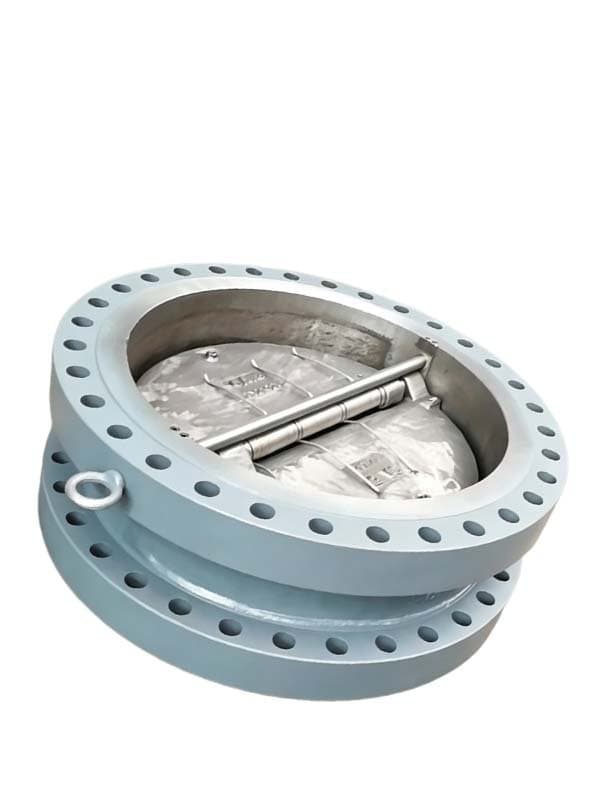
Válvula de Retención de Doble Placa con Bridas Dobles
Tamaño: 2" - 48" (DN50 - DN1200) Presión: Clase 150 - 600 / PN 10-100 Norma: API 6D, ASME B16.34, MSS SP-126, AWWA C508 Materiales del cuerpo: A216 WCB, A351 CF8M, A351 CF8, hierro dúctil (GGG40) Asiento: Metal contra metal o asiento blando (sello de elastómero/PTFE en el borde de la placa) Placas: Dos placas semicirculares sobre pasador central de bisagra con asistencia de resorte de torsión Diseño: Cuerpo de doble brida — conexiones totalmente embridadas en ambos lados de entrada y salida (ASME B16.5) Máxima integridad estructural para líneas de gran diámetro Las válvulas de retención de doble placa tipo wafer y lug funcionan bien en la mayoría de las aplicaciones — se intercalan entre bridas de tubería y los pernos de brida mantienen todo en posición. Pero en diámetros grandes y altas presiones, las fuerzas de la tubería se vuelven serias. Un cuerpo wafer de 48" Clase 600 tiene una dimensión cara a cara delgada. La pared del cuerpo entre las bridas tiene una profundidad estructural mínima. Bajo cargas de flexión de la tubería, fuerzas de expansión térmica y golpes hidráulicos a ese tamaño y presión, un cuerpo wafer es estructuralmente marginal. El diseño de doble brida resuelve esto proporcionando conexiones totalmente embridadas en ambos lados — dos puntos de fijación de brida independientes con un cuerpo de válvula completo entre ellos. La profundidad estructural es real. El cuerpo resiste cargas de flexión de la tubería. Las bridas distribuyen la carga de los pernos en dos superficies de conexión dedicadas en lugar de depender de pernos pasantes que sujetan un wafer delgado. Para líneas de 24" a 48" en Clase 300 y superiores, esa diferencia estructural importa. Por qué pagas más y cuándo merece la pena. Las válvulas de retención de doble placa con doble brida cuestan más que los formatos wafer y lug del mismo tamaño. El cuerpo es más pesado, la dimensión cara a cara es más larga, y está comprando dos bridas completas en lugar de un disco wafer delgado. La diferencia de peso es significativa en tamaños grandes — un cuerpo de doble brida de 36" pesa considerablemente más que un cuerpo wafer de 36". Usted paga esa prima cuando la seguridad estructural importa más que la instalación compacta. Las aplicaciones de obras hidráulicas que siguen AWWA C508 a menudo especifican doble brida porque las tuberías principales de gran diámetro operan bajo presión sostenida con posibles eventos de golpe de ariete. Los puntos de aislamiento petroquímico en tuberías críticas Clase 600 necesitan la profundidad estructural para confiabilidad a largo plazo. Si está operando una línea HVAC de 6" Clase 150, una doble placa tipo wafer hace el trabajo a menor costo. Si está operando un oleoducto de crudo de 36" Clase 600, la doble brida es la elección apropiada. El mecanismo de doble placa — el mismo diseño probado El mecanismo interno es el mismo que en las válvulas de retención de doble placa tipo lug y wafer. Dos placas semicirculares cuelgan de un pasador central de bisagra. Los resortes de torsión en el pasador asisten el cierre de las placas. El flujo directo empuja ambas placas para abrir — las placas se pliegan contra la pared del cuerpo y dejan el orificio mayormente despejado para el paso del flujo. Cuando el flujo directo se detiene, los resortes de torsión comienzan a cerrar las placas inmediatamente, y la contrapresión termina el trabajo. La asistencia de resorte significa que las placas comienzan a cerrarse antes de que se desarrolle la contrapresión — cierre más rápido que las válvulas de retención de disco oscilante de un solo disco por gravedad. Los asientos de metal contra metal manejan vapor, alta temperatura y servicio abrasivo. Las versiones de asiento blando con sellos de elastómero o PTFE en el borde de la placa proporcionan cierre hermético de burbuja para agua, productos químicos y aplicaciones de proceso a baja temperatura. Las mismas opciones de asiento, el mismo mecanismo de cierre — el formato de doble brida simplemente envuelve ese mecanismo probado en un cuerpo más robusto. Realidad de instalación — cara a cara más largo, más trabajo de pernos Las válvulas de doble brida tienen una dimensión cara a cara más larga que los formatos wafer y lug. Necesita más longitud de tubería entre las dos bridas de la tubería para acomodar el cuerpo de la válvula. Eso importa en espacios de instalación reducidos — si está reemplazando una válvula de retención tipo wafer con una de doble brida, el diseño de la tubería puede necesitar modificación. El trabajo de pernos también es más complejo. Las válvulas wafer y lug usan pernos pasantes que atraviesan el cuerpo de la válvula. Las válvulas de doble brida se empernan en cada lado de forma independiente — dos juegos de pernos de brida, dos superficies de junta, dos secuencias de apriete de pernos. Más mano de obra por instalación. En tamaños grandes...
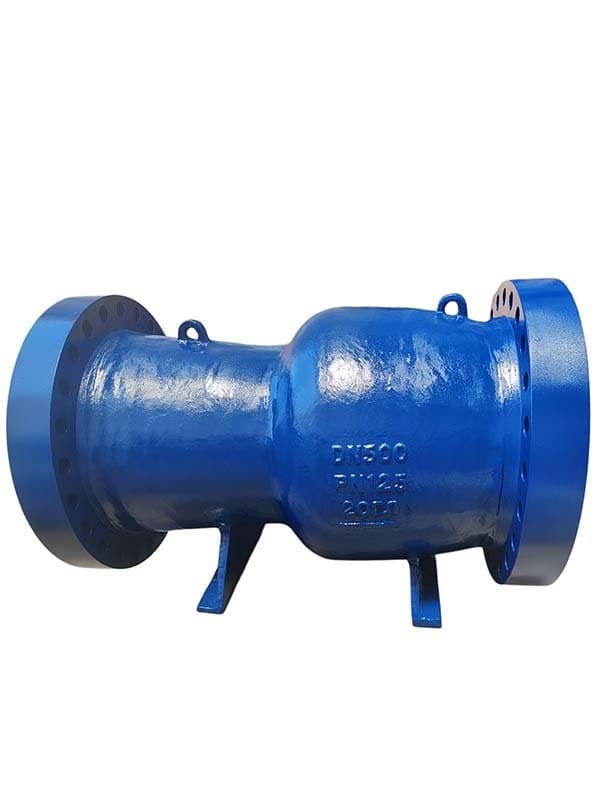
Válvula de Retención de Flujo Axial
Tamaño: 2" - 24" (DN50 - DN600) Presión: Clase 150 - 600 / PN 10-100 Norma: ASME B16.34, específica del fabricante (categoría de diseño propietario) Materiales del cuerpo: A216 WCB, A351 CF8M, A182 F316 (forjado para tamaños pequeños) Asiento: Asiento blando (anillo de sellado de elastómero o PTFE en la cara del disco) o metal contra metal Disco: Disco axial — se mueve a lo largo del eje de flujo, se desliza aguas arriba para abrir, se desliza aguas abajo para cerrar, cierre con resorte Diseño: Geometría de flujo axial, el disco se retrae en la jaula aguas arriba cuando está abierto, paso de orificio completo, sin pasador de bisagra en la trayectoria de flujo La Menor Caída de Presión — Por Diseño Cada tipo de válvula de retención coloca algo en la trayectoria del flujo. Las de clapeta oscilante tienen un pasador de bisagra que cruza el diámetro interior. Las de doble plato tienen un pasador de bisagra y un mecanismo de resorte de torsión situado en el paso. Las de elevación tienen una jaula guía del disco que restringe el área de flujo. Todas estas obstrucciones crean caída de presión — algunas pequeñas, algunas significativas, pero siempre presentes. Las válvulas de retención de flujo axial eliminan las obstrucciones en línea. El disco se mueve a lo largo del eje de la tubería — se desliza aguas arriba hacia una jaula o área de receso cuando el flujo directo lo empuja para abrirlo. Cuando el disco está completamente abierto, el diámetro interior está despejado. Sin pasador de bisagra, sin mecanismo de resorte, sin jaula guía que cruce el paso. El flujo pasa directamente a través de un diámetro interior sin obstrucciones. La caída de presión es mínima — menor que cualquier otro tipo de válvula de retención del mismo tamaño. Eso importa donde la caída de presión cuesta dinero real. Las líneas de descarga de compresores de gas son el ejemplo clásico. Los compresores son sensibles a la contrapresión de descarga — cada psi de caída de presión adicional en el lado de descarga cuesta energía en cada hora de operación. Una válvula de retención de flujo axial en una línea de descarga de compresor añade prácticamente cero caída de presión. A lo largo de años de operación continua del compresor, esa diferencia de eficiencia se acumula en ahorros de energía medibles. Cierre por Resorte — Funciona Incluso Sin Contrapresión La mayoría de las válvulas de retención cierran por gravedad y contrapresión. El disco o los platos oscilan o caen cuando el flujo inverso los empuja hacia el asiento. Eso funciona en líneas horizontales donde la gravedad ayuda al cierre y la contrapresión se desarrolla rápidamente después de que el flujo directo se detiene. Pero en instalaciones verticales, o en sistemas donde la contrapresión se desarrolla lentamente, el cierre solo por gravedad no es confiable. Las válvulas de retención de flujo axial usan un resorte para cerrar el disco. El resorte empuja el disco aguas abajo hacia el asiento independientemente de si existe contrapresión. La válvula cierra incluso a presión diferencial cero. Eso es crítico para instalaciones verticales donde la dirección de la gravedad no ayuda al cierre, y para sistemas de baja contrapresión donde el flujo inverso se acumula lentamente — el resorte lleva el disco al asiento antes de que pase un volumen inverso significativo. La fuerza del resorte está ajustada al tamaño de la válvula y la aplicación. Las aplicaciones de descarga de compresores usan resortes más ligeros para minimizar la presión de apertura — la presión mínima de flujo directo necesaria para empujar el disco fuera del asiento. Las estaciones de verificación de tuberías pueden usar resortes más pesados para un cierre más rápido. El resorte es parte del diseño, no una opción adicional. Diseños Patentados — Sepa Lo Que Está Comprando Las válvulas de retención de flujo axial son patentadas. Cada fabricante diseña su propia geometría de disco, perfil de jaula, especificación de resorte y configuración de asiento. No existe un estándar industrial unificado que rija la geometría interna — a diferencia de las de clapeta oscilante (MSS SP-71) o las de doble plato (MSS SP-126) donde los estándares dimensionales y de diseño proporcionan intercambiabilidad. Eso significa dos cosas: mayor costo en comparación con los tipos estándar de válvulas de retención, y menos opciones de abastecimiento intercambiables. Usted está comprando el diseño de un fabricante específico, y el reemplazo o abastecimiento alternativo se limita a ese fabricante o a un competidor con un diseño patentado similar. Para protección crítica de compresores y estaciones de verificación de tuberías donde la ventaja de rendimiento justifica la prima, eso es una compensación aceptable. Para una línea general de descarga de bomba donde una válvula estándar de doble plato hace el trabajo a menor costo, la de flujo axial está...
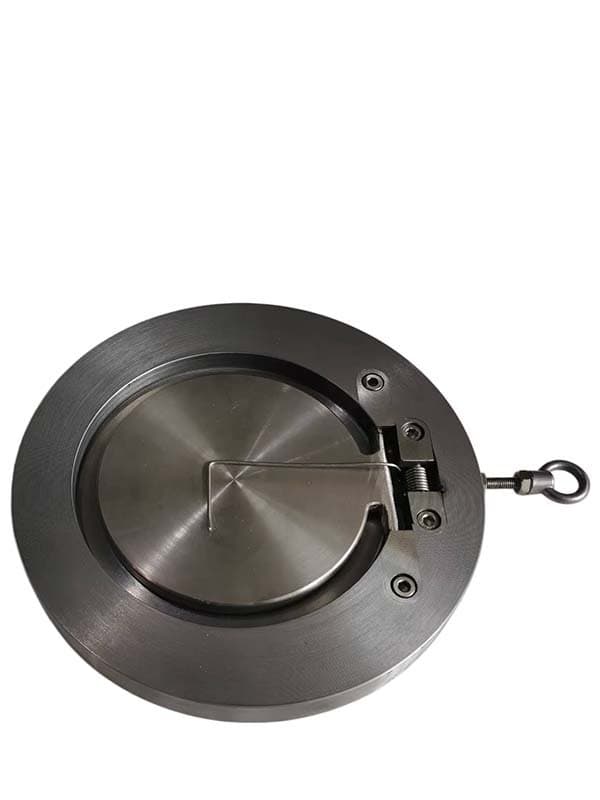
Válvula de Retención de Bisagra de Disco Único Tipo Sándwich
Tamaño: 2" - 24" (DN50 - DN600) Presión: Clase 150 - 300 / PN 10-40 Estándar: MSS SP-71, API 6D Materiales del cuerpo: A216 WCB, A351 CF8M, hierro dúctil (GGG40) Asiento: Metal contra metal o asiento blando (inserto de sellado de elastómero/PTFE en el borde del disco o en el anillo del asiento) Disco: Disco único — oscilación completa sobre pasador interno, ángulo de apertura de hasta 80°, cierre por gravedad y contrapresión Diseño: Cuerpo tipo wafer — cara a cara delgado, sin orificios para pernos, se sujeta entre bridas de tubería con pernos pasantes La Opción Económica — y Lo Que Se Sacrifica Las válvulas de retención de oscilación de disco único tipo wafer son el dispositivo más simple de prevención de flujo inverso que se puede colocar entre dos bridas. Cuerpo delgado, sin orificios para pernos, un disco sobre un pasador. El flujo directo empuja el disco para abrirlo. Cuando el flujo se detiene, la gravedad y la contrapresión hacen oscilar el disco de vuelta sobre el asiento. Sin resorte, sin amortiguador, sin mecanismo externo, sin internos complicados. Solo un disco oscilando sobre un pasador dentro de una carcasa delgada. Esa simplicidad hace que las de retención de disco único tipo wafer sean el formato de oscilación más económico. Si se opera una línea de agua Clase 150-300, un circuito de circulación HVAC, o una descarga de bomba de proceso general donde se necesita protección básica contra flujo inverso y el costo es el factor principal de decisión, la de disco único tipo wafer es la que se especifica. Funciona. Es asequible. Está disponible en todos los fabricantes de válvulas en todos los materiales comunes. Pero la simplicidad conlleva compensaciones que se deben entender antes de instalar. Servicio de Extremo Ciego — El Wafer No Puede Hacerlo Los cuerpos tipo wafer no tienen orificios para pernos. La válvula se mantiene en posición mediante pernos pasantes que atraviesan el cuerpo de la válvula de una brida de tubería a la otra. Ambas bridas de tubería deben estar presentes para sujetar la válvula. Si se necesita atornillar una brida ciega en un lado — para aislamiento de extremo ciego, para terminación de línea, para aislamiento de mantenimiento donde un lado se tapa — un cuerpo tipo wafer no puede hacerlo. No hay orificios para pernos en el cuerpo wafer para que se fije una brida ciega. Se necesita un cuerpo tipo lug o de doble brida para servicio de extremo ciego. Este es el error más común con las válvulas de retención tipo wafer. Alguien especifica un wafer para un punto de aislamiento de descarga de bomba, y luego quiere tapar el lado aguas abajo para mantenimiento de la bomba. El wafer no puede sostener una brida ciega. Los pernos pasantes que sujetan el wafer entre las bridas de tubería solo funcionan cuando ambas bridas están presentes y atornilladas. Retire una brida y el wafer no tiene soporte estructural en ese lado. Cierre por Gravedad y Contrapresión — Sin Respaldo de Resorte El disco cierra por gravedad y contrapresión. Sin asistencia de resorte. En líneas horizontales con dirección de flujo que permite que la gravedad tire del disco hacia el asiento, el cierre es confiable — el disco oscila hacia abajo por gravedad, y la contrapresión lo empuja a su lugar. Pero en líneas verticales con flujo ascendente, la gravedad aleja el disco del asiento. El disco queda colgando abierto a menos que se desarrolle contrapresión para empujarlo a cerrar. Si la contrapresión se acumula lentamente — un sistema de baja altura, una línea de descarga larga con desaceleración gradual del flujo — el disco permanece abierto más tiempo y pasa más flujo inverso antes del cierre. Para instalaciones verticales, se necesita una válvula de retención con resorte. Las válvulas de retención de doble placa con resortes de torsión, las de flujo axial con discos accionados por resorte o las de elevación con corto recorrido de caída por gravedad se cierran de forma más fiable en tuberías verticales. Las válvulas de retención oscilantes de disco simple tipo oblea son ideales para tuberías horizontales. Cuerpo Delgado — Menos Profundidad Estructural Los cuerpos tipo wafer tienen una dimensión cara a cara mínima. Ese es el diseño — compacto, delgado, sujeto entre bridas. En tamaños de 2" a 6" donde las fuerzas de la tubería son moderadas, el cuerpo delgado maneja la carga sin problemas. En tamaños de 12" a 24" donde las cargas de flexión de la tubería y las fuerzas de expansión térmica son sustanciales, el cuerpo wafer tiene menos profundidad estructural que los formatos lug o de doble brida. Menos profundidad significa menos resistencia a la flexión, menos capacidad para distribuir las fuerzas de la tubería a través de la estructura del cuerpo. Para líneas principales de agua Clase 150 de gran diámetro donde la presión de operación es baja y los eventos de golpe de ariete son manejables, las de...
Descripción técnica
Las válvulas de retención evitan el flujo inverso en sistemas de tuberías: se abren con la velocidad del flujo directo y se cierran cuando el flujo directo se detiene o se invierte, protegiendo bombas, compresores y equipos de proceso contra daños por contracorriente. No requieren accionamiento externo; el propio flujo impulsa la apertura y el cierre mediante el peso del disco, la fuerza del resorte o la dinámica de fluidos. FLOWKS fabrica ocho configuraciones de válvulas de retención que abarcan cuatro mecanismos de cierre y tres formatos de cuerpo. Las válvulas de retención de clapeta oscilante utilizan un disco completo que pivota sobre un pasador de bisagra: un ángulo de apertura de 80° proporciona un paso casi de diámetro completo y una caída de presión mínima, cierre por gravedad, la opción predeterminada para descarga de bombas de flujo constante en 2"-24". Las válvulas de retención de clapeta oscilante con extremos soldados a tope aplican cuerpos forjados y conexiones soldadas a tope en Clase 150-2500 donde las juntas bridadas se convierten en responsabilidades de fiabilidad bajo golpes de impacto de alta presión. Las válvulas de retención de clapeta oscilante con pasador externo añaden un amortiguador hidráulico al pasador de bisagra: el cierre controlado durante 1-3 segundos elimina el golpe de ariete en aplicaciones de parada de bomba y tuberías largas. Las válvulas de retención de doble placa tipo lug dividen el movimiento de cierre entre dos semidiscos con asistencia de resorte de torsión: un recorrido más corto significa un cierre más rápido (0.2-0.5 segundos), el formato lug permite servicio en extremo ciego, dimensión cara a cara compacta. Las válvulas de retención de elevación vertical levantan un disco verticalmente del asiento con flujo ascendente: recorrido corto para cierre rápido en 1/2"-4", guía de disco asegura asentamiento centrado, instalación solo vertical. Las válvulas de retención de doble placa con doble brida proporcionan integridad estructural bridada completa en 2"-48" y Clase 600 donde los cuerpos tipo wafer/lug carecen de resistencia suficiente a la carga de la tubería. Las válvulas de retención de flujo axial mueven el disco a lo largo del eje de flujo hacia una jaula aguas arriba: paso de diámetro completo sin obstrucción, la caída de presión más baja de cualquier diseño de retención, cierre por resorte para fiabilidad sin contrapresión, especificadas para descarga de compresores y estaciones de tuberías de flujo continuo. Las válvulas de retención de clapeta oscilante de disco único tipo wafer ofrecen protección económica de retención oscilante en Clase 150-300 en formato wafer delgado: la prevención de flujo inverso más simple, económica y básica para agua, HVAC y líneas de proceso generales.
Las válvulas de retención FLOWKS proporcionan prevención automática de flujo inverso en toda la gama de tamaños y presiones de tuberías industriales. Las válvulas de retención de clapeta oscilante ofrecen un paso casi de diámetro completo con apertura de disco de 80° y cierre por gravedad: la opción predeterminada para descarga de bombas de flujo constante en 2"-24" Clase 150-600. Las válvulas de retención de clapeta oscilante con extremos soldados a tope y cuerpos forjados eliminan conexiones bridadas en Clase 150-2500 donde las juntas fugan bajo golpes de impacto de disco de alta presión. Las válvulas de retención de clapeta oscilante con pasador externo añaden control de amortiguador hidráulico para cierre gradual de 1-3 segundos que elimina el golpe de ariete en aplicaciones de parada de bomba y tuberías largas. Las válvulas de retención de doble placa tipo lug cierran más rápido con dos semidiscos asistidos por resorte: cierre en 0.2-0.5 segundos, capacidad de servicio en extremo ciego, dimensión cara a cara compacta en 2"-48". Las válvulas de retención de elevación vertical proporcionan cierre guiado rápido en líneas verticales de diámetro pequeño en 1/2"-4" donde la precisión de alineación del disco importa. Las válvulas de retención de doble placa con doble brida ofrecen máxima integridad estructural en 2"-48" Clase 600 para obras hidráulicas y estaciones de tuberías críticas. Las válvulas de retención de flujo axial ofrecen la caída de presión más baja con paso sin obstrucción de diámetro completo y cierre por resorte: protección de descarga de compresores y tuberías de flujo continuo. Las válvulas de retención de clapeta oscilante de disco único tipo wafer brindan prevención económica de flujo inverso en Clase 150-300 en formato wafer compacto para servicio de agua y HVAC.
Descargas de productos
Industrias que utilizan este producto
Aplicaciones en diversos sectores industriales.
Oil & Gas
Upstream, midstream and downstream valve solutions meeting API 6D, API 607 fire-safe requirements. From wellhead to refinery, FLOWKS provides reliable valve solutions for the most demanding oil and gas applications.
Water Treatment
Reliable flow control solutions for desalination, wastewater, and potable water systems. FLOWKS butterfly valves and check valves are widely used in water infrastructure projects.
Mining
Abrasion-resistant valves for slurry, tailings, and mineral processing applications. FLOWKS knife gate valves and butterfly valves are built to withstand harsh mining environments.
products.lookingMore
products.lookingMoreDesc
Ball Valves
FLOWKS offers floating ball valve, trunnion mounted ball valve and top entry ball valve for oil & gas, petrochemical and power generation. Designed per API 6D, API 608 and ASME B16.34.
DBB Valves
FLOWKS Double Block & Bleed (DBB) valves provide dual isolation with bleed verification in a single compact body. Replacing traditional multi-valve installations, FLOWKS DBB valves reduce weight, space and potential leak paths. Available in bolted bonnet, all-welded and expanding gate designs per API 6D and API 607.
Gate Valves
FLOWKS gate valves for isolation service in piping systems. Flexible wedge, solid wedge, slab and expanding gate designs per API 600, API 602 and ASME B16.34.
Globe Valves
FLOWKS globe valves for throttling and isolation. Standard, angle, Y-pattern and bellows seal configurations per API 602 and BS 1868.